
PCN Europe December 2025 WebMagIssue #195 - 11/12/2025
Essential source of information for professionals in the broad field of processing industries since 2004
Quick access
Contents2 Imdustry News: BASF | Cerafiltec3 Industry News: Sensiron | HIMA4 Industry News: WIKA | AMA5 Industry News: ABB | PI6 Measurement & Instrumentation: Choosing the Right Flow Meter for Beverage Dispensing7 Measurement & Instrumentation: Sensotech | Vaisala8 Measurement & Instrumentation: Emerson | SICK9 Measurement & Instrumentation: JUMO | Servomex10 Automation: Exclusive Interview11 Automation: TURCK | Phoenix Contact12 Automation: Softing | EK Robotics13 Automation: Digitalization Through Integration of Augmented Reality at Device Level14 Pumps & Valves: Sliding Gate Valves Help to Reduce Operating Costs and CO₂ Emissions15 Pumps & Valves: ProMinent | Rotork16 Maintenance: Flir | Sensonics17 Index18 Contacts19Companies in this issue
Hans Turck GmbH & Co. KG12 JUMO GmbH & Co. KG10 Pepperl + Fuchs SE14 SensoTech GmbH8Bürkert Fluid Control Systems11 Ek Robotics GmbH13 Emerson Automation Solutions - Systems9 FLIR SYSTEMS TRADING BELGIUM17 Hans Turck GmbH & Co. KG12 JUMO GmbH & Co. KG10 Pepperl + Fuchs SE14 Phoenix Contact GmbH & Co. KG12 ProMinent GmbH16 Rotork Plc16 Schubert & Salzer Control Systems GmbH15 Sensonics17 SensoTech GmbH8 Servomex Group Ltd10 SICK AG9 Softing Industrial Automation GmbH13


#2 Contents
#3 Imdustry News: BASF | Cerafiltec
#4 Industry News: Sensiron | HIMA
#5 Industry News: WIKA | AMA
#6 Industry News: ABB | PI
#7 Measurement & Instrumentation: Choosing the Right Flow Meter for Beverage Dispensing
#8 Measurement & Instrumentation: Sensotech | Vaisala
#9 Measurement & Instrumentation: Emerson | SICK
#10 Measurement & Instrumentation: JUMO | Servomex
#11 Automation: Exclusive Interview
#12 Automation: TURCK | Phoenix Contact
#13 Automation: Softing | EK Robotics
#14 Automation: Digitalization Through Integration of Augmented Reality at Device Level
#15 Pumps & Valves: Sliding Gate Valves Help to Reduce Operating Costs and CO₂ Emissions
#16 Pumps & Valves: ProMinent | Rotork
#17 Maintenance: Flir | Sensonics
#18 Index
#19 Contacts
Nobel Prize for Metal-Organic Frameworks (MOFs)
BASF already produces metal-organic frameworks (MOFs) on an industrial scale that can store large quantities of CO₂ and water vapour in a limited space.

BASF produces metal-organic frameworks (MOFs) for CO₂ capture on an industrial scale. These nanostructures can absorb large quantities of molecules on their surface. For the development of these MOF structures, the Royal Swedish Academy of Sciences in Stockholm will award this year’s Nobel Prize in Chemistry on December 10, 2025. The prize will go to the materials researchers Prof. Omar M. Yaghi, University of California, USA, Prof. Susumu Kitagawa, Kyoto University, Japan, and Prof. Richard Robson, University of Melbourne, Australia.
At the prize announcement in October, the Nobel Committee for Chemistry presented, among other things, the MOF compound CALF-20, which BASF produces at its site in Seneca, South Carolina, USA. The Canadian company Svante Technologies Inc. uses CALF-20 to separate CO₂ from gas streams.
MOFs are sponge-like crystalline, three-dimensional structures made of metals and organic molecules. They feature nanoporous cavities and an internal surface area of up to 10,000 square meters per gram - larger than a football pitch - and can store large quantities of molecules. MOFs can be engineered to selectively capture and store specific molecules. Thanks to their structure, they are ideally suited to extract gases such as CO₂ or water vapor in confined spaces, or to catalyse chemical reactions. “Our MOFs are already being used in commercial applications to capture CO₂ and to recover water from the air. We are very pleased that the Nobel Prize Committee recognizes the significance of these materials and at the same time is highlighting further fields of application, which we aim to develop together with our partners,” said Dr. Detlef Ruff, Senior Vice President Chemical Catalysts and Adsorbents at BASF.
MOFs: From the Beginning to Today
BASF’s research into MOFs began around 25 years ago. During this time, researchers have investigated and developed a wide variety of MOFs for different applications: from hydrogen storage and natural gas storage to the storage of CO₂ and water.
Currently, BASF is primarily focused on two applications: the storage of water and the storage of CO₂. For water storage, MOFs extract moisture from the air. BASF is already utilizing this in pilot projects, for example, to dehumidify air conditioning systems. Alternatively, in the future, the water storage capability of MOFs could help to supply dry regions with water captured from desert air. MOFs can also be used to reduce carbon emissions in various industries.
The Nobel Prize award demonstrates that BASF’s perseverance in MOF research has paid off. Over many years, BASF has worked closely with Professor Omar Yaghi and maintains a strong connection with him to this day. Among other things, Yaghi is co-founder of the California Research Alliance (CARA), a research collaboration initiated by BASF in the USA.
Deliveries for the World’s Largest Ceramic Membrane Bioreactor
Cerafiltec sent out the final shipment for what will become the world largest ceramic membrane bioreactor

Once complete, this record-breaking installation will reuse 49.2 million liters (13.0 million gallons) of municipal wastewater every day, transforming it into high-quality water for cooling xAI’s next-generation supercomputing data center, one of the most powerful AI infrastructures ever built.
The last deliveries mark the culmination of months of intense engineering and precision manufacturing at CERAFILTEC’s production site. Each module represents the latest evolution of the flat-sheet ceramic membrane technology, engineered to deliver the highest mechanical strength, extreme chemical resistance, and unmatched lifespan in the industry.
Unlike polymeric membranes, CERAFILTEC’s robust ceramic membrane solution consistently delivers stable performance, even when exposed to aggressive cleaning or fluctuating process conditions. They maintain full permeability and integrity over decades of use, enabling energy-efficient filtration even under high solids loads. This durability is key to xAI’s goal of achieving continuous, low-maintenance water reuse operations on a mega scale, supporting 24/7 data processing with minimal environmental impact. “Seeing the final shipment leave Saarbrücken is more than a logistical milestone, it is proof of how advanced materials and purposeful engineering can enable sustainability at scale,” said Torsten Wintergerste, CEO at CERAFILTEC. “Together with xAI, we are showing that reliable, circular water management is not only possible for critical infrastructure, it is essential.”
As the project advances toward completion, it stands as a defining example of how ceramic membrane technology is reshaping water treatment for the digital age, offering a solution that is not only more sustainable, but also more resilient and futureproof.
Groundbreaking Ceremony for New Sensirion Production Building
The modern production facility in Stäfa, featuring highly classified cleanrooms for the semiconductor industry, will be built over the next two and a half years and accompanied by the acquisition of land for an additional office building.

The existing production building C on the company’s headquarter at Laubisrütistrasse in Stäfa is at full capacity and cannot accommodate any additional production facilities. To ensure reliable and on-time delivery in the future, Sensirion is creating the capacity it needs for further growth, technological development and greater production reliability with the new building F. As a systemically important supplier with long-term customer contracts, Sensirion has an obligation to guarantee maximum security of supply. Some key customers also require a redundant production site.
The new production building will also require the construction of a new office building for workstations, as additional engineers will be needed to handle the gradual expansion of production facilitated by the new building. This is why the property at Moritzberg was purchased. It will provide the space for the high-tech core processes, including their development and production, at the headquarters in Stäfa.
Sustainable building technology
The new production building F will be integrated into the site map of all Sensirion buildings at the Stäfa site. Covering an area of 11,000 m², it will house, in addition to high-tech cleanrooms, a logistics area with delivery facilities, technical rooms and parking spaces on two underground levels. It is right by and connected via walkway to the main building A at Laubisrütistrasse 50, which houses the reception, office and laboratory spaces.
The building will meet the Minergie P sustainability standard. The materials used in the building and its construction will also comply with the DGNB (German Sustainable Building Council) Gold certification standard. The surrounding area, including by the bus stop, will be upgraded with a tree-lined avenue along Laubsrütistrasse and a fountain.
Global success — local roots
Sensirion develops and manufactures sensors and sensor solutions for the automotive industry, medical technology and industrial applications. Today, for example, Sensirion sensors are installed in one out of every three cars worldwide, and 10 million patients rely on ventilators from the sensor manufacturer—impressive proof of the innovative strength and global reach of the company headquartered in Stäfa, on the right bank of Lake Zurich.
HIMA and DEUTA Partner for new SafeHMI solution
Increased safety through clarity in challenging situations for the process industry and railway sector

HIMA, provider of safety-related automation solutions, and DEUTA, a specialist in certified display and safety technology, have jointly launched a new solution, SafeHMI, that combines HIMA safety systems and function block libraries with a safety-related human-machine interface (HMI) panel based on IconTrust technology. The innovative solution sets new standards in safety-related visualization, offering context-sensitive alarm management, safe operation and display monitoring in accordance with SIL 3 (IEC 61508) and has been consistently designed with an aim to meet functional safety requirements.
While classic SCADA systems and MIMIC panels often reach their limits in safety-critical applications, SafeHMI delivers clear, prioritized information – exactly where it is required.
"With DEUTA, we have a technology partner with decades of experience in the field of safety-related displays, especially in the rail and transport sectors," said Jörg de la Motte, CEO of the HIMA Group. "With SafeHMI, we are creating a solution that makes functional safety in the industrial environment visible, controllable and digitally manageable."
Dynamic alarm display and secure input processes
At the heart of the system is the dynamic alarm display, which reduces the burden on operators during fault situations. Relevant alarms are automatically prioritized, along with concise instructions for action and limited to a maximum of four simultaneous entries. This ensures that an overview is maintained, even in critical moments and operating errors are avoided.
The solution allows to make inputs, acknowledgements or safe overrides directly through the touch panel – tested, documented and validated according to SIL 2/3. This means that maintenance functions or recipe changes can be carried out digitally and documented in an auditable manner. Bernd Schäfer, Product Manager at HIMA, said: "With SafeHMI, we are taking display and operating logic to a new level of safety. In critical situations, operators not only receive information, but also clear instructions for action and they can rely on what they see being accurate."
Display with a guarantee of reliability
A key safety feature is the IconTrust technology developed by DEUTA. It continuously monitors screen content and reliably detects any deviations between the displayed and expected values. This makes the display itself an active safety element that is certified up to SIL 3, offering operators maximum reliability.
Fully integrated into the HIMA Safety platform
The SafeHMI solution is fully integrated into the HIMA Safety Platform. Configuration, modifications and enhancements are carried out using standardized function blocks, which are offered as part of a certified library. This makes SafeHMI an important component of HIMA’s #safetygoesdigital initiative, with which the company is driving digitalizing of the entire life cycle of safety-related systems and their peripherals.
"In partnership with HIMA, we can now provide generic safety technology for operating and display units used in the railway sector with over 30,000 units for new fields of application for which no comparable solution has been available to date. In combination with the HIMA safety system, the application possibilities are almost limitless," said Dr Rudolf Ganz, CEO of the DEUTA Group and DEUTA-WERKE.
WIKA Strengthens Management Team
Axel Schwerdtfeger has been appointed as Executive Vice President of the Process Solutions company division, effective 1 October. As a member of the Management Board, he will also contribute significantly to shaping and executing the global business strategy of the measurement technology manufacturer.

As Executive Vice President, Axel Schwerdtfeger will focus on the strategic development of the company division’s product and service portfolio, including that of its affiliated subsidiaries. He will also prioritise delivering innovative, high-value solutions for customers and driving continuous optimisation of business processes.
“Global megatrends such as digitalisation and decarbonisation are fundamentally reshaping business requirements – while simultaneously opening up vast opportunities for innovation and growth,” says Axel Schwerdtfeger. “With our broad technology portfolio, international orientation and strong internal collaboration, we at WIKA are ideally positioned to actively shape this transformation. I look forward to working with our customers to develop forward-looking solutions that deliver genuine added value.”
Prior to joining WIKA, Axel Schwerdtfeger served as CTO and member of the Executive Board at HAWE Hydraulik SE, a Munich-based manufacturer of mechatronic and hydraulic components and systems. Over 20 years, he held various roles at the international family-owned company with global subsidiaries, including a two-year tenure as COO of its branch in Shanghai, China. He holds a degree in industrial engineering.
“Axel Schwerdtfeger possesses a deep understanding of the industries and markets we serve,” says Alexander Wiegand, Chairman and CEO of WIKA. “He is also a determined leader. He will play a pivotal role in positioning our Process Solutions company division so that it is ideally equipped to meet the challenges of today and tomorrow.”
AMA Innovation Award 2026: Submit Your Applications Now
AMA Association honors innovative developments in sensor and measurement technology

The AMA Association for Sensor and Measurement Technology (AMA) is calling on scientists and developers from industry and research to apply for the prestigious AMA Innovation Award 2026. The association is looking for groundbreaking research and development results in sensor and measurement technology with clear market relevance. The deadline for submissions is January 22, 2026.
Special category for young companies
Individuals and development teams whose solutions demonstrate innovation and economic relevance are eligible to apply. The AMA Innovation Award is endowed with 10,000 euros. In addition, young companies that have been on the market for no longer than five years, employ fewer than 50 people, and have an annual turnover of no more than 10 million euros can win the special “Young Company” award. The winner will receive a free exhibition stand at SENSOR+TEST 2026.
“We invite you to submit your forward-looking ideas in the field of sensor and measurement technology and present them to an international audience of experts at SENSOR+TEST 2026,” says Klaus Drese from Coburg University, chairman of the jury. "Whether you represent an established company or a start-up, whether you operate nationally or internationally, we look forward to your innovations and contributions that reflect the dynamism of our industry."
The AMA Innovation Award has been presented for 26 years and recognizes the achievements of developers and development teams, regardless of the companies or institutions behind them. The jury, consisting of experts from science, research, and industry, evaluates the scientific quality, degree of innovation, and market prospects of the submissions.
The nominations and the winner of the special “Young Company” award will be announced at the AMA press conference on March 3, 2026. The winners of the AMA Innovation Award 2026 will be honored at the opening ceremony of SENSOR+TEST 2026 on June 9, 2026, in Nuremberg. All nominated teams will present their innovations to an international audience of experts at the event.
The conditions of participation and application documents for the AMA Innovation Award 2026 and the special category “Young Company” can be found at: https://www.ama-sensorik.de/en/science/ama-innovation-award/
ABB Launches Embedded ESAT Technology in Drives at ADIPEC 2025
Integrating Electrical Signature Analysis technology (ESA) in high power drives turns modernization into a digital transformation catalyst for industrial assets. These include motors, pumps, fans, mixers and conveyors operating in hot, toxic or hard-to-access environments, previously regarded as unmonitorable.

ABB launched a service ADIPEC 2025 in Abu Dhabi, UAE, embedding Samotics-powered Electrical Signature Analysis (ESA) technology into legacy drives. This enables industrial players to collect performance-related data, which can then be analyzed to provide maintenance teams with actionable, real-time insights on the condition of their assets. This collaboration is based on the long-term strategic partnership of ABB and the Dutch company Samotics, a global provider of condition monitoring technology based on ESA.
Upgrading equipment for a longer product life
Embedding ESA technology unlocks advanced condition monitoring - directly from the drive - providing insight into the health of the powertrain across assets such as motors, pumps, fans, mixers, and conveyors. Drives will now be able to monitor and identify changes in operating behavior, such as bearing wear or damage, coupling or gear misalignment or pump cavitation. This means that remedial action can be taken well before a costly failure and/or long downtime can occur.
“This leap forward in the modernization of legacy drives promises to be a catalyst for the digital transformation of industry,” says Oswald Deuchar, Global Head of Modernization Program, ABB Motion Services. “It enables quick, seamless and cost-efficient adoption of ESA technology for enhanced uptime, and immediate access to ABB’s support and services. Should an issue be detected, our customers can rely on the full support of ABB’s global expert network, including targeted actions to keep operations running consistently and reliably.”
“Because ESA is embedded in the drive, it can monitor assets where other technologies struggle, such as submerged pumps or equipment in hot and toxic areas,” adds Simon Jagers, Founder & co-CEO of Samotics. “This is a key step toward autonomous, self-optimizing operations that are at the heart of the factory of the future.”
Real-time condition status
The ESA-enabled drives gather electrical data directly from the powertrain. Powered by Samotics’ analytics and supplied to industrial players by ABB’s global expert network, the data are translated into real-time insights on asset conditions. This establishes a solid platform for actionable recommendations and a clear path forward, freeing up skilled labor and maximizing uptime, for operational resilience.
Initially, the ESA modernization service will focus on two ranges of ABB’s low-voltage (LV) VSDs — the cabinet-built drives ACS600 and ACS800. In recognition of evolving industry requirements, the modernized drives also benefit from ABB’s TÜV-certified cyber security measures.
As part of the ABB Ability™ Condition Monitoring suite of digital solutions and services, Samotics’ ESA complements ABB’s well-established vibration analysis capabilities to provide the most complete view of powertrain health. From simple low-speed assets to complex, high-speed systems, these two solutions ensure early fault detection, clearer service actions and maximized reliability.
Certification Is Now Available for All Device Types With Profinet Over APL
Field tests with end-users in the process industry show positive results in test installations

The functionality of PROFINET for explosion-proof applications in process automation is available in its complete scope. In joint working groups, experts from PROFIBUS & PROFINET International (PI) are currently working closely with end-users to intensively evaluate the potential for use and interoperability of PROFINET over APL products from different manufacturers in several pilot plants in the chemical industry. The basis for a high degree of interoperability is a certification test for all product types, including controllers, sensors, actuators, and switches. Tests for actuators have been added to the latest version of the PROFINET Test Bundle. The first products have already successfully passed the certification tests. For example, Samson has received the first certificates for its positioners.
"In addition to developing user-friendly technology and establishing targeted measures for product quality assurance, we believe that working with users is an important step in establishing the technology in plants and promoting its acceptance. For years, we have been working closely with users throughout the entire life cycle of technology. This begins with the creation of requirements and extends to the evaluation of prototypical or real products in pilot or demo systems. The experience gained in this process is incorporated into the maintenance and further development of our technologies," says PI Chairman Xaver Schmidt.
Next step to deployment
In addition to physical layer tests to verify suitability for intrinsically safe applications, the scope of certification testing for PROFINET over APL products includes additional APL-specific test cases for verifying PROFINET communication, the execution of an APL-specific test setup for interoperability scenarios, and tests for the Profile for PA Devices. With the availability of certification for actuators, the PI experts for PROFINET over APL have completed another step toward deployment in process automation.
In the meantime, end-users have positively evaluated the suitability of PROFINET over APL with certified products in several test lab installations. PI has initiated activities involving PI experts and users from the process industry to define further field tests. These will also be extended to the topic of security, considering the underlying non-Ethernet communication systems.
In addition, the topics of functional safety with PROFIsafe and the certification of switches are on PI's agenda, which are also being developed in close cooperation with end-users from the process industry.
Choosing the Right Flow Meter for Beverage Dispensing
When it comes to beverage dispensing and flow measurement, Titan Enterprises offers two distinct solutions that each has unique strengths and trade-offs, making the choice application-dependent.
Measurement & Instrumentation

Here the differences between the technologies used within each flow meter - the well-established Beverage Turbine Meter and the newly released Ultrasonic Beverage Meter are described:
The Turbine Meter operates on a mechanical principle using a Pelton wheel turbine and sapphire bearings. This design provides consistent repeatability and has 1.5% Full Scale Accuracy but introduces moving parts into the system.
The Ultrasonic Meter uses the ‘time of flight’ principle to measure flow, with no moving parts. This eliminates mechanical wear and contamination risk, while offering a completely clean, straight bore, and accuracy better than 2% of reading.
Materials & Design
Turbine Meters are constructed from PVDF with sapphire bearings and Viton™ seals, it is robust and resistant to a wide temperature range. This device is NSF-approved under the NSF standard 169 as ‘Special Purpose Food Equipment and Devices’.
Built from food approved ABS/PC polymer with Viton™ seals the Ultrasonic Meters offera lightweight design with a straight 6 mm bore. The absence of internal obstructions makes it easy to clean using sponge balls. All parts are to FDA / EU food approved standards and NSF-approval will be sought for this product when it reaches full commercialisation.
Performance Comparison
-
Granularity:
Beverage Turbine(BT): 1400 pulses per litre (lower resolution).
Ultrasonic Beverage(UB): 5000 pulses per litre (higher resolution). -
Flow Range:
BT: 0.6–10 l/min - limited low-end capability.
UB: 0.2–10 l/min - better for low flow applications. -
Linearity & Repeatability:
BT: ±1.0% FSD linearity, excellent ±0.1% repeatability.
UT: ±2% of reading linearity, ±0.5% repeatability. - Temperature Range:
BT: 0–125 °C, suitable for hot and cold beverages.
UT: 3–15 °C, restricted primarily to chilled beverages.
Installation & Operation
Both beverage meters use John Guest 3/8” push-fit connections, ensuring compatibility with standard tubing. The pressure drop is minimized in both designs, though the ultrasonic’s straight 6mm bore gives it a lower overall pressure drop. Power requirements differ slightly: the beverage turbine meter runs from 5–24 VDC, whereas the ultrasonic models require 7–24 VDC. Both types are calibrated in-situ by the customer to suit the system requirements. As the ultrasonic meter has no contact of medium and moving parts it eliminates contamination issues and allows easy cleaning.
When the costs are considered the Beverage Turbine offers a budget-friendly and reliable solution, particularly for high-temperature or mixed-use applications. While the ultrasonic meter nearly has five times the cost initially, it is justifiable for hygienic, low-maintenance, and high-resolution needs in the long run.
The turbine technology offers a low-cost, robust, highly repeatable flowmeter, and capable of handling hot beverages. But the moving parts within the meter require cleaning and can cause blockages if not maintained. In comparison the ultrasonic meters offer higher resolution, factory-settable K factor, potential for both NPN and PNP outputs, and easy cleaning. Good linearity enables effective use of the device in variable flow rates. But the narrow temperature range limits use to cold beverages and comes with higher upfront cost.
The comparison shows that both technologies are up to date. Ultimately, the decision comes down to the application's specific requirements: whether economy and temperature versatility or hygienic design and precision at low flows are the deciding factors.
Inline Ultrasonic Bubble Detection System
Inline Ultrasonic Concentration Measurement and Bubble Detection System
Measurement & Instrumentation

In many industrial processes, including alkaline electrolysis, the early and reliable detection of gas bubbles plays a crucial role in maintaining process stability, product quality, and equipment protection. Even small amounts of gas can indicate disturbances such as leaks, backflow, or phase transitions that compromise measurement accuracy and overall system performance.
Using ultrasonic technology, SensoTech’s LiquiSonic® system provides real-time detection of gas bubbles directly in the process line. The sensor continuously analyses acoustic signals, while an intelligent algorithm identifies characteristic patterns caused by gas-related disturbances. This enables operators to recognize anomalies at an early stage and supports both predictive maintenance and consistent process safety.
Replacement of manual sampling
LiquiSonic® sensors are designed for continuous inline operation and can simultaneously measure concentration and detect gas bubbles, eliminating the need for manual sampling. Their robust, maintenance-free design and high measurement accuracy make them suitable for a wide range of applications – from chemical and energy processes to carbon capture, green fuel synthesis, and other fluid-based systems where reliability and transparency are essential. The combination of two critical measurement functions – concentration monitoring and gas bubble detection – into a single, reliable inline solution increases efficiency, operational safety, and scalability.
Refractive Index Measurement for Monitoring of Dissolved Components
Robust technology monitors the most challenging wastewaters
Measurement & Instrumentation

Fortunately for process managers, changes in the level of dissolved compounds in a liquid result in changes in the refractive index (RI) of that liquid. Vaisala’s inline refractometers have exploited this phenomenon, providing accurate liquid measurements for many years in a wide range of industries. These refractometers are frequently used for process monitoring, but as a reliable technology in even the most challenging conditions, they can also be utilised in wastewater management.
In-line RI measurements allow process managers to implement real-time control by monitoring the progress of processes such as evaporation, distillation, fermentation, blending, drying, wet-mixing, interface detection, dilution, extraction, clean-in-place, washing and more. In addition, Vaisala’s inline refractometers are used to monitor wastewater, particularly where industrial process managers need immediate notification when a spill or a leak affects the strength of wastewater.
Developed for demanding environments
Many industrial applications can be challenging for monitoring technologies - aggressive chemicals, sticky sugars and syrups, extreme temperatures, and corrosive acids, for example. Vaisala’s Polaris™ family of refractometers have been developed to operate in these conditions, measuring concentrations of acids, alkalis, alcohols, hydrocarbons, solvents, and other solutions directly in pipelines and tanks.
Polaris refractometers are delivered factory-calibrated, making them maintenance-free and eliminating the need for recalibration over time. In contrast with many other liquid concentration methods, Vaisala’s refractometers are not affected by particles, bubbles, crystals or colour, so these instruments can be employed in a wide variety of solutions for liquid identification and for monitoring the concentration of dissolved components – a particularly important feature in wastewater monitoring.
Application Wastewater Management:
Producing 24 million cases of products annually, a large manufacturing cooperative in the USA had a requirement to improve wastewater treatment to lower the strength of final effluent and reduce the risk of exceedances.
One of the key factors affecting the performance of the treatment plant was variability in the sugar content of the effluent, which substantially affected BOD (Biochemical oxygen demand) levels. A Vaisala refractometer was therefore installed in the effluent line, prior to the treatment plant. This provided real-time data which delivered a number of benefits.
Most importantly, any spikes in sugar content were detected immediately so that remedial action could be taken. In addition, data on the sugar spikes enabled staff to diagnose the root cause, so that it could be prevented in the future. As a consequence, the cooperative has experienced a six-figure cost avoidance at this facility alone. The cooperative has also been able to avoid surcharges, reduce material loss and optimise its operational procedures.
Native WirelessHART Non-Contacting Radar Level Transmitter
Elimination of measurement blind spots with safe and easy-to-install solution
Measurement & Instrumentation

The Emerson Rosemount™ 3408 Wireless Non-Contacting Radar Level Transmitter reduces the complexity, time and costs associated with installing cabling in automated measurement points. By eliminating measurement blind spots and the need for manual readings, the transmitter enhances plant safety, boosts operational efficiency, and enables more reliable, continuous level monitoring in industrial environments. Based on 80 GHz frequency modulated continuous wave (FMCW) technology, the Rosemount 3408 Wireless reliably measures the level of liquids and solids, even in remote locations where access is challenging. This makes it suitable for use in a broad range of industries, including energy, chemical, metals and mining, pulp and paper, construction and marine.
In alignment with Emerson’s Boundless Automation vision for seamless data mobility, real-time measurement and diagnostic data is transmitted via the WirelessHART communication protocol. The 3408 can also be easily integrated into any host monitoring and control system compliant with the HART® protocol and the Field Device Integration® (FDI) standard. This makes it easy for operations and maintenance teams to obtain clear visibility of data that may previously have been siloed, resulting in improved operational performance and inventory management.
Software for enhanced operational efficiency and safety
The new transmitter features a diagnostics suite, providing actionable insights into device and process health, leading to long-term measurement reliability, reduced lifecycle costs, and enhanced operational efficiency and safety. Emerson’s proprietary diagnostic software, Smart Meter Verification, provides in-situ performance validation without interrupting the process, while Signal Quality Metrics delivers continuous, real-time assessment of radar signal quality and early alerts of abnormal conditions. In addition, on-board data historian functionality enhances operational insight, streamlines troubleshooting and supports proactive maintenance by continuously recording and storing key measurement and diagnostic data.
The 3408 has a modular electronics cassette that can be quickly removed or replaced without disturbing the field wiring or process seal. The availability of different seals and antenna types increases the range of applications for which the transmitter is suitable. With two power modules, organisations can adjust the update rate to suit their needs and obtain extended battery life with a slower update rate.
Robust Ex-Rated Ceramic Pressure Sensor
Versatile senor with certification for use in hygienic applications
Measurement & Instrumentation

SICK has unveiled its new PTA ceramic pressure sensor, which is used for measuring and controlling pressure. Thanks to the ceramic cell, the sensor family is especially robust against pressure spikes. Thanks to its high level of digital integration, various process connections, outputs, measurement ranges and approvals, it is suitable for almost every application environment. The PTA sensor features either a thin-film or ceramic membrane, enclosed within a fully welded stainless steel measurement cell. This makes it highly resistant to aggressive media, and it has EHEDG and 3A certification for hygienic applications, as well as ATEX EX approval.
PTA pressure sensors can be used for hydrostatic measurement during the filling of vessels and dosing processes. Front flush and hygienic process connections make them ideal for use with sticky or highly viscous media and beverages. The ceramic measuring cell is especially robust against pressure spikes and abrasive media. With the capability to handle pressure ranges between -1 and +1000 bar (absolute and relative), PTA sensors also offer high accuracy of ±0.3% and a process temperature range of -40 to +130 °C.
Easy setup and excellent connectivity
With a very high level of digital integration (IO-Link/ Bluetooth), different signal options (analogue and/or digital switching outputs), and standard electrical and process connections, the PTA ceramic pressure sensor range is quick and simple to install and set up. The optional Bluetooth connection module allows via the SICK Smart Assistant App easy configuration, parameter changes and diagnostic functionalities.
The plug-and-play PTA sensor is simple to install and comes with threaded, front flush and hygienic process connections to cover a wide range of applications. The clear, multi-colour LED-status indicator is visible 360° at a distance, while remote data and configuration provide greater mounting flexibility. A wide range of compatible accessories, including siphon tubes for high temperatures, complements the PTA range.
Humidity and Temperature Transmitter for Accelerated Processes and High Levels of Chemical Contamination
For accurate and stable measurements of process temperatures above 100 °C
Measurement & Instrumentation

Devices of the JUMO hydroTRANS series are dependable humidity and temperature transmitters with an optional CO2 module. The device series is available with various interfaces. Moreover, it is characterized by easy installation, robustness, and reliable sensor technology.
The new hydroTRANS H50 is a solution even in areas with high levels of moisture or chemical contamination thanks to highly accurate as well as stable temperature and humidity measurements. Its broad application area of -80 to +180 °C and its ability to measure pressures of up to 300 bar not only allows it to handle a wide range of measurement tasks, but also reduces equipment costs due to an integrated data logger.
Measurement for efficient processes
The transmitter is able to cover a wide applicational range that need a high degree of process reliability as the following examples demonstrate:
Dry processes for grain can be monitored very closely and also accelerated, thanks to the JUMO hydroTRANS H50 robustness and precision despite the extremely high temperatures.
PEM fuel cells are another application area. PEM stands for “Proton Exchange Membrane” or “Polymer Electrolyte Membrane”. 2 types of PEM fuel cells are being developed: low-temperature cells (up to about 90 °C) and high-temperature cells (up to about 180 °C). In the fuel cell, the JUMO hydroTRANS H50 is used to measure the humidity in the supply lines for hydrogen and oxygen. This ensures that the membrane is always properly moistened and, as a result, the operating life and effectiveness of the fuel cell are maximized.
Flexible Gas- and Water Analyser
IEC Ex approved device for use reliable process control in hazardous areas
Measurement & Instrumentation

Servomex has upgraded its SERVOTOUGH SpectraExact 2500F flexible gas and liquid water analyser for hazardous areas. The innovative analyser is IEC Ex approved and meets compliance requirements across Europe, the USA and Canada. It provides highly accurate data while reducing maintenance needs and costs. Its digital communication systems ensure seamless integration. The SpectraExact 2500F is designed to offer a flexible analytical solution adaptable to a range of applications and hazardous areas. The rugged build allows analysis of toxic, flammable or corrosive samples without damage to equipment or the environment. Wall-mounting options enable flexible placement, even in the harshest of conditions.
Enhanced service intervals and simple maintenance
The analyser enhances process control by delivering high-precision measurements, from ppm levels to percentages. This enables optimization of processes improving operational efficiency and the safety of people and environments. Users can expect increased uptime and reduced ongoing costs thanks to non-depleting, NDIR sensing technologies that extend calibration intervals. Servicing is simple, with a removable sample cell that is separate from the electronics, making scheduled maintenance quick and easy.
As the latest edition to Servomex’s SpectraExact range, the 2500F offers a direct upgrade for existing 2500 users. Digital communication systems ensure smooth integration with existing setups, while enhanced usability provides rapid response times and simplifies data access. Real-time data can be monitored remotely, further improving safety and efficiency.
Beyond Sustainability
At the Bürkert Trade Press Days we spoke with Georg Stawowy, CEO of Bürkert Fluid Control Systems about the concept of a regenerative economy.
Automation & Communication, Industry 4.0

PCN Europe: Bürkert is deeply involved in the topic of the 'regenerative economy'. How did Bürkert come to focus on this topic? Could you also briefly define the term for our readers?
Georg Stawowy: Perhaps we should start with the background. While developing our new Bürkert strategy, we realised that we wanted to prioritise sustainability, so we considered what needed to be done to achieve this. As part of the strategy, we then came to the conclusion that we needed to formulate a vision.
We believe it is important for a company to set itself overarching goals – a North Star that provides enduring direction. However, the more we researched sustainability, the more we realised that sustainability goals alone are insufficient. Focusing purely on sustainability activities means doing less harm than with the previous, conventional approach, but the clock is still ticking.
At some point, we came across the concept of regenerative economics. As we explored it further, we realised that regenerative economics is about changing the rules of the game. It's about rewarding different things and having a vision of how resources can be restored.
And if I had to define it, I would say that yes, a regenerative economy is the vision of considering, in everything I do, whether I can renew the resources I need. In simple terms, can I give back more than I take in order to improve the overall situation? At first glance, this sounds like a contradiction, especially for a private company. And of course, it is a major challenge when you start to think differently and say that it's not just about Scope 1 and 2 in terms of carbon footprint and photovoltaics. It's about how we can truly regenerate. What are resources anyway? Are we only talking about plastic and steel, or what other resources are there? And then I come to the topic of, well, employees are also resources, and I have to think about regeneration there too.
That's where we are right now, thinking about what that means in concrete terms in terms of implementation.
PCN Europe: That sounds unusual for a private company at first. But what does it mean for Bürkert? What measures need to be taken to move the company in this direction, but also to get its customers on board?
Georg Stawowy: Well, in my presentation, I showed the different levels at which action can and must be taken. The first key issue is responsible ownership: what do we do with the profits? This has already been regulated at Bürkert through the existing foundation structure, which is non-profit. And, of course, there is also the area of employees. What can I do for them to make them feel secure and appreciated in the company during difficult economic times? But, of course, the area of customers is central: what services do I offer and how must the company be positioned for this?
The first thing we did was to define four key areas from all the applications and customer groups we serve. Of course, we want to continue serving the other areas and also gain new ones, no question about it. These four focus areas are pharma and biotech, food and beverage, lab and analytical, and energy. What do they have in common? Put simply, they can contribute to creating a better world. Improvements in these areas can have an enormous leverage effect. We are also aligning the organisation of the company with these four sectors. The national subsidiaries have organised their sales departments accordingly, with internal and external sales forces. Behind this, we have business development, structured precisely according to the application and product managers, and behind that, development. It should be clearly recognisable everywhere what we stand for and what we offer.
If we can support our customers in improving their processes, for example in reducing CO2 emissions, we can achieve much more together than if our developers only improve our products, which of course they also do.
PCN Europe: Will this also have a positive financial impact?
Georg Stawowy: At present, perhaps one per cent of customers set this as a hard criterion. These are companies that say they will not buy from a supplier that does not invest in sustainability. However, for many buyers, sustainability does play a role, even if it is not defined as a hard criterion. And the number is sure to rise in both areas. It is a strategic risk for the moment, of course, but it will certainly pay off in the long term. Regenerative management is becoming part of our existing quality promise, because selling solely on the basis of the cheapest price is not an option for us.
The basic prerequisite is that I can demonstrate a positive effect and improve efficiency for the customer with my products; the rest comes on top of that. It is certain that the share of material costs in the bill of materials will increase. Therefore, it is sensible to address resource costs and efficiency as soon as possible.
PCN Europe: In the four areas mentioned, which applications does Bürkert specialise in? Through products or services?
Georg Stawowy: Basically, a significant part of our business involves simply selling components, including in the aforementioned areas. Bürkert products can be found in a wide variety of applications in the pharmaceutical sector. However, we excel in certain applications, such as fermenters in the pharmaceutical and biotech sectors, as well as in the production of new foods, to mention just two examples. The same applies to microdosing, laboratory equipment, in vitro diagnostics, and working with small sample quantities. Our experience enables us to solve problems quickly. Another of our strengths when it comes to food and beverages is decentralised automation. This is not a component, of course. However, this control area for mixing processes – a classic example of which is the production of fruit yoghurt with various fruit preparations – is also important.
PCN Europe: What effect do you think the changes that have now been initiated will have on Bürkert's business model?
Georg Stawowy: Yes, it will certainly change the way we work with our partners if you think it through to its logical conclusion. We are moving away from a conventional business model and towards a circular and regenerative economy. If you go down that route, it will impact the business model. However, it also requires customers who are interested in developing and trying out new models. This starts with recycling, but also extends to overhauling parts for possible reuse. It also involves leasing or subscription models, right through to pay-per-use. This requires a great deal of flexibility.
For example, we could build systems for end customer orders and co-finance them through our products to enable us to scale up more quickly. But then a way to share the success must be found. As an example: If the system is installed at an end customer's site and the manufacturer receives a certain amount per litre of solvent, then a clearly defined share will also go to Bürkert. These are all things that are just getting started, but if you think regenerative management through to its logical conclusion, it's clear that completely different reward models are needed.
The final topic is our intention to prioritise service. This makes sense from an economic perspective. However, when discussing field service, it is important to clarify what is meant by this. For instance, we may receive an order from the beverage industry for plant maintenance.
This would mean carrying out maintenance on our own products and those of our competitors. This means that I also need to know the part numbers of the competitor’s spare parts. The technician must also have these available on site, such as valve parts, seals and diaphragms. A whole network of information and expertise needs to be built up, including ordering processes and item numbers. This is no trivial matter; it is comparable to the difference between authorised and independent car garages today – you need a broader knowledge base.
We have a lot of work ahead of us, but we are committed to this path, and it will change business models.
PCN Europe: Thank you very much for these insights. We look forward to following the developments.
Ethernet Gateway for Zone 1
Intrinsically safe copper-based Ethernet to ATEX Zone 1
Automation & Communication, Explosion Protection & Safety

TURCK presents a new solution for Ethernet communication in hazardous areas. The GEN-2G multiprotocol gateway enables a continuous, intrinsically safe, copper-based Ethernet infrastructure in ATEX Zone 1 for the first time. The new solution expands the existing excom system with the GEN-3G Zone 2 gateway, now allowing easy conversion from Profibus DP to Ethernet communication in Zone 1 as well – without replacing the I/O and sensor level.
Hot swapping option
Communication between non-hazardous and hazardous areas is carried out using fiber optic cables with TURCK's FOCEN11Ex-2G and FOCEN11-3G media converters – over distances of up to 2,500 m. From this point, several excom stations can be integrated intrinsically safely via copper cables in Zone 1. This eliminates the previously common, costly point-to-point installation of each station via fiber optic cable. The GEN-2G multiprotocol gateway even allows hot swapping during operation without the need for a fire extinguisher. With the GEN-2G, existing excom installations can also be quickly and cost-effectively converted to Ethernet communication and made future-proof.
International approvals such as ATEX, IECEx, CCC, and others, as well as maritime approvals (DNV, BV, LR, ABS, KR) expand the system's range of applications. The solution enables easy connection of sensors and actuators as well as the integration of HART data for diagnostics and IIoT applications. Since the entire excom family has system approval for hazardous areas, extensions do not need to be re-approved; this can be done by the user.
The Standardized Future of Process Heating
Thermoprocessing solution with comprehensive hardware and software components
Automation & Communication

The PLCnext Technology ecosystem from Phoenix Contact now satisfies globally applicable standards such as DIN EN ISO 13577-2/4 and NFPA 85, 86, 87 for industrial process heating. With this development, the company is positioning itself in both the European and North American markets as a provider of functional and data security automation solutions for furnaces and incinerators. The aim is to reduce emissions and increase security through the IIoT, intelligent combustion processes, and open interfaces.The extended PLCnext platform combines the controller at the machine level with the requirements of combustion processes. It helps manufacturers to meet the high requirements on security, reliability, and performance with an open and standardized solution.
“The field of industrial process heating is developing rapidly. Our customers need scalable, intelligent, and certified solutions. With PLCnext Technology, we are providing a future-oriented ecosystem that combines security, connectivity, and advanced analytics in a modular platform”, says Markus Kick, International Business Development Thermoprocessing and Digitalization at Phoenix Contact.
Functionally safe with integrated machine learning
The company’s thermoprocessing solution includes all the necessary components. EMpro devices take on the role of energy monitoring and provide insights into real-time consumption. A high level of system availability is achieved through the use of certified voltage monitoring, uninterruptible power supply (UPS), and modular fuse distribution systems. SPE and APL switches as well as solid-state relays are used for secure data transport. Machine learning is also integrated: The MLnext software solution takes over the predictive control and optimization of processes. The Virtual PLCnext Control virtualized control system ensures flexible use. State-of-the-art PID controllers are used to replace electromechanical components such as leak testers and temperature monitoring devices. Phoenix Contact also provides end-to-end functional safety for machine and process applications, including safe signal coupling and isolation, safety relays for Ex/ATEX environments, and support for external emergency stop devices. To maintain robust connectivity in zones with high temperatures and vibration levels, Heavycon high-performance connectors from Phoenix Contact are used to ensure IP69K protection, EMC shielding, and modular contact inserts for power, signal, and data transmissions in a single interface. The connectors are designed for maximum durability and are therefore indispensable for combustion systems, boiler controllers, and process-critical environments.
Enhanced Connector To Simplify Direct PLC-to-Database Integration
Accelerated PLC integration without need for programming
Automation & Communication

Softing Industrial announces feature enhancements to its tManager product line, enabling seamless, bi-directional communication between Siemens PLCs and SQL databases. The latest update introduces symbol browsing capabilities for Siemens S7-1200 and S7-1500 controllers, significantly reducing integration time and eliminating the need for manual tag creation. The enhanced Siemens connector builds on Softing's proven tManager in-chassis connectivity platform and expands tManager ControlLogix and tManager IPC (Industrial PC) to support Siemens controllers in addition to Rockwell and Modbus PLCs. Users can now browse PLC symbols and SQL database fields directly, set up triggers and deploy industrial applications such as track and trace, quality monitoring, KPI dashboards and recipe downloads.
Symbol browsing speeds up project realization
Previously, Siemens integration required time-consuming, manual symbol setup. With this new functionality, browsing and mapping symbols from Siemens S7 1200 and 1500 controllers is now just as streamlined as it is with Rockwell PLCs. The update also maintains support for legacy symbol creation with Siemens S7 300, 400, 1200 and 1500 controllers, ensuring full backward compatibility for existing installations.
As manufacturers face increasing pressure to improve traceability, reduce errors and gain real-time insights from plant-floor data, legacy approaches like clipboard logging or custom-coded solutions often fall short. tManager addresses these challenges with a no-code, off-the-shelf solution that’s easy to deploy and maintain.
With robust in-chassis and IPC-based architecture, built-in fault tolerance, store-and-forward capabilities and scalable integration with multiple PLCs and databases, the solution offers a reliable and supportable path to digital transformation. It enables rapid implementation of high-value industrial use cases including KPI monitoring, high-speed sorting, recipe management and MES integration — without the complexity of OPC protocol translation or PC-based middleware.
Customized Transport Solution for the Beverage Industry
Niederrhein-Gold Tersteegen GmbH & Co. KG in Moers, Germany has been relying on automated guided vehicles (AGV) from ek robotics. After the system was expanded in 2019 to include vehicles for transporting industrial pallets, new transport robots were added in 2024, opening further functional areas and ensuring even higher throughputs and efficient material flows with their continuous operation.
Automation & Communication, Equipment & Services

With the first expansion stage of the transport system, a fleet of custom-built vehicles from the CUSTOM MOVE series went into operation. Equipped with two roller conveyors, the vehicles each transport two Euro pallets weighing up to one ton and supply the filling lines with empty pallets in three shifts. They also transport the finished goods to the pallet wrapper and on to the storage areas. A characteristic feature of the solution is the contactless energy transfer in the floor, which also serves as inductive track guidance – battery operation is therefore not necessary. In 2019, the system was expanded to include additional CUSTOM MOVE vehicles. This expansion also enabled the transport of industrial pallets (1,200 x 1,000 mm) and the automated connection of the high-bay and cold storage warehouses.
The next expansion stage followed in 2024: new vehicles open up additional filling lines and storage areas. The planning was based on detailed material flow simulations, which were used to determine the optimal number of vehicles and future transport volumes. "The simulations provide us with reliable key figures to ensure the performance of the overall system even as requirements increase," explains Clemens Wollmann, sales engineer at ek robotics. All vehicles are custom-built, designed for high transport performance, short filling intervals, and the specific environmental conditions of beverage production.
Customized transport solutions for the beverage industry
In the international beverage industry, ek robotics primarily uses specially manufactured custom vehicles in addition to series vehicles for projects, including for Arla Foods, Gerolsteiner, and Royal Swinkels Family Brewers (Bavaria). Together, the systems ensure reliable material flows and transport more than one billion liters of beer, juice, and milk annually.
Digitalization Through Integration of Augmented Reality at Device Level
Intrinsically safe tablets and smartphones serve as digital and networked hubs for connected workers in the process industry
Automation & Communication

The digitalization of processes in hazardous areas places high demands on explosion protection. All infrastructure components used in these areas must be intrinsically safe or explosion-proof and certified. The Pepperl+Fuchs Group, a pioneer in the field of mobile devices for hazardous areas, meets these requirements with a comprehensive portfolio of certified solutions, from smartphones, tablets, and HMI systems to intrinsically safe barriers and remote I/O systems to Ethernet APL technology and sensor technology in hazardous areas.
Augmented reality for more efficient workflows
Augmented reality (AR) offers enormous potential at device level for digitalizing processes. With the help of this technology, information can be brought directly into the field of vision and display of employees in real time and presented in a spatially and context-sensitive manner. For example, markings on cables or flanges or process values can be displayed directly next to the corresponding valves.
AR therefore offers particularly great potential for complex tasks such as shutdown work, commissioning, or fault diagnosis in areas that are difficult to access. The technology is also ideal for training and qualifying new employees, for example in practical on-the-job training with AR-supported instructions or via remote support. In addition, AR overlays can be linked to digital twins of assets to simulate scenarios. This integration significantly improves the basis for decision-making, increases efficiency, and ensures safe plant operation.
5G as the basis for AR
The 5G mobile communication standard ideally complements augmented reality technology. In addition to the necessary bandwidth, 5G also provides the low latency required to transmit AR content in real time and integrate it seamlessly. On site, technicians receive context-sensitive instructions, overlay markings on components, and live data such as sensor values or histories directly in their field of vision. At the same time, they can request support or instructions from remote experts at any time, who can be easily connected.
This shifts maintenance processes more toward just-in-time assistance, reducing errors and increasing first-time fix rates. Planning is shifting organizationally toward data- and event-driven workflows, for example, when predictive maintenance alerts automatically trigger AR checklists. An integrative approach is crucial here. AR and 5G are not isolated solutions. They must be seamlessly connected to CMMS/ERP systems, asset digital twins, and role and rights models.
IT security in practice
The high demands placed on IT security require that it be considered from the outset in all digitalization initiatives. Today, this can be easily reconciled with intuitive and efficient operation, for example, using modern, explosion-proof smartphones and tablets from Pepperl+Fuchs. These devices feature integrated biometric authentication methods, such as fingerprint sensors or facial recognition, which ensure fast, user-friendly, and highly secure access.
This eliminates the need for time-consuming entry of complex passwords in everyday industrial use, without compromising security. Biometric identification ensures that only authorized persons have access to sensitive data, control functions, company networks, or applications. Together with encrypted communication and role-based access concepts, this creates a solution that not only successfully bridges the gap between maximum user-friendliness and maximum security but also ensures industrial processes are running smoothly.
Customers also benefit from the fact that Pepperl+Fuchs mobile devices are part of the Android Enterprise Recommended (AER) program. This guarantees consistent, easy deployment and management of mobile solutions through hardware and operating system support, as well as guaranteed security and operating system updates. The Samsung Knox mobile security solution also ensures a high level of device and data security for companies.
Connected workers—highly networked into the future
Intrinsically safe tablets and smartphones already serve as digital and networked hubs for connected workers. They enable authentication, collect sensor data, and bundle a wide variety of communication channels. They also allow for the seamless integration of mobile scanners, IoT gateways, or communication peripherals such as headsets. This makes them a central component for safe, efficient, and networked work processes in hazardous areas.
In the future, platforms for “digital shift operation” will emerge that digitally map handover protocols, know-how transfers, shift handovers, and shift KPIs, thus enabling comprehensive shift digitalization. Step by step, the connected worker is evolving into a highly networked, smart-supported employee who can access and respond to all relevant information, analysis tools, and expert knowledge securely and context-sensitively in real time at any time.
“As a pioneer, Pepperl+Fuchs is continuously working on developing intuitive solutions to optimally connect people in industrial environments, simplify work processes, and sustainably increase efficiency,” says Christopher Limbrunner, Team Lead Product Management of the Enterprise Mobility division at Pepperl+Fuchs. “In addition to providing the right hardware, we also support our customers in the holistic planning and implementation of the necessary infrastructure. They benefit from our many years of expertise and a global support and service network. This ensures that applications are not only compliant and reliable, but also efficient and future oriented.”
Sliding Gate Valves Help to Reduce Operating Costs and CO₂ Emissions
Valuable energy is lost in pressure reduction stations, exhaust steam pipes and condensation systems. With Energify system, the company CFT GmbH offers a simple and robust solution for the cost-effective conversion of even slight pressure differences into energy. This saves electricity costs and lowers CO₂ emissions. The system performance is controlled precisely with sliding gate valves from Schubert & Salzer.
Pumps, Valves & Compressors

"At the start we always have to do some convincing", says Selcuk Aslan, Energify Project Manager at CFT. "Our system is highly developed, but the idea and the basic design are actually very simple. For that reason people are sometimes sceptical. However, once they have seen and understood Energify, they are quickly convinced by the robustness and reliability of the technology – and that 'simple' is therefore also a great advantage."
With Energify, CFT offers a solution to challenges that almost all industrial companies are facing: the reduction of CO₂ emissions and the improvement of energy- and cost-efficiency. The innovative system utilises even slight pressure differences to generate power and feed it into the factory's own grid. Such pressure differences exist in almost all industrial plants. They occur in pressure reduction stations and exhaust steam pipes as well as in condensation and back pressure systems – and in most cases the energy stored in the fluids goes to waste.
Optimal utilisation of the already used energy
"Energify optimises the use of the already existing energy", explains Maximilian Igelbüscher, project engineer at CFT. "In order to guarantee an uninterrupted process, our system is always operated in the bypass. The basic design is as follows: Steam, or a gas of any kind, is expanded to a low pressure level in a rotary piston expander. This generates mechanical energy. This energy is transmitted via a shaft to an asynchronous generator, which then inputs the electricity into the low voltage grid."
Initially, it was difficult to precisely control the expander performance. The globe control valve originally used reacted too slowly to changing process requirements and could not reliably provide the gaseous medium with the desired output pressure. "We spent a lot of time looking for a solution to optimise our system in this respect. Ultimately, we made contact with Marcel Mokosch from Technical Sales at Schubert & Salzer. He visited us immediately to discuss the topic and proposed a solution with the sliding gate valve, which not only met our expectations, but even exceeded them", says Igelbüscher.
Significant improvement through the use of the sliding gate valve
The reason for the excellent control performance is the fundamental design principle of Schubert & Salzer’s sliding gate valve, which is based on two sealing discs that slide over each other. As a result, the maximum stroke between open and closed is a mere 6-9 mm and only very low actuation forces are required. This makes control extremely precise and agile. "The control accuracy has improved considerably through the use of the sliding gate valve. We can now control the output pressure with absolute precision", says Aslan.
A further advantage: The use of the sliding gate valve allowed two other valves to be replaced. For reasons of safety, it must be possible to stop the supply of steam or gas within a maximum of two seconds. For that reason a quick-closing valve was previously installed upstream of the control valve. However, sliding gate valves close within milliseconds and also perform this function. "Reliability and low maintenance costs play a decisive role in the cost-effective operation of a system like Energify. That's why we rely on a simple design and a robust construction", explains Aslan. "The sliding gate valve helps us by reducing the complexity of the system – and with a very compact design, too."
The difference to the previous technology is clear: the DN80 Schubert & Salzer sliding gate valve now used weighs a mere 15 kg, whereas the two globe valves previously used weighed together around 170 kg. "That's an enormous advantage, especially for the annually necessary maintenance work", Igelbüscher adds.
More economical than photovoltaics
The Energify demonstration system is located in a dairy in Münsterland, where it is used on the 8-bar steam mains. The cost-effectiveness of the system can be illustrated well here: With an input pressure of 8 bar (g), an output pressure of 5 bar (g) and a steam quantity of 2 t/h on average, an electrical output of 27 kW is achieved. With an annual running time of 6,500 hours, that would produce 175 MWh of power per year. The amortisation time is less than three years under these conditions. Including maintenance costs, over 270,000 Euros could be saved over an operating period of ten years.
CFT compares Energify with photovoltaics in a further calculation example: An Energify system with an output of 300 kW that achieves 8,500 operating hours per year would accordingly generate around 2,550 MWh annually – on an area of just 40 m². In order to generate the same amount of energy with photovoltaics, with an annual utilisation time of about 1,000 hours (average in Germany), an area of around 13,500 m² would be necessary.
"The technology has enormous potential. Thousands of steam generators are in use in Germany alone. And steam – in whatever form – is only one of the media from which we can produce energy. In principle, Energify can be used with virtually every gas, for instance nitrogen, coke oven gas, natural gas or hydrogen", Selcuk Aslan concludes.
Precise Metering Technology for Clean Water
Diaphragm metering pumps in robust design ensure reliable treatment processes for a safe resource
Measurement & Instrumentation, Pumps, Valves & Compressors

The demands placed on water treatment are increasing – in cities, municipalities and industry. To provide clean water on a permanent basis, precise metering, reliable technology and digital integration are required. With the magnetic diaphragm metering pumps gamma/X and the motor-driven diaphragm metering pumps sigma, ProMinent offers two systems that have proven themselves worldwide. Around 1.6 million ProMinent pumps are in continuous use worldwide – in municipal facilities as well as in industrial processes.
"Clean water is one of the most valuable resources of our time. Our technology helps to secure this resource worldwide – through precision, digital networking and solutions that are already shaping the future of water treatment today," says Andreas Zühlcke, Vice President Product Management & Marketing at ProMinent.
Precise metering, digital control
The gamma/ X meters disinfectants such as sodium hypochlorite or pH correction agents accurately and consistently. Its digital control automatically adjusts the metering quantity to the respective flow rate. Integrated pressure and air detection supports stable operation. The pump can be integrated into existing systems and monitored centrally via interfaces such as Profibus, Profinet or Modbus.
The sigma is used where high flow rates and robust construction are required – for example, when adding flocculants, biocides or pH correction agents. Chemical-resistant materials and the patented multi-layer safety diaphragm enable reliable and low-maintenance operation. This makes the sigma particularly suitable for demanding applications in industrial and municipal water treatment.
Proven worldwide, digitally networked
From drinking water plants in Europe to industrial facilities in Asia and sewage treatment plants in South America – ProMinent pumps gamma/ X and sigma are in use worldwide. Their digital networking allows continuous monitoring and adjustment of processes, making operation safer and more efficient.
Intelligent Valve Positioners
Optimised control solutions for single- and double-acting actuators on rotary and linear valves
Pumps, Valves & Compressors

Launching with the dual-certified RTP-4400 model, this release from Rotork combines smooth installation and commissioning, premium online diagnostics, robust construction, and seamless system integration for fast and energy-efficient operation in demanding oil and gas applications, as well as in other industries requiring high-end valve control solutions.
For temperatures down to -55°C
The range features magnet-based contactless position feedback, eliminating mechanical wear and ensuring long-term reliability for both linear and rotary actuators. Advanced pressure sensor-based diagnostics provide online real-time device status and predictive maintenance capabilities, while a user-friendly dashboard offers at-a-glance valve status. The rugged, corrosion-resistant construction, featuring copper-free aluminium and electronic circuits potted in resin, ensures durability even in harsh conditions, and an arctic option extending the temperature range down to -55 °C.
The positioner integrates easily with all major control and asset management systems, and the dual certification enables the use in both explosionproof and intrinsically safe areas. High pneumatic capacity enables rapid valve operation, and optimised supply air consumption helps to achieve greater efficiency and lower operational costs. Additional options include analogue and digital outputs, pressure gauges, and support for Emergency Shutdown (ESD) applications with partial stroke testing capability.
Acoustic Camera with ATEX and IECEx Certification
For reliable detection of pressurized gas leaks, mechanical faults, and partial discharge in explosive vapor and dust environments
Maintenance, Measurement & Instrumentation

FLIR has announced an IECEx-certified version of the FLIR Si2x, an advanced industrial acoustic imaging camera designed for professional inspectors requiring fast and accurate detection of compressed air and gas leaks in hazardous environments. Certified to both ATEX and IECEx standards, the FLIR Si2x is designed for use in explosive atmospheres.
Compressed air and pressurised gas leaks, mechanical faults, and partial discharge are common and costly issues in industrial sectors such as chemical processing, oil and gas, and pharmaceuticals, where safety and reliability are paramount. The FLIR Si2x enables maintenance professionals to identify and quantify these issues with unparalleled precision and speed, even in environments where the use of traditional tools is prohibited.
Prioritise repairs easily
The highly sensitive microphone array of the Si2x delivers pinpoint accuracy for fault detection up to 200 metres away, making it ideal for high ceilings, hard-to-reach assets and noisy plant floors. The on-device quantification function enables the camera to instantly view leak size and estimated annual cost, as well as partial discharge severity, to help prioritise repairs and achieve a fast ROI. Data can be used to support ESG and sustainability reporting initiatives.
The customisable bandpass filter enables users to target specific ultrasonic frequencies, cutting through noisy environments to detect even the most subtle of leaks with clarity. An integrated 12 MP visual camera with digital zoom and built-in LED lighting helps users capture detailed contextual images for reports and maintenance workflows. Designed for challenging field conditions, the Si2x is lightweight, compact and can be operated with one hand. To transfer data, Wi-Fi, USB, or the new secure data transfer cable can be used to move images and analytics to FLIR Thermal Studio or FLIR Acoustic Viewer software.
There are two versions of the Si2x: the Si2x-LD, which is designed for detecting pressurised gas leaks and mechanical faults; and the Si2x-Pro, which includes all the capabilities of the LD model, plus the ability to identify partial discharge. All other features remain the same.
Vibration Monitoring Package for Cooling Tower Fans
Effective monitoring of critical infrastructure is an essential requirement across the power generation, Oil, Gas and Petrochem industries where smooth running and trouble-free system operation is vital, especially in today’s highly competitive and energy cost-conscious environment.
Maintenance, Measurement & Instrumentation
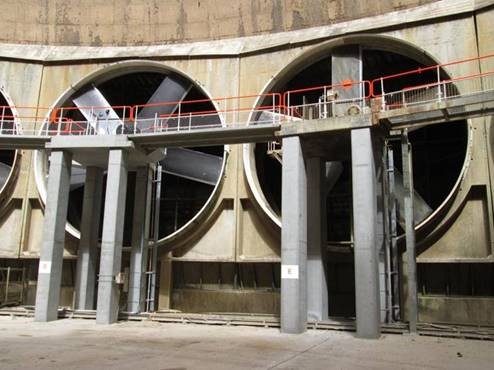
Condition monitoring specialist SENSONICS are experts in developing highly effective monitoring systems based on over 50 years of experience, including vibration monitoring products. A good example of this is the recent completion of a cooling tower monitoring project at a major Petrochemicals plant.
The Project Engineer at the site confirmed they were looking for a suitable system to monitor and protect cooling tower fans to prevent issues in case of failure of the fan blades. The requirement would be for individual systems to monitor each of the twenty motor / gearbox driven fans which were located between the motors and fans around the base of the cooling tower.
Early warning to avoid major damage
Confirming the specific requirements of the application, the Project Engineer commented, “The fan speed is 131RPM / 2.18Hz and what we want is to have a single transducer mounted on the gearbox (each fan is mounted on the gearbox output shaft) and the issue we want to address is the potential failure of the fan blades. When this has happened, the vibration has been so severe it damaged the concrete platform that the fan assembly is mounted on, as well as damaging adjacent fans from the fan projectiles”. Also, it was confirmed that, “The atmosphere where the fan is mounted is very wet and windy as the fans pull moist air out of the cooling tower packing and blows it across the gearbox and motor.”
Confirmation of these specific issues and challenges initially suggested the need to install a suitably ranged 4-20mA vibration transducer and then feed this to a closely located unit that has the start / stop buttons for the fans, enabling the tripping of a fan if the vibration is too high.
There was also a need to feed the overall vibration levels to the main plant DCS system. Due to the specific requirements of this application the frequency of response of the transducers would need to be lower than below 2Hz and there was no requirement for any local display or further diagnostics. A simple system which would reliably trip the fan out if it were failing and additionally to give an indication on DCS for the overall vibration level.
Conclusion
Once the specific requirements of this vibration monitoring application were confirmed, Sensonics were able to suggest and supply a combination of their DN26 G3 dual channel protection system along with their VEL/GLF low frequency (slow speed) velocity transducers. Established in the condition monitoring market for many years Sensonics has supplied thousands of these compact and innovative, din rail mountable DN26 G3 dual channel vibration monitors which have delivered reliable and cost-effective vibration monitoring across a wide range of installations. This high performance fully programmable signal conditioning unit is capable of monitoring 2 channels of absolute vibration, shaft vibration or shaft position, while a third channel option is available for measuring speed or for use a phase reference.
To complete the solution for this application is Sensonics VEL/GLF, a low frequency velocity transducer (slow speed) option proved to be ideally suited to the large fans which were operating at a minimum RPM. This electro dynamic sensor provides a superior performance compared to piezo-electric devices by combining high measurement sensitivity with a frequency response down to 0.5 Hz.
This level of sensitivity, along with excellent noise performance, provides the necessary dynamic range required for detailed analysis of gearbox vibration, so is ideal for measuring velocity vibration on equipment with speeds down to 30 RPM. Furthermore, the VEL/GLF has advantages over traditional piezoelectric based velocity vibration sensors which are susceptible to many forms of interference in low frequency applications that can result in spurious readings and alarms.
As a result of its robust design, the VEL/GLF offers high noise immunity due to the low impedance electro dynamic nature of the sensor assembly.
In addition to the filtering of high frequency events and since no electronic integration is required, means the design of the sensor is immune to the saturation problems that impair the reliability of other piezoelectric devices.
B
Bürkert Fluid Control Systems 11E
Ek Robotics GmbH 13 Emerson Automation Solutions - Systems 9F
FLIR SYSTEMS TRADING BELGIUM 17H
J
P
Phoenix Contact GmbH & Co. KG 12 ProMinent GmbH 16R
Rotork Plc 16S
Schubert & Salzer Control Systems GmbH 15 Sensonics 17 Servomex Group Ltd 10 SICK AG 9 Softing Industrial Automation GmbH 13T
Titan Enterprises Ltd 7V
Vaisala Oyj, Industrial Measurements 8TIMGlobal Media BV
177 Chaussée de La Hulpe, Bte 20, 1170 Brussels, Belgium
o.erenberk@tim-europe.com - www.pcne.eu
- Editorial Director:Orhan Erenberko.erenberk@tim-europe.com
- Editor:Kay Petermann k.petermann@tim-europe.com
- Associate Publisher:Marco Marangonim.marangoni@tim-europe.com
- Production & Order Administration:Francesca Lorinif.lorini@tim-europe.com
- Website & Newsletter:Marco Prinarim.prinari@tim-europe.com
- Marketing Manager:Marco Prinarim.prinari@tim-europe.com
- President:Orhan Erenberko.erenberk@tim-europe.com
Advertising Sales
Tel: +41 41 850 44 24
Tel: +32-(0)11-224397
Fax: +32-(0)11-224397
Tel: +32 (0) 2 318 67 37
Tel: +49-(0)9771-1779007
Tel: +39-02-7030 0088
Turkey
Tel: +90 (0) 212 366 02 76
Tel: +44 (0)7594 239 182
John Murphy
Tel: +1 616 682 4790
Fax: +1 616 682 4791
Incom Co. Ltd
Tel: +81-(0)3-3260-7871
Fax: +81-(0)3-3260-7833
Tel: +39(0)2-7030631
- PCN Europe December 2025 WebMag Essential source of information for professionals in the broad field of processing industries since 2004
- PCN Europe WebMag October 2025 Essential source of information for professionals in the broad field of processing industries since 2004
- PCN Europe WebMag August 2025 Essential source of information for professionals in the broad field of processing industries since 2004
- WebMag PCN Europe July 2025 Essential source of information for professionals in the broad field of processing industries since 2004
- PCN Europe WebMag April 2025 Essential source of information for professionals in the broad field of processing industries since 2004
- WebMag January/February 2025 Essential source of information for professionals in the broad field of processing industries since 2004
- PCN Europe WebMag August 2024 Essential source of information for professionals in the broad field of processing industries since 2004
- WebMag PCN Europe July 2024 Essential source of information for professionals in the broad field of processing industries since 2004
- PCN Europe WebMag May 2024 Essential source of information for professionals in the broad field of processing industries since 2004
- PCN Europe WebMag January/February 2024 Essential source of information for professionals in the broad field of processing industries since 2004