We use cookies to provide you with personalized services and improve our website. More info Ok
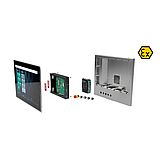
It wasn’t too long ago that hazardous zones and production zones were reasonably well separated. The areas where explosive gases, vapors, or combustible dusts were present tended to stay in their own very specific environments, and the equipment operating in those areas was specified accordingly. Today, however, that distinction is less clear.
Nijhuis Saur Industries (NSI), part of Saur Group, introduced PFAS Resolve at IFAT 2026 in Munich. It is a Saur Group solution: a modular concept combining advanced technologies to address the full spectrum of PFAS contamination directly on site.
UL certificates confirm the EtherCAT Technology Group’s assessment and demonstrate that EtherCAT meets IEC 62443 / CRA requirements for Security Level 2 without modifications
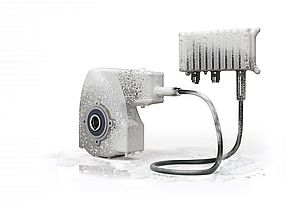
Making aluminium drives resistant to cleaning chemicals
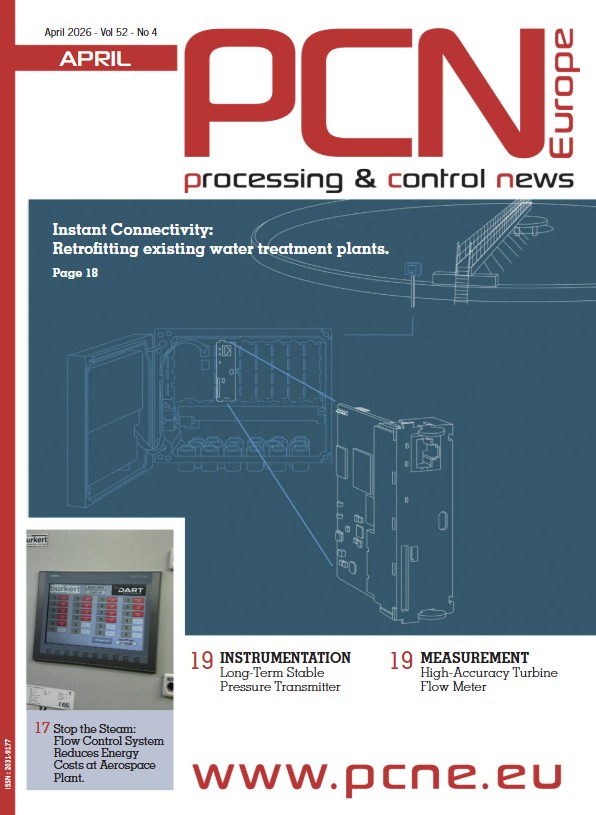
At a specialist aerospace equipment manufacturer in Portsmouth, an initiative to reduce energy costs identified steam energy usage that could be optimised. Dart Aerospace involved Bürkert’s engineering team to develop a system that could automatically close steam flow during non-operational periods. This custom-developed flow control system was set live in January 2025 and achieved return on investment in a matter of months.
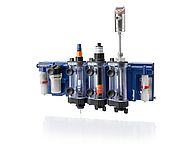
Sometimes, digitalization is really straightforward. For example, retrofitting existing water treatment plants to enable transfer of measurement and sensor data to the cloud is now as simple as plugging in an expansion card.
Easy-to-maintain solution provides opportunity for massive energy savings
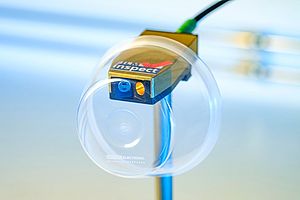
Ultra-thin barrier layers on packaging effectively protect food and medicine from oxygen, moisture, and contaminants. The Film-Inspect sensor, developed at Fraunhofer IPM, measures the quality of these barriers during the coating process, enabling process control for the first time.
A new wave of more efficient, adaptable and intelligent plant operations is emerging as conventional control systems evolve into modern, open and modular automation ecosystems. Stefan Basenach, Senior Vice President ABB Automation Technology, explains how ABB’s Automation Extended allows industrial organizations to fully embrace the opportunities of digitalization while futureproofing their operations.
ELGi Compressors Europe, a subsidiary of ELGi Equipments Limited announced the transformative operational results achieved by its customer, Guttsta Källa AB, a century-old Swedish natural mineral water producer. By implementing a high-performance ELGi compressed air solution, Guttsta Källa has dramatically increased its production throughput while delivering substantial annual energy savings of 120,000 kWh, positioning the company for continued growth in the premium Swedish bottled water market.
APC enables capacity increases without new hardware, energy savings and cost reduction through continuous optimization, and more stable product quality under fluctuating conditions.
Valuable energy is lost in pressure reduction stations, exhaust steam pipes and condensation systems. With Energify system, the company CFT GmbH offers a simple and robust solution for the cost-effective conversion of even slight pressure differences into energy. This saves electricity costs and lowers CO₂ emissions. The system performance is controlled precisely with sliding gate valves from Schubert & Salzer.
Thermoprocessing solution with comprehensive hardware and software components
The Hungarian MOL Group has achieved a significant milestone in its SHAPE TOMORROW Strategy by successfully completing its first ISCC PLUS-certified production run using circular feedstock at its MOL Petrochemicals site in Tiszaújváros.
Upgrading pneumatic control valves with digital capabilities can enhance process quality and efficiency. Though a full digital control system redesign might be prohibitive, integrating digital positioners and process controllers can offer many of the same benefits without requiring a complete overhaul. Author: Kieran Bennett, Industry Manager, Food & Beverage at Bürkert.
The largest oil producer in the Caribbean used Cogent DataHubTM software in a recent project to modernize their SCADA systems and integrate new IoT-enabled well-monitoring devices
Optimized performance with more torque for the same size
As businesses in industry continually aim to become environmentally sustainable, the demands are increasingly pushed throughout the supply chains. Liquid and gas flow controls, ubiquitous throughout industry, are highlighted within the sustainability drive. Optimising the performance of valves and their controls can directly improve energy efficiency for end users. Moreover, procurement teams are progressively checking that flow control suppliers are achieving a holistic position to meet sustainability goals.
The measurement technology and automation solutions specialist increased its sales, created new jobs worldwide, invested more than at any time in its history and maintained profit stability.
For pure compressed air with optimum energy efficiency
Safe and Reliable Signal Processing
Standardized Plug System for PROFINET over SPE
Robust sensor series hygiene-sensitive production and packaging processes
Plasma-coated paper as a plastic alternative for the packaging industry
Acquisition of Födisch Group will expand ABB’s position in industrial emission measurement.
Mitsubishi Electric technologies have enabled the development of innovative composting machines that can turn food waste into high-quality fertiliser in just 24 hours. This solution responds to the global problem of waste, in particular food waste, which constitutes about 30% of landfill waste. For Radisson Blu Scandinavia, this technology enables the daily processing of food waste from restaurants, room service, and other food-related operations.
Modules with broad range of functions and certifications for worldwide use in all areas of the process industry
Innovative concept with particularly high volumetric flow rates that are virtually identical in all directions
Personalized medicine means an elementary change for the pharma and biotech industry aimed at the production of large quantities. Pharmabotix is developing automation and robotics solutions for filling smaller batches as they occur in cell and gene therapy. The Swiss company is thereby focusing on a hygienically designed Yaskawa Motoman HD8 industrial robot.
Ethernet-APL extends connectivity all the way to process automation field devices. This is achieved with 2-wire cabling via Ethernet-APL switches at data transfer rates of 10 MB/s. Transmissions are intrinsically safe and therefore possible into Ex zones as well. This paves the way for the straightforward collection of large volumes of field data, which facilitates plant optimization as well as the development of new business models in process engineering. Yet physical transmission is only part of the story.
Clean water for rearing healthy fish – High-performance systems for sustainable production in RAS
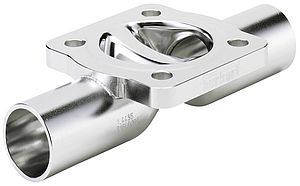
For fluid control applications in sectors such as pharmaceuticals as well as food & beverage production, manufacturers can increase productivity and reduce costs while helping to meet their sustainability objectives by integrating improved control valves. Hydroformed valve bodies for diaphragm valves achieve high strength and light weight. This makes hydroformed valve bodies far more energy efficient compared to forged or cast designs, and the manufacturing process is inherently more sustainable too.
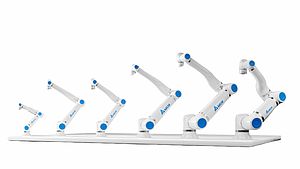
Precise and fast movements for a versatile range of applications
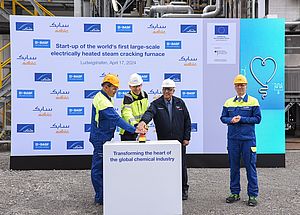
Joint development and construction of electric steam cracking furnaces at BASF’s Verbund site in Ludwigshafen. The technology has the potential to reduce CO2 emissions by at least 90% compared to conventional steam crackers.
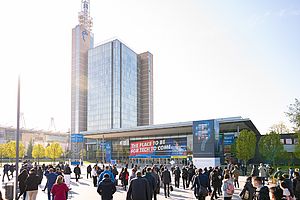
More than 130,000 visitors from 150 countries, 4,000 exhibiting companies, 300 startups and over 300 economic and political delegations from all over the world. These are the figures that emphasise the fair's position again after five successful days.
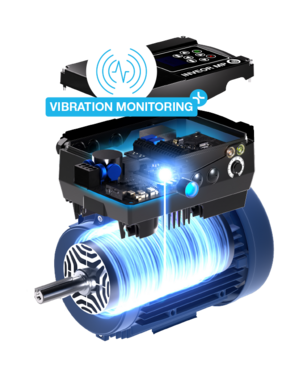
Minimising downtimes with predictive maintenance
Real-time insights for the identification of top-priority pollutants across cities and industries
Today, the majority of consumer goods and everyday items are made from petroleum-based plastics. In Germany alone, around six million tonnes of plastic waste is generated every year. About half of this is mechanically recycled into new materials; the rest is used for energy recovery. The incineration of this waste results in the release of CO2, a greenhouse gas. It is therefore important to keep more plastics in the material cycle for climate and environmental reasons. Eight Fraunhofer Institutes are developing new ideas and processes to significantly improve the mechanical recycling rate of plastics as part of the Waste4Future flagship project.
The session at the Emerson Exchange EMEA 2024 described improvements for a tank terminal in Antwerp. Dirk van Baelen, Emerson Area Sales Manager for Measurement Solutions in Flanders, described the improvement process in detail.
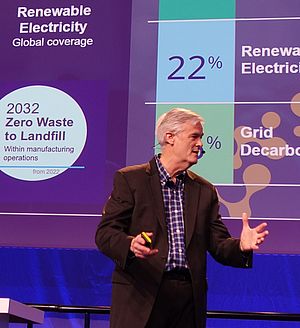
In the keynote at Emerson Exchange 2024 in Düsseldorf, Emersons’s Chief Sustainability Officer Mike Train and Chief Technology Officer Peter Zornio spoke about different aspects of their company's and customer's sustainability journey
Digital Edition Download PDF