We use cookies to provide you with personalized services and improve our website. More info Ok
Fast and reliable measurement over wide temperature ranges
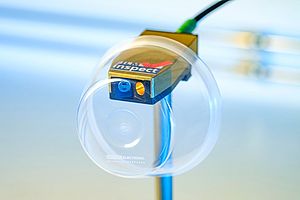
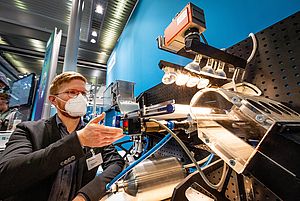
Ultra-thin barrier layers on packaging effectively protect food and medicine from oxygen, moisture, and contaminants. The Film-Inspect sensor, developed at Fraunhofer IPM, measures the quality of these barriers during the coating process, enabling process control for the first time.
Flexible adaptation to different user requirements
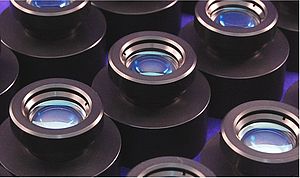
In response to the recent global shortage of Germanium, an essential material for optical components in long-wavelength infrared cameras, Optris has engineered and launched a new optical design that completely removes the need for Germanium. Germanium has long been the main material for lenses and windows in thermal imaging systems. However, issues like supply shortages, export restrictions,...
Digital Interfaces for Efficient Process Automation with Pyrometers or Infrared Cameras
Sensirion Connected Solutions, a subsidiary of Sensirion Holding AG specializing in sensor-based IoT solutions and services for emissions monitoring, announced the acquisition of Kuva Systems, a Cambridge-based innovator in image-based methane emissions monitoring.
Robust sensor series hygiene-sensitive production and packaging processes
Designed to maintain focus over a wide temperature range
Robust and radiation resistant optical systems for nuclear inspection applications
Intrinsically safe optical liquid level switches for direct contact with flammable or explosive liquids
PCN Europe spoke to Mark Pontin, Managing Director of Resolve Optics about the challenges for lenses in optical material inspection and sorting applications.
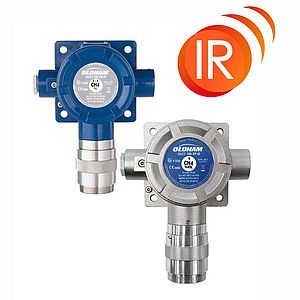
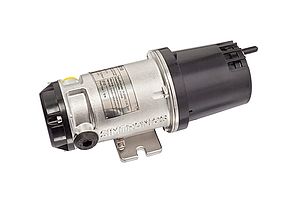
Cost-Effective Infrared Sensor for Fixed Gas Detector
Today, the majority of consumer goods and everyday items are made from petroleum-based plastics. In Germany alone, around six million tonnes of plastic waste is generated every year. About half of this is mechanically recycled into new materials; the rest is used for energy recovery. The incineration of this waste results in the release of CO2, a greenhouse gas. It is therefore important to keep more plastics in the material cycle for climate and environmental reasons. Eight Fraunhofer Institutes are developing new ideas and processes to significantly improve the mechanical recycling rate of plastics as part of the Waste4Future flagship project.
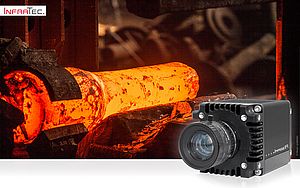
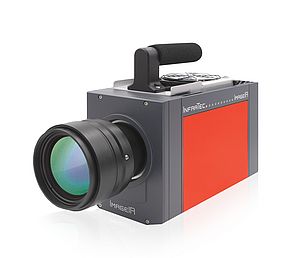
High-resolution, radiometrically calibrated for temperatures from 300 to 1,700 °C
Jørgen Andersen, the founder, is still active as chairman of the board for the camera manufacturer.
Hyperspectral cameras for four GHGSat satellites set to launch in 2024
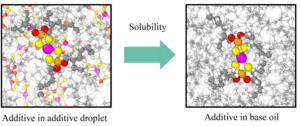
Mechanical bearings and gearboxes — like those used in electric vehicles and wind farms — are often treated with lubricants to avoid friction and wear. The voltage the components might be under impairs the effectiveness of the lubricants to such a degree that the tribological contacts are damaged. As part of the Lube.Life joint research project, researchers at the Fraunhofer Institute for Mechanics of Materials IWM have developed a virtual lubricant lab, which can be used to predict the effects of electrical fields on lubricant stability.
Seamless location and documentation of fugitive gas emissions
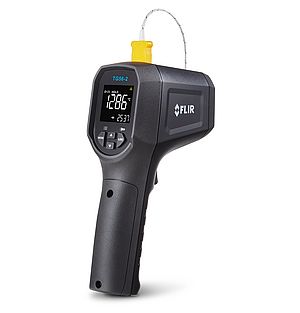
Accurate object targeting at long distances with a 30:1 distance to spot ratio
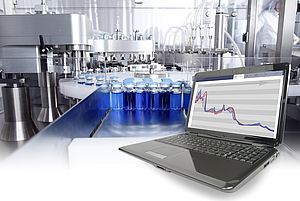
The importance of PAT software for Pharma 4.0-oriented data management
For use in demanding applications where direct contact with flammable or explosive liquids is required
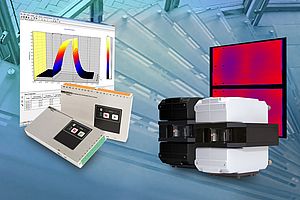
Advanced analytics and high connectivity for industrial automation, inspection and process monitoring
Cocoa plays an important role in Brazilian agriculture. However, the fruit of the cacao tree (cocoa pods) is prone to fungal diseases. pest infestations are responsible for crop losses of up to 40 percent worldwide. In collaboration with the State University of Campinas (Unicamp), Brazil, researchers at the Fraunhofer Institute for Process Engineering and Packaging IVV are looking to establish new ways of using damaged cocoa pods as part of the Damaged Beans project.
Two decades of innovation in infrared: Since 2003, Berlin-based Optris GmbH has been taking care of accurate, reliable and non-contact temperature measurement in many different industries and research.
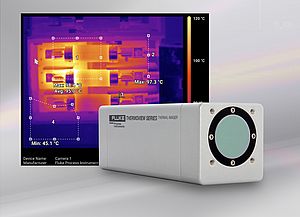
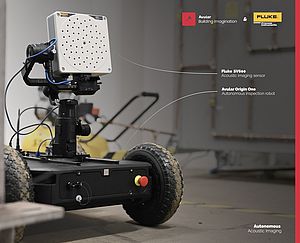
Fluke Process Instruments will present its acoustic and thermal imagers at Maintenance NEXT alongside Avular at Hall 2, Booth 106 from April 18 to 20.
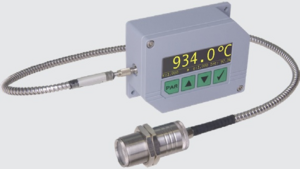
For non-contact measurement in a temperature range from 300 °C to 3000 °C
High measuring accuracy and high geometric, thermal and temporal resolution
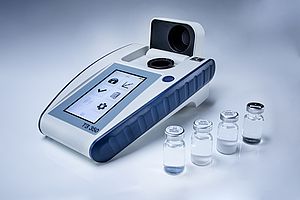
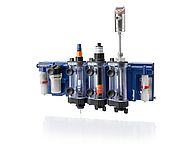
Mobile turbidity measurement with laboratory accuracy
With QAL1 certification for measuring SO₂
Higher Resolution and better colour correction for the short wave Infrared range
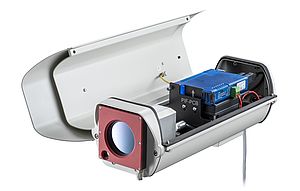
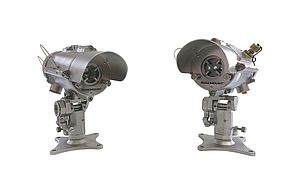
For use of infrared cameras under harsh environmental conditions
Fluke Process Instruments will showcase temperature monitoring solutions for quality control in glass manufacturing, forming and coating processes at the glasstec trade fair in Düsseldorf, Germany from September 20 to 23.
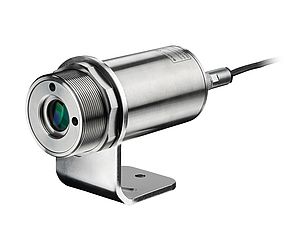
Four temperature ranges available for use in demanding environments
IR detection to first-class SIL 2 high demand mode and SIL 3-capable IEC 61508 ed. 2 with a proof test interval of 8760 hours.
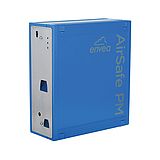
Easy-to-install gas detectors trigger alarms for toxic and combustible gases across wide areas
An interview with Mark Pontin, Managing Director at Resolve Optics Ltd. The company specialises in design, development and manufacture of custom lenses and optical modules.
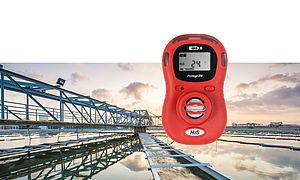
When choosing a gas detector for use in water treatment applications, engineers should focus on simple, efficient, proven products for this challenging marketplace.
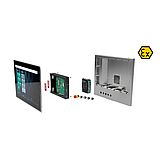
Temperature measurement from -40 °C to 2300 °C for use in hazardous environments
Proof of concept for inexpensive chip-integrated optical infrared components
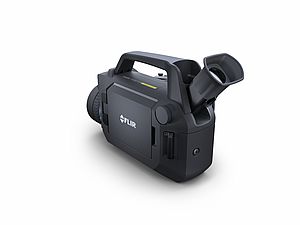
Auto hotspot finder and motor focus enable optimal use
Digital Edition Download PDF