We use cookies to provide you with personalized services and improve our website. More info Ok
Mihails Kusnezoff, Stefan Megel and Sindy Mosch from the Fraunhofer Institute for Ceramic Technologies and Systems IKTS in Dresden have developed a high-temperature electrolysis stack that is setting new standards worldwide: It generates hydrogen with unprecedented efficiency, can also operate as a fuel cell and is designed for industrial-scale serial production. The technology has earned the three researchers the Joseph von Fraunhofer Prize for 2026.
Ensuring quality and consistency in plastic manufacturing and recycling processes
Around 170 IEC experts for explosion protection meet in Mannheim for two weeks to discuss current safety-related topics such as robotics, drones, lithium batteries and more.
Fraunhofer project for better recycling processes of paper packaging
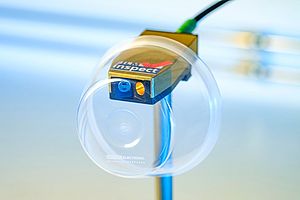
Ultra-thin barrier layers on packaging effectively protect food and medicine from oxygen, moisture, and contaminants. The Film-Inspect sensor, developed at Fraunhofer IPM, measures the quality of these barriers during the coating process, enabling process control for the first time.
Combination of laser and paramagnetic detection methods for a for a wide range of applications
A new wave of more efficient, adaptable and intelligent plant operations is emerging as conventional control systems evolve into modern, open and modular automation ecosystems. Stefan Basenach, Senior Vice President ABB Automation Technology, explains how ABB’s Automation Extended allows industrial organizations to fully embrace the opportunities of digitalization while futureproofing their operations.
Alfa Laval is turning circularity into action with the launch of ThinkCircularity, a take-back programme that recycles materials from its ThinkTop valve control units. The pilot project has been well received by customers and partners
Polyurethanes (PUR) are found in many products, such as upholstered furniture, foam or insulation materials, flooring, paints and even medical catheter tubes. The production of these high-demand plastics, however, relies on toxic isocyanate. Fraunhofer researchers have now developed an alternative production process using harmless dicarbamate.
The latest trends in robotics can be experienced at HANNOVER MESSE 2026 from April 20 to 24.
Hanna Lundin, product engineer at Emerson, explains in this article how simplified tank monitoring system architectures make it more feasible for companies to implement an automated solution to improve their inventory management, increase safety and efficiency.
The new treatment will reduce the high cost of transforming rice straw and citrus pruning waste into plant-based plastics.
APC enables capacity increases without new hardware, energy savings and cost reduction through continuous optimization, and more stable product quality under fluctuating conditions.
Robust technology monitors the most challenging wastewaters
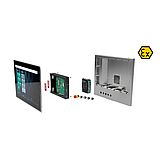
Intrinsically safe tablets and smartphones serve as digital and networked hubs for connected workers in the process industry
Precision and accuracy are essential for liquid dosing applications to ensure quality and safety. While these factors are vital at the micro level, macro scale applications, involving litres of product, can also make significant efficiency gains by optimising dosing control. To achieve this, selecting the right valve and measurement technology is vital, with the right level of automation.
October marks the 50th year since ABB’s Low Voltage Variable Speed Drive was first brought to market. Developed by Finnish company Strömberg, which went on to become part of ABB, VSD have revolutionized industrial energy consumption and decarbonization
With the growing complexity of technical plants, demographic shifts in the workforce, and increasingly stringent regulatory requirements, traditional methods of risk assessment are reaching their limits. To meet these challenges, TÜV SÜD has developed a digital approach, called iaHAZOP, that builds on established risk assessment methods and extends them into the digital domain. The process industry now has a tool that redefines the state-of-the-art in technical risk management. Authors: Michael Pfeifer, Senior Expert Adaptive Safety and Alexander Kurdas, Expert for Machinery and Electrical Safety. TÜV Süd
As the world urgently seeks ways to decarbonise, James Clements from Signal Group explains how gas analysis will perform a vital role – particularly in carbon capture, and not just for CO2 but for all of the important greenhouse gases.
The Hungarian MOL Group has achieved a significant milestone in its SHAPE TOMORROW Strategy by successfully completing its first ISCC PLUS-certified production run using circular feedstock at its MOL Petrochemicals site in Tiszaújváros.
Maintaining wind turbines and identifying potential vulnerabilities is expensive and time-consuming, especially when they are located offshore. As a result, rotor blades are often simply replaced, a costly process, when damage is merely suspected. The Fraunhofer Institute for Integrated Circuits IIS, working in concert with the Fraunhofer Institute for Wind Energy Systems IWES, has developed a solution that can be used to identify cracks and breakages inside the blades remotely at an early stage.
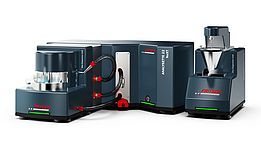
Precise material analysis plays a central role in many industries - from the pharmaceutical and food industries to construction materials, biotechnology and environmental sciences. Whether for quality assurance or for predicting material behaviour, the precise characterisation of particles is crucial.
Innovative technology transforms heavily contaminated polystyrene waste into valuable resources
From fertilizer to energy source of the future
Machine and plant manufacturer expands testing capacities, completion planned for the end of October
Agriculture is facing major challenges today. Climate change, increasing demands on sustainability and the pressure to achieve higher yields with lower resource consumption require innovative solutions. Greenhouses offer a controllable environment that can be made even more efficient through technological advances such as the Industrial Internet of Things (IIoT).
Integration of OPC UA with Allotrope Standards for seamlessly interoperable communications and information data in analytical labs
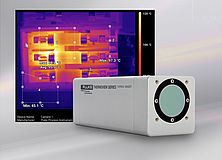
Maintaining Compliance with the European Union Methane Emissions Reduction 2024/1787 Ruling Requires Quantitative Optical Gas Imaging
Solenoid and process valves for pressures up to 1.000 bar
Battery Energy Storage Systems (BESS) are essential for storing renewable energy and ensuring grid stability. However, their implementation comes with inherent risks, particularly related to lithium-ion battery fires.
Fraunhofer researchers have developed sensor systems and measuring equipment that detect leaks in hydrogen lines and tanks. Applications for the new technology include continuous monitoring of hydrogen shipments and facilities in the chemical industry.
Pepperl+Fuchs Integrates RFID Reader Into VisuNet GXP HMI Platform and Enables Authentication up to Zone 1/21
Analysis technology insensitive to cross-contamination allows cost effective measurements
First Data Acquisition and Handling System passes the new international emissions monitoring standard test EN 17255
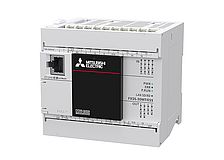
Mitsubishi Electric technologies have enabled the development of innovative composting machines that can turn food waste into high-quality fertiliser in just 24 hours. This solution responds to the global problem of waste, in particular food waste, which constitutes about 30% of landfill waste. For Radisson Blu Scandinavia, this technology enables the daily processing of food waste from restaurants, room service, and other food-related operations.
The climate crisis is driving demand for the electrification of transportation and energy infrastructure, which in turn is accelerating the need for more powerful and safer rechargeable batteries, including li-ion, sodium-ion, and solid-state. However, one of the key issues affecting battery quality is accurate humidity monitoring and dry control during manufacture.
Modular valve engineering for a more efficient and sustainable valve, suitable for liquids, gases and vapors
Leak detection with robust fixed mounted solution for monitoring and advanced analytics
Product packaging has always polarized: while it is indispensable for maintaining product and consumer safety, some materials are constantly under scrutiny regarding their environmental impact. The EU’s Packaging and Packaging Waste Regulation (PPWR) introduces binding regulations across the EU to mitigate these effects by reducing and replacing certain types of packaging. Packaging manufacturers and brand owners alike can meet those challenges and become PPWR-compliant without sacrificing efficiency and packing quality.
Steen-Hansen – a Norwegian manufacturer of fouling prevention and net protecting solutions for aquaculture use as well as of specialized industrial paint systems – has not only successfully overcome quality problems with its newly developed antifouling coatings, but also significantly shortened process times, simply by switching its production facilities to state-of-the-art mixing and dispersion technology.
Digital Edition Download PDF