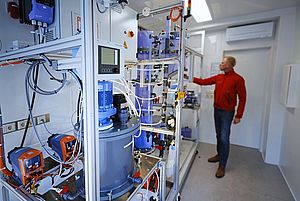
Nijhuis Saur Industries (NSI), part of Saur Group, introduced PFAS Resolve at IFAT 2026 in Munich. It is a Saur Group solution: a modular concept combining advanced technologies to address the full spectrum of PFAS contamination directly on site.
Fraunhofer project for better recycling processes of paper packaging
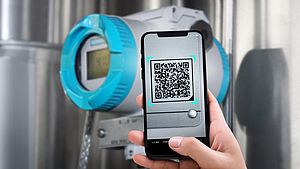
Alfa Laval is turning circularity into action with the launch of ThinkCircularity, a take-back programme that recycles materials from its ThinkTop valve control units. The pilot project has been well received by customers and partners
Polyurethanes (PUR) are found in many products, such as upholstered furniture, foam or insulation materials, flooring, paints and even medical catheter tubes. The production of these high-demand plastics, however, relies on toxic isocyanate. Fraunhofer researchers have now developed an alternative production process using harmless dicarbamate.
APC enables capacity increases without new hardware, energy savings and cost reduction through continuous optimization, and more stable product quality under fluctuating conditions.
BASF already produces metal-organic frameworks (MOFs) on an industrial scale that can store large quantities of CO₂ and water vapour in a limited space.
Field tests with end-users in the process industry show positive results in test installations
As the world urgently seeks ways to decarbonise, James Clements from Signal Group explains how gas analysis will perform a vital role – particularly in carbon capture, and not just for CO2 but for all of the important greenhouse gases.
Merck and Siemens are deepening their strategic partnership with the aim of accelerating AI and data-driven drug discovery and development
The Hungarian MOL Group has achieved a significant milestone in its SHAPE TOMORROW Strategy by successfully completing its first ISCC PLUS-certified production run using circular feedstock at its MOL Petrochemicals site in Tiszaújváros.
Yokogawa Collaborates with Shell on Robotics and AI Technology for Plant Maintenance
The safety solutions provider has been successful in its digitalisation strategy, which has been helped by international expansion and strategic acquisitions.
NOA cooperation for efficient and secure vertical communication at process automation production plants kicks off
All over the world, farmed salmon suffer from salmon lice, a small crab that infests the fish and feeds on their mucus, skin and blood, causing disease. However, an innovative solution from the Norwegian company Harbor AS offers effective protection against this parasite. The customised connection solutions required for this are provided by LAPP.
Solenoid pilot-operated valves designed for high-pressure applications help to comply with regulations
Ethernet-APL extends connectivity all the way to process automation field devices. This is achieved with 2-wire cabling via Ethernet-APL switches at data transfer rates of 10 MB/s. Transmissions are intrinsically safe and therefore possible into Ex zones as well. This paves the way for the straightforward collection of large volumes of field data, which facilitates plant optimization as well as the development of new business models in process engineering. Yet physical transmission is only part of the story.
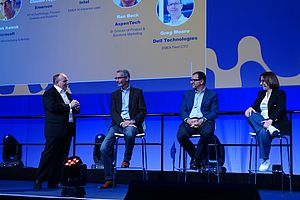
Under the heading "Forging Tomorrow – Unleashing the Industrial AI Benefits", a panel on the assessment of artificial intelligence by experts from the industry took place at the Emerson Exchange.
Expansion adds large-scale flow chemistry market expertise to the Japanese solution provider
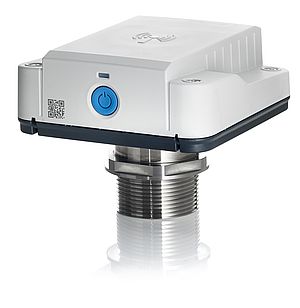
Supply chain optimization with wireless level measurement: The IIoT radar sensor measures fill levels in mobile tanks, containers and silos. The values are sent to the cloud so that they are available at any time and from anywhere. Close cooperation with users of the innovative sensor has led to further expansion of its fields of application since its market introduction three years ago.
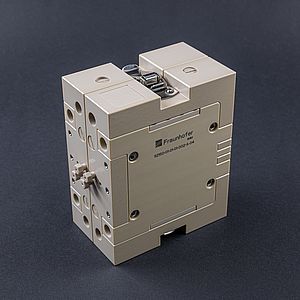
Electrochemical processes like water electrolysis will become increasingly important in the future in light of climate change and the resultant need for an energy and raw materials transition. The Fraunhofer Institute for Microengineering and Microsystems IMM is collaborating with hte GmbH to develop modular electrochemical cells. These flow cells are used in screening tasks, thereby helping optimize electrochemical production processes, such as water electrolysis.
New water treatment systems expand the product portfolio to include an essential element of the production and use of hydrogen.
Pilot project aims to demonstrate the scalability of PCF (Product Carbon Footprint) data exchange across an entire industry
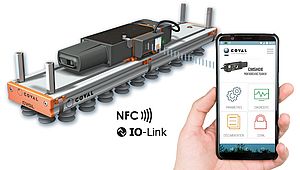
New generation of grippers with greater robustness and more communication interfaces
Industry pilot project with digital pressure transmitters
Chemical dosing based on reliable real-time data in Finish pilot plant
Sulzer and Blue Planet deepen collaboration to accelerate decarbonization of concrete and the construction sector
The Plastics Technology Centre will generate lactic acid and then PLA from fermentable sugars in biomass waste for use in packaging with active properties for cosmetics and other uses.
Looking at all of the business sectors in Germany, industry requires the largest amount of water. This makes access to efficient technology for cleaning and recycling water all the more important for this sector in particular. Ideally, this technology should also allow energy and valuable raw materials to be retrieved so that they can be reused in production.
Every day, sensors in production plants collect huge amounts of data. However, companies seldom realise how valuable the correct evaluation of large amounts of data is. This creates data graves whose potential remains undiscovered. The Heubach Group had a similar experience. However, with Festo AX artificial intelligence, it was proven that benefits for maintenance, engineering and productivity can be achieved from central PID data.
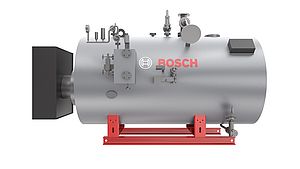
Carbon-neutral steam generation for industrial and commercial processes
“The chemical industry has finally woken up to the benefits of Industry 4.0 and is ready to spend in the face of challenges such as increasing margin pressures and a declining labor force,” says report from ABI Research
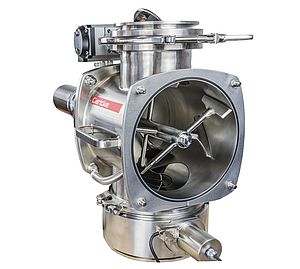
Reliable mixing processes for smaller batch sizes
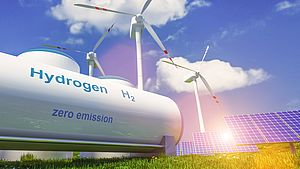
Technology for hydrogen generation expected to go into production in 2025
Market access in the United Kingdom: Schmersal Group receives certificate for solenoid interlocks as transition period for British market ends 2022
IO-Link is enjoying increasing popularity, with demand for the communications standard growing rapidly, especially in the food & beverage industry. The fieldbus-independent technology for point-to-point communication is easy to use and provides a cost-effective way to digitalize industrial plants.
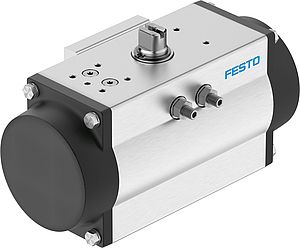
For the automation of different valve types in the chemical industry
Reliable measurement of hydrogen in gas networks
Zero liquid discharge(ZLD) is a waste management technique which transforms liquid waste streams from industrial plants into clean water, which can be reused in the process, and a minimal amount of solid residue, which often include valuable by-products.
Launch of sustainable lightweight Selective Hydrogenation Catalysts
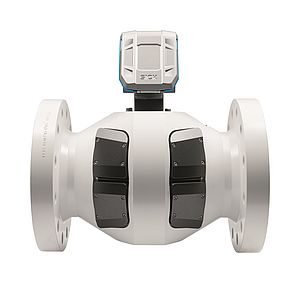
Precision for custody transfer and inventory control
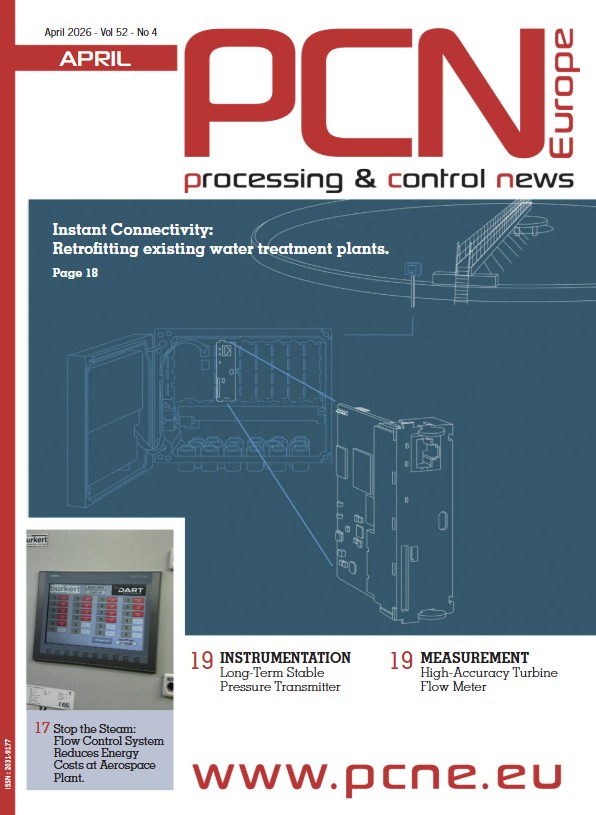
Digital Edition Download PDF