We use cookies to provide you with personalized services and improve our website. More info Ok
Polyurethanes (PUR) are found in many products, such as upholstered furniture, foam or insulation materials, flooring, paints and even medical catheter tubes. The production of these high-demand plastics, however, relies on toxic isocyanate. Fraunhofer researchers have now developed an alternative production process using harmless dicarbamate.
The Hungarian MOL Group has achieved a significant milestone in its SHAPE TOMORROW Strategy by successfully completing its first ISCC PLUS-certified production run using circular feedstock at its MOL Petrochemicals site in Tiszaújváros.
Precise material analysis plays a central role in many industries - from the pharmaceutical and food industries to construction materials, biotechnology and environmental sciences. Whether for quality assurance or for predicting material behaviour, the precise characterisation of particles is crucial.
The Packaging Competence Centre (PCC) is a joint venture between packaging machinery manufacturer Gerhard Schubert GmbH and Berlin-based packaging consultancy Berndt+Partner Group. The new organisation brings together experts in the fields of regulation, packaging design, materials and automation technology to support manufacturers to develop and implement sustainable packaging.
First Data Acquisition and Handling System passes the new international emissions monitoring standard test EN 17255
Wireless sensors for condition monitoring prevent unplanned downtime of critical centrifugal pump
Process industries, with a focus on Chemicals plants, are currently experiencing an evolution. Plant operators are grappling with a market that is shifting towards shorter product lifecycles, regularly changing feedstocks, an overall more precise yet rapid approach to production and narrowing profit margins.
Personalized medicine means an elementary change for the pharma and biotech industry aimed at the production of large quantities. Pharmabotix is developing automation and robotics solutions for filling smaller batches as they occur in cell and gene therapy. The Swiss company is thereby focusing on a hygienically designed Yaskawa Motoman HD8 industrial robot.
Leak detection with robust fixed mounted solution for monitoring and advanced analytics
For predictive maintenance in industrial settings
Product packaging has always polarized: while it is indispensable for maintaining product and consumer safety, some materials are constantly under scrutiny regarding their environmental impact. The EU’s Packaging and Packaging Waste Regulation (PPWR) introduces binding regulations across the EU to mitigate these effects by reducing and replacing certain types of packaging. Packaging manufacturers and brand owners alike can meet those challenges and become PPWR-compliant without sacrificing efficiency and packing quality.
High precision measurements despite high temperatures
Endress+Hauser announces its partnership with the Single Pair Ethernet System Alliance. This strategic alliance underscores the company’s commitment to simplifying customer’s digitalization needs and investing in the future of automation.
Minimising downtimes with predictive maintenance
Ethernet APL is a game changer for networking at field level – especially for the process industry. It offers consistent networking with a single protocol, high speeds for cable lengths of up to 1000 metres and intrinsic safety for areas at risk of explosion.
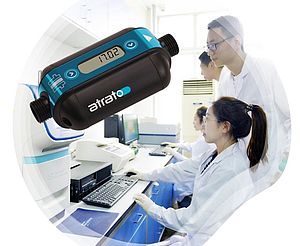
Easy-to-use USB-interface for direct monitoring
As a pillar of the global economy, the process industry is facing major challenges: high energy consumption and high use of fossil fuels, rising energy costs and stricter legal regulations make the decarbonization of the industry increasingly urgent. In order to achieve CO2 reductions and higher energy efficiency in their own operations, it is essential that companies drive the digitalization and automation of their entire production process. Author: Axel Lorenz, CEO Process Automation, Siemens
For compressed air consumption measurement and avoidance of losses due to leakages and inefficiencies
German Fraunhofer researchers have developed an extremely heat-resistant ceramic-based ink. For the first time, this enables metal components processed in the automotive industry at temperatures over 1,000 °C to be marked with a code. This opens up wide-ranging possibilities for designing process chains in the industry more efficiently and reducing their carbon footprint significantly.
The quality of manufactured or processed products at cleanroom facilities are protected by applicable good manufacturing practices (GMP) that specify stringent environmental monitoring requirements.
Transforming Plant Process Management with AI
First test phase under real condition starts at cement plant in Beckum, Germany
Jury chooses new Phoenix Contact product for fuctional safety in compact design
The green transition demands efficient storage of renewable energy, to which end a number of Power-to-X plants are under construction in Denmark. They are designed to convert green electricity to another form of energy.
Cocoa plays an important role in Brazilian agriculture. However, the fruit of the cacao tree (cocoa pods) is prone to fungal diseases. pest infestations are responsible for crop losses of up to 40 percent worldwide. In collaboration with the State University of Campinas (Unicamp), Brazil, researchers at the Fraunhofer Institute for Process Engineering and Packaging IVV are looking to establish new ways of using damaged cocoa pods as part of the Damaged Beans project.
The innovative data science tool, MELSOFT MaiLab (Mitsubishi Electric AI Laboratory) helps companies drive productivity improvements on manufacturing lines. The new solution offers an intuitive, operator-centric platform that leverages artificial intelligence (AI) to automatically optimise operations while maximising equipment monitoring, visibility and diagnostics.
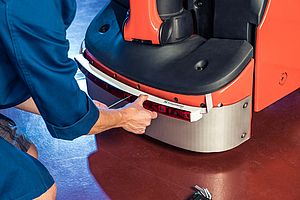
Fraunhofer Application Center develops new optical safety technology reduces transportation accidents
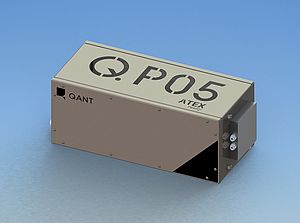
Real-time particle monitoring allows plant optimization
Waste heat from cooling water system to be used as a low-carbon energy source for steam production. Feasibility study to investigate project at Ludwigshafen site
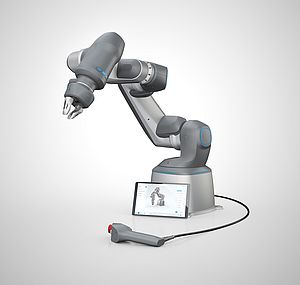
Introduction of new category of collaborative robot arm
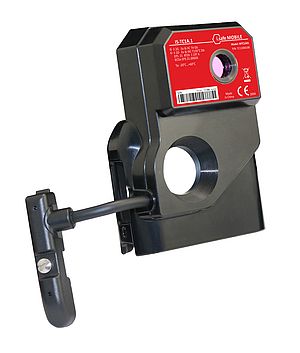
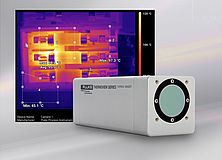
Variable measuring ranges from -40 to +330 °C for capture and analysis of thermal images
For commissioning, inspection and mobile maintenance tasks
Flexible unit with integrated image processing and AI
The Fraunhofer Cluster of Excellence Circular Plastics Economy CCPE and its Institute for Environmental, Safety and Energy Technology UMSICHT have developed an advanced recycling process for used plastics. The pilot project with SABIC and Procter & Gamble serves to demonstrate the feasibility of closed-loop recycling for single-use facemasks.
IIoT-ready technology starts with pH/ORP, conductivity and dissolved oxygen sensors and will be extended
Ethernet-APL for wide use in process control
Plastic waste redirected into production cycles, distinct greenhouse gas reduction with product properties unchanged
As the importance of reducing CO2 emissions continues to increase, companies are developing new technologies that will enable this on an industrial scale. In the case of C-Capture, perfecting the carbon capture process requires precise solvent control.
SAMSON and InfraServ Wiesbaden Join Forces to Develop Digital Information System for Biological Water Treatment Plant in Industrial Park
Bringing environment variables to higher-level systems for central condition monitoring in the IIoT
Digital Edition Download PDF