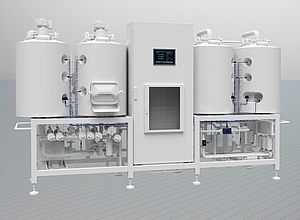
Nijhuis Saur Industries (NSI), part of Saur Group, introduced PFAS Resolve at IFAT 2026 in Munich. It is a Saur Group solution: a modular concept combining advanced technologies to address the full spectrum of PFAS contamination directly on site.
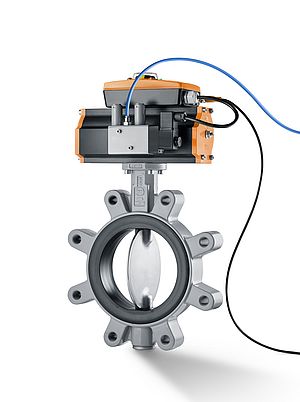
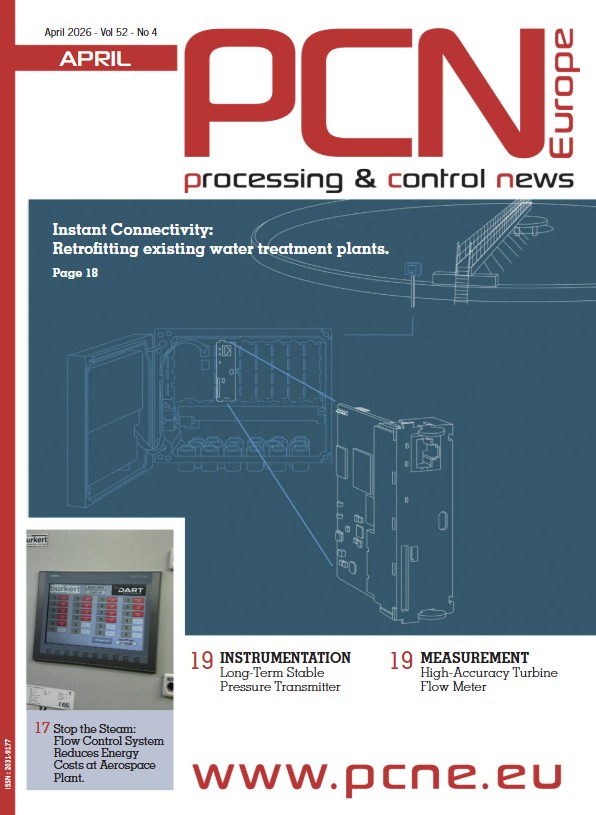
At a specialist aerospace equipment manufacturer in Portsmouth, an initiative to reduce energy costs identified steam energy usage that could be optimised. Dart Aerospace involved Bürkert’s engineering team to develop a system that could automatically close steam flow during non-operational periods. This custom-developed flow control system was set live in January 2025 and achieved return on investment in a matter of months.
A new wave of more efficient, adaptable and intelligent plant operations is emerging as conventional control systems evolve into modern, open and modular automation ecosystems. Stefan Basenach, Senior Vice President ABB Automation Technology, explains how ABB’s Automation Extended allows industrial organizations to fully embrace the opportunities of digitalization while futureproofing their operations.
In response to the recent global shortage of Germanium, an essential material for optical components in long-wavelength infrared cameras, Optris has engineered and launched a new optical design that completely removes the need for Germanium. Germanium has long been the main material for lenses and windows in thermal imaging systems. However, issues like supply shortages, export restrictions,...
Elimination of measurement blind spots with safe and easy-to-install solution
As the world urgently seeks ways to decarbonise, James Clements from Signal Group explains how gas analysis will perform a vital role – particularly in carbon capture, and not just for CO2 but for all of the important greenhouse gases.
Upgrading pneumatic control valves with digital capabilities can enhance process quality and efficiency. Though a full digital control system redesign might be prohibitive, integrating digital positioners and process controllers can offer many of the same benefits without requiring a complete overhaul. Author: Kieran Bennett, Industry Manager, Food & Beverage at Bürkert.
As businesses in industry continually aim to become environmentally sustainable, the demands are increasingly pushed throughout the supply chains. Liquid and gas flow controls, ubiquitous throughout industry, are highlighted within the sustainability drive. Optimising the performance of valves and their controls can directly improve energy efficiency for end users. Moreover, procurement teams are progressively checking that flow control suppliers are achieving a holistic position to meet sustainability goals.
Pepperl+Fuchs Integrates RFID Reader Into VisuNet GXP HMI Platform and Enables Authentication up to Zone 1/21
Solenoid pilot-operated valves designed for high-pressure applications help to comply with regulations
A hydrogen-fuelled kiln test rig is helping brick and ceramics manufacturers to support the energy transition. In a first for the UK, a kiln and furnace manufacturer has partnered with flow control specialist Bürkert to manage the precise and reliable control of hydrogen. The result for end users is increased production quality and confidence in the transition to hydrogen, enabling a more sustainable process.
Siemens named one of the global preferred suppliers for Merck's next-level automation, boosting global smart manufacturing with Siemens Xcelerator platform
Finding possible contaminants in renewable hydrogen helps prevent equipment damages
Mitsubishi Electric technologies have enabled the development of innovative composting machines that can turn food waste into high-quality fertiliser in just 24 hours. This solution responds to the global problem of waste, in particular food waste, which constitutes about 30% of landfill waste. For Radisson Blu Scandinavia, this technology enables the daily processing of food waste from restaurants, room service, and other food-related operations.
The climate crisis is driving demand for the electrification of transportation and energy infrastructure, which in turn is accelerating the need for more powerful and safer rechargeable batteries, including li-ion, sodium-ion, and solid-state. However, one of the key issues affecting battery quality is accurate humidity monitoring and dry control during manufacture.
Unique optical module fits for a wide range of mounting arrangements used by different satellite camera systems
New Emerson Software solution provides a sandbox to deploy and run applications with easy, secure, contextualized data access
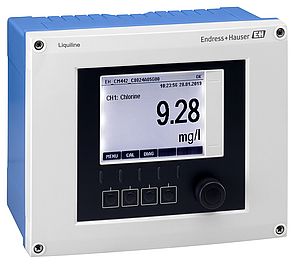
Water management is an increasingly important and challenging issue, particularly in light of concerns such as water scarcity. Greater value is thus being placed on disinfection processes. To protect against bacteria, viruses and other harmful organisms, drinking water requires disinfection and hygiene measures. This also applies to the environment in order that lakes and water-based activities can be enjoyed without hesitation. Disinfection processes play a large role in industrial processes as well. In the beverage industry, drinking water flows directly into the products, while surface waters are frequently used as a coolant in other segments such as energy generation.
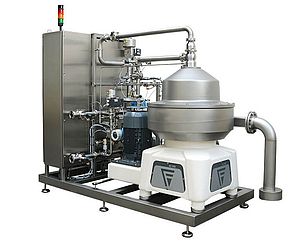
Highly efficient cleaning device for safe processes and higher production uptime
Sulzer’s repair expertise supports reliability of water utilities with large-scale pump refurbishment project in Africa
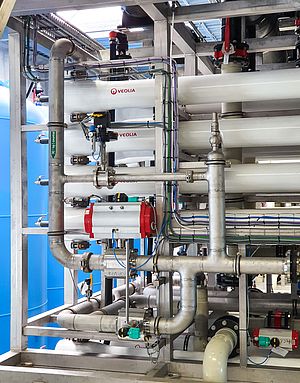
Veolia Water Technologies has built an ultra-modern plant to produce drinking water in Ostend, Belgium. In a multi-stage filtration process, the water supplier is now producing drinking water of excellent quality – far above the statutory requirements. At critical points of the process – during reverse osmosis, filtration with activated carbon and remineralisation of the water – sliding gate valves made by Schubert & Salzer Control Systems are responsible for regulating pressure and flow rate.
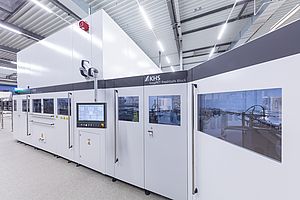
To date, the KHS coating of wafer-thin, chemically pure glass on the inside wall of PET bottles was primarily applied to improve the quality and shelf life of sensitive soft drinks and juice. VILSA-BRUNNEN Otto Rodekohr GmbH is now the first mineral water bottling plant to profit from Plasmax technology. The family business is consistently investing in its product quality and the long-lasting freshness protection of its premium beverages – and in doing so is setting standards on the market.
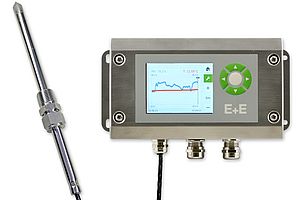
Heatable sensing element offers accurate measurements and guarantees long-term stability
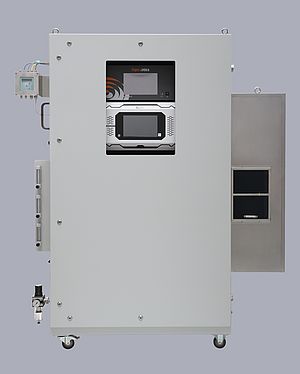
The use of conventional analysis equipment in hazardous areas is complicated due to a lack of approvals. Equipment without ATEX or IECEx certification must be specially protected so that it does not act as an ignition source. At the same time, analysis equipment is essential for many processes. For example, for testing the purity of hydrogen at hydrogen refuelling stations.
New water treatment systems expand the product portfolio to include an essential element of the production and use of hydrogen.
As an innovative technology leader, JUMO has been supplying high-quality measurement and automation technology for the food industry for decades. So it was an obvious idea to have our own anniversary beer created for the 75th anniversary in 2023. In the brewing process, all relevant JUMO products that are supplied to the brewing industry were to be combined in one application. The choice therefore fell on an in-house, modern, and highly efficient brewery plant.
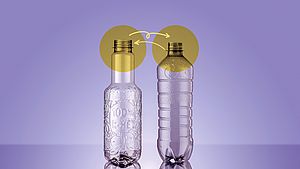
Whereas in the past only one category of product was usually run on aseptic lines, bottlers of sensitive beverages now face an ever-growing demand for flexibility. Beverage producers who process both aseptically filled beverages and juice and carbonated soft drinks need to use 38-millimeter bottle necks for the former and containers with 28-millimeter openings for the latter. If the bottle neck is to be changed on a PET line, however, to date a comparatively large amount of effort was required to convert the stretch blow molder in particular.
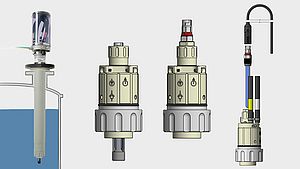
Adapter for locking and cleaning of sensors in immersion fittings
For harsh and demanding environments in the operational temperature range of -30 °C to +70 °C
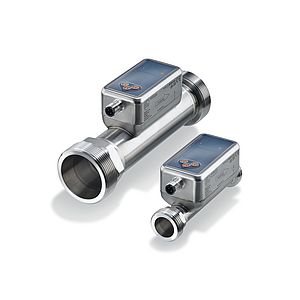
1’’ or 2’’ process connections for measuring ranges up to 1000 l/min
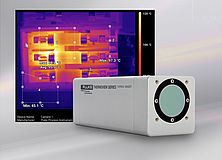
Pocket-sized thermal camera for use in hot working zones
How Raman process monitoring is providing a spectra of benefits across the biopharmaceutical industry. Dean Stuart, Product Manager at Thermo Fisher Scientific
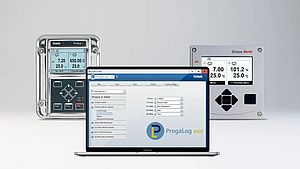
Conveniently configure offline for different languages
For easy handling and cleaning without tools
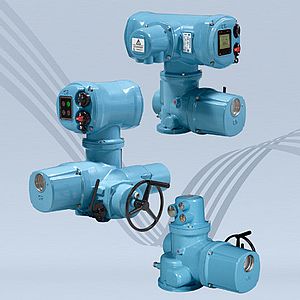
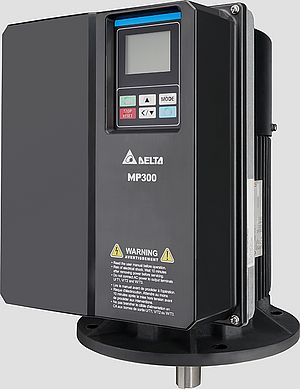
Energy-saving motor/inverter solutions for new installations and retrofitting
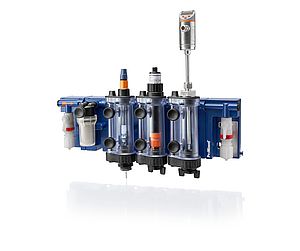
Cloud-based, smart solutions deliver transparent, digital communication. ProMinent’s web-based platform ensures safe monitoring of system statuses and process data in the cloud from any location. This allows operators in various sectors to improve their process reliability and system efficiency.
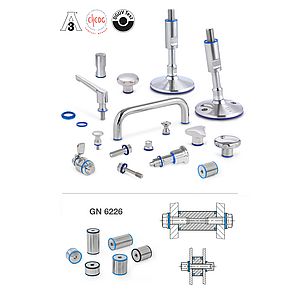
Sealed parts for very high hygienic requirements
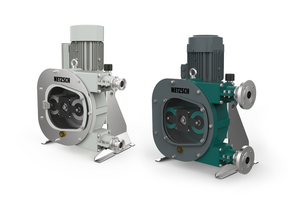
For particularly aggressive and abrasive media
Specially developed valve for installation with plastic pipes
Variety of sizes for different size of applications and plants
Digital Edition Download PDF