We use cookies to provide you with personalized services and improve our website. More info Ok
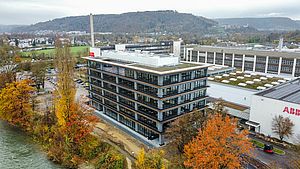
Competence Centre for Power Electronics strenghtened by setting up 500 state-of-the-art workplaces
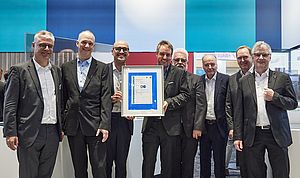
Official handover at SPS 2023: Representatives of the company receive the certificate from the TÜV SÜD experts
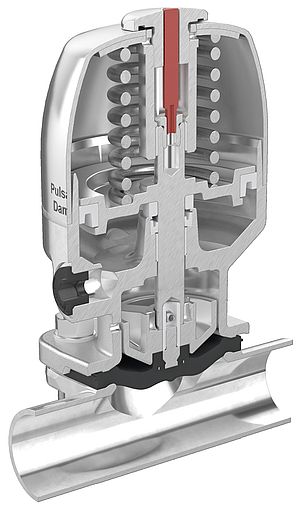
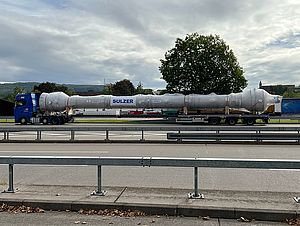
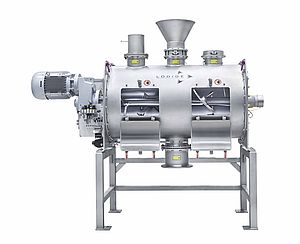
CIP/SIP capable solution to avoid pressure surges in plants
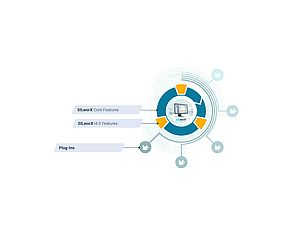
Simplified collaborative engineering for automation projects
First Step of Implementation for PROFINET Security Classes
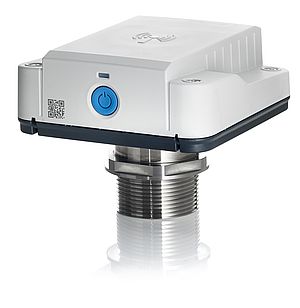
Supply chain optimization with wireless level measurement: The IIoT radar sensor measures fill levels in mobile tanks, containers and silos. The values are sent to the cloud so that they are available at any time and from anywhere. Close cooperation with users of the innovative sensor has led to further expansion of its fields of application since its market introduction three years ago.
German sensor company SICK and Swiss measurement and automation technology specialist Endress+Hauser want to intensify their cooperation. By bundling their strengths, the companies are striving to provide even better support for their customers in important areas such as energy and resource efficiency and protection of the climate and environment.
A digital twin is not only the basis for a holistic view of the system and the individual processes. It is also the basis for automatic routines that react autonomously to changes in the process. It helps applications identify unwanted situations and the countermeasures to be taken often long before the plant comes to a standstill. Predictive maintenance is a key to the efficient operation of a process plant. However, digital processes are not a question of individual products or components, but require the seamless interaction of people and systems.
Yokogawa has joined the Common Vulnerabilities and Exposures (CVE) Program as a CVE Numbering Authority (CNA). As of October 24, 2023 (USA), the company is authorized to assign CVE IDs to cybersecurity vulnerabilities for Yokogawa Group companies' products and Yokogawa Group subsidiaries' products.
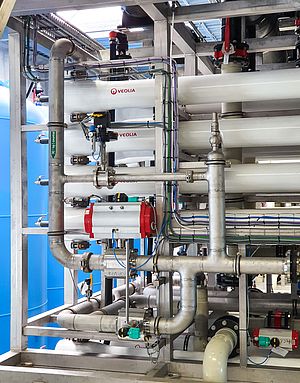
Veolia Water Technologies has built an ultra-modern plant to produce drinking water in Ostend, Belgium. In a multi-stage filtration process, the water supplier is now producing drinking water of excellent quality – far above the statutory requirements. At critical points of the process – during reverse osmosis, filtration with activated carbon and remineralisation of the water – sliding gate valves made by Schubert & Salzer Control Systems are responsible for regulating pressure and flow rate.
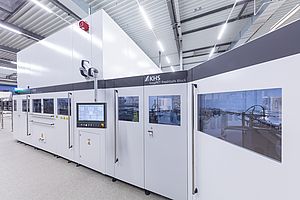
To date, the KHS coating of wafer-thin, chemically pure glass on the inside wall of PET bottles was primarily applied to improve the quality and shelf life of sensitive soft drinks and juice. VILSA-BRUNNEN Otto Rodekohr GmbH is now the first mineral water bottling plant to profit from Plasmax technology. The family business is consistently investing in its product quality and the long-lasting freshness protection of its premium beverages – and in doing so is setting standards on the market.
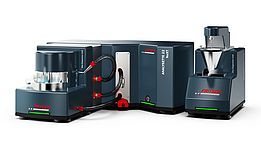
Photometer with UV-absorption-based measurement principle
GEA supplies Britvic, one of UK’s leading soft drinks manufacturers, with a heat recovery system at its Beckton site, in London. The installation begins this summer and will result in cutting the factory’s carbon emissions by an estimated 1,200 tons annually – equivalent to the annual energy usage of around 500 UK homes.
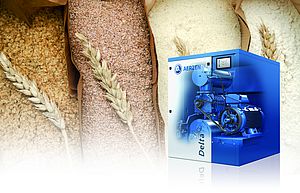
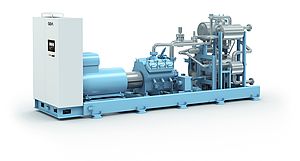
Pneumatic conveying processes have a key function in the material flow of many industrial companies and place correspondingly high demands on blower technology, with efficiency, reliability and purity of the conveying air particularly in focus.
World largest plant to produce 12.000 tons of biomethanol from raw pulp mill waste.
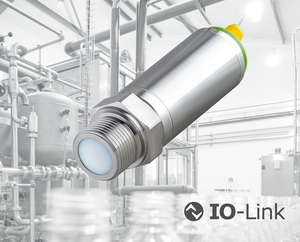
For level measurement in a hygienic environment
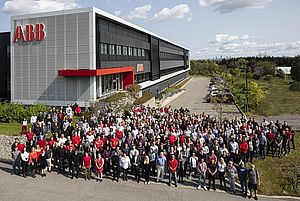
Established in 1973, today the ABB factory in Quebec, Canada manufactures market leading products for industrial analytical measurement.
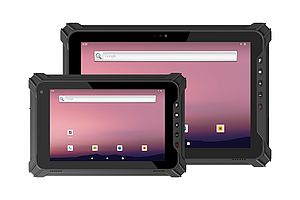
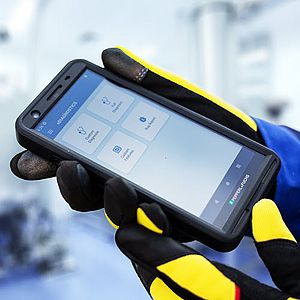
Mil-Standard devices available with different operating systems for versatile scenarios
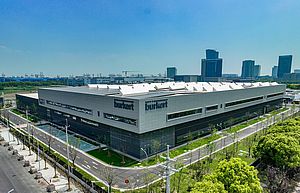
The new Bürkert building complex in Taicang Port, in the east of the People’s Republic of China, was officially opened at a inauguration ceremony on 11 October 2023. With the new building, Bürkert Fluid Control Systems is strengthening its position in the Asian area and can therefore support customers more closely on site.
For increases cost efficiency amd lower lead times
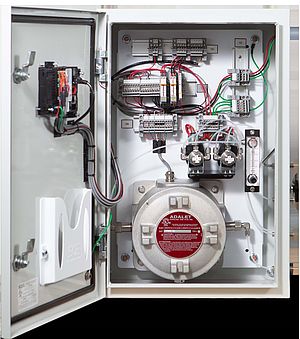
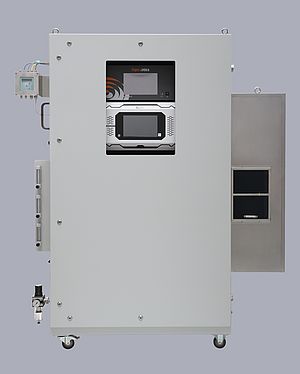
Two-in-One Analyzer for measuring hydrogen sulfide (H2S) and carbon dioxide (CO2) as part of quality and process control
6-inch device combines European inhouse expertise
Moxa announces that the company has achieved the world’s first IEC 62443-4-2 Security Level 2 (SL2) certification for industrial secure routers of the EDR-G9010 and TN-4900 Series.
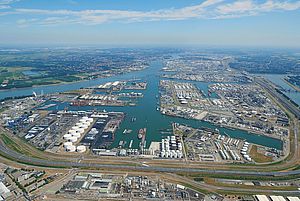
Port of Rotterdam and Yokogawa kick off feasibility study for optimization of efficient energy use
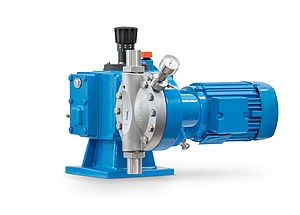
For applications with flow rates up to 2000 l/h
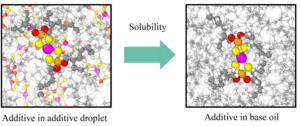
Mechanical bearings and gearboxes — like those used in electric vehicles and wind farms — are often treated with lubricants to avoid friction and wear. The voltage the components might be under impairs the effectiveness of the lubricants to such a degree that the tribological contacts are damaged. As part of the Lube.Life joint research project, researchers at the Fraunhofer Institute for Mechanics of Materials IWM have developed a virtual lubricant lab, which can be used to predict the effects of electrical fields on lubricant stability.
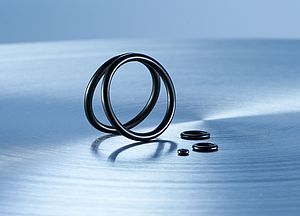
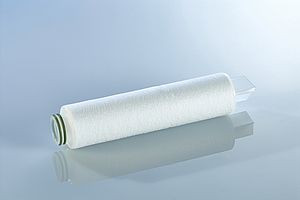
New compound with FDA approval usable in CIP and SIP processes
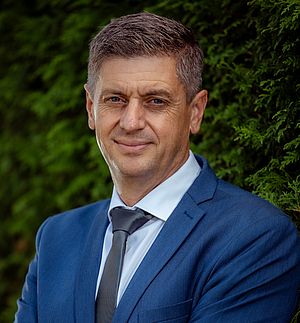
Successor from Schneider Electric to lead the executive strategy for the open FDT/DTM standard
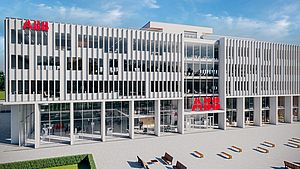
$280 million will be spent on integrated campus for automated manufacturing, R&D, customer experience and training centers.
A PCN Europe Interview with Steve Biegacki, Managing Director of the FDT Group
As a pillar of the global economy, the process industry is facing major challenges: high energy consumption and high use of fossil fuels, rising energy costs and stricter legal regulations make the decarbonization of the industry increasingly urgent. In order to achieve CO2 reductions and higher energy efficiency in their own operations, it is essential that companies drive the digitalization and automation of their entire production process. Author: Axel Lorenz, CEO Process Automation, Siemens
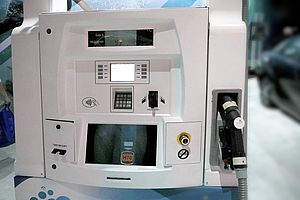
With the increase in hydrogen mobility, the network of refuelling stations is densifying. The sector is investing heavily into the infrastructure. This creates a significant demand for measurement technology, mainly to ensure the safety of the refuelling process.
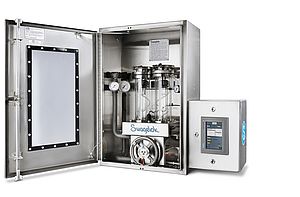
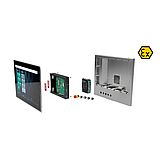
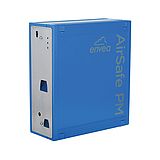
The use of conventional analysis equipment in hazardous areas is complicated due to a lack of approvals. Equipment without ATEX or IECEx certification must be specially protected so that it does not act as an ignition source. At the same time, analysis equipment is essential for many processes. For example, for testing the purity of hydrogen at hydrogen refuelling stations.
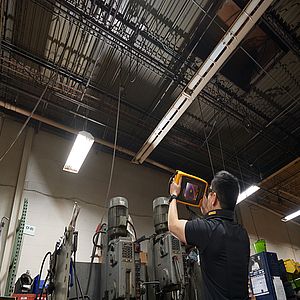
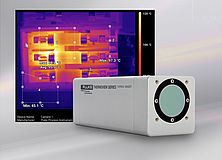
Fluke interviewed a manufacturer regarding air leaks
Schenck Process repositions itself with focus on digital solutions and sustainable bulk solids processes
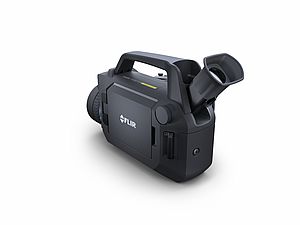
Seamless location and documentation of fugitive gas emissions
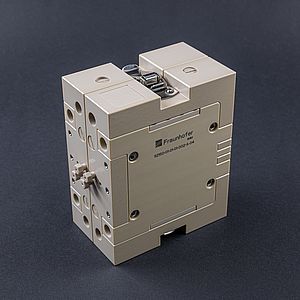
Electrochemical processes like water electrolysis will become increasingly important in the future in light of climate change and the resultant need for an energy and raw materials transition. The Fraunhofer Institute for Microengineering and Microsystems IMM is collaborating with hte GmbH to develop modular electrochemical cells. These flow cells are used in screening tasks, thereby helping optimize electrochemical production processes, such as water electrolysis.
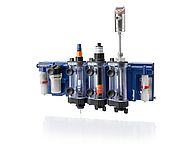
Design features offer a solution for common challenges associated with manual sampling
Certified for use in Safety Instrumented Systems up to SIL 3
High chemical resistance for use in demanding applications
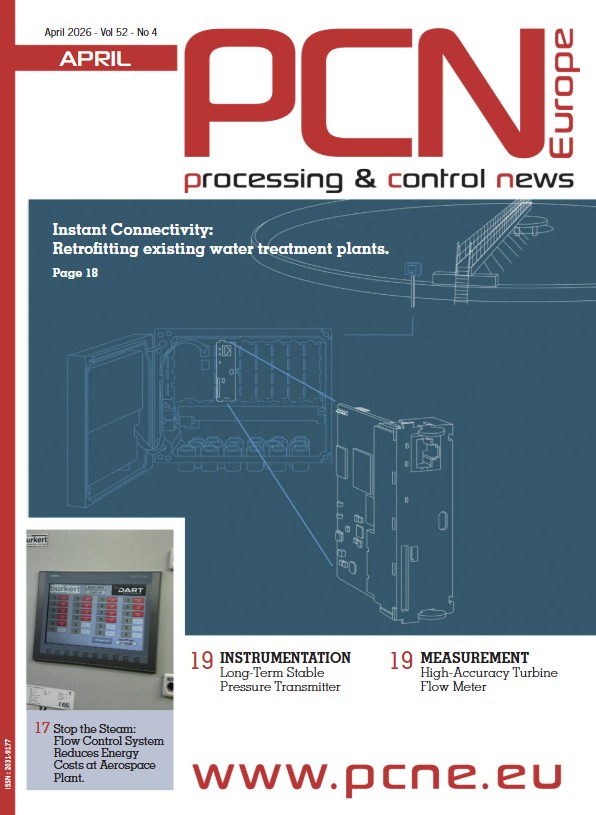
Digital Edition Download PDF