We use cookies to provide you with personalized services and improve our website. More info Ok
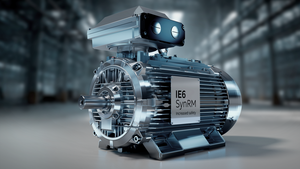
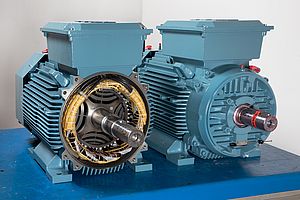
Certification to ATEX and IECEx requirements enables IE6 technology to be deployed in hazardous areas
Hanna Lundin, product engineer at Emerson, explains in this article how simplified tank monitoring system architectures make it more feasible for companies to implement an automated solution to improve their inventory management, increase safety and efficiency.
Precision and accuracy are essential for liquid dosing applications to ensure quality and safety. While these factors are vital at the micro level, macro scale applications, involving litres of product, can also make significant efficiency gains by optimising dosing control. To achieve this, selecting the right valve and measurement technology is vital, with the right level of automation.
With the growing complexity of technical plants, demographic shifts in the workforce, and increasingly stringent regulatory requirements, traditional methods of risk assessment are reaching their limits. To meet these challenges, TÜV SÜD has developed a digital approach, called iaHAZOP, that builds on established risk assessment methods and extends them into the digital domain. The process industry now has a tool that redefines the state-of-the-art in technical risk management. Authors: Michael Pfeifer, Senior Expert Adaptive Safety and Alexander Kurdas, Expert for Machinery and Electrical Safety. TÜV Süd
Upgrading pneumatic control valves with digital capabilities can enhance process quality and efficiency. Though a full digital control system redesign might be prohibitive, integrating digital positioners and process controllers can offer many of the same benefits without requiring a complete overhaul. Author: Kieran Bennett, Industry Manager, Food & Beverage at Bürkert.
For proactive maintenance of air systems and detection of energy saving potentials
Battery Energy Storage Systems (BESS) are essential for storing renewable energy and ensuring grid stability. However, their implementation comes with inherent risks, particularly related to lithium-ion battery fires.
Ethernet-APL extends connectivity all the way to process automation field devices. This is achieved with 2-wire cabling via Ethernet-APL switches at data transfer rates of 10 MB/s. Transmissions are intrinsically safe and therefore possible into Ex zones as well. This paves the way for the straightforward collection of large volumes of field data, which facilitates plant optimization as well as the development of new business models in process engineering. Yet physical transmission is only part of the story.
Product packaging has always polarized: while it is indispensable for maintaining product and consumer safety, some materials are constantly under scrutiny regarding their environmental impact. The EU’s Packaging and Packaging Waste Regulation (PPWR) introduces binding regulations across the EU to mitigate these effects by reducing and replacing certain types of packaging. Packaging manufacturers and brand owners alike can meet those challenges and become PPWR-compliant without sacrificing efficiency and packing quality.
For fluid control applications in sectors such as pharmaceuticals as well as food & beverage production, manufacturers can increase productivity and reduce costs while helping to meet their sustainability objectives by integrating improved control valves. Hydroformed valve bodies for diaphragm valves achieve high strength and light weight. This makes hydroformed valve bodies far more energy efficient compared to forged or cast designs, and the manufacturing process is inherently more sustainable too.
Digital Plant Asset Management is a topic that often comes up in discussions about process engineering facilities. Today, while intelligent field devices might be the standard, system owners have yet to exploit their full potential. To provide the connectivity needed, Softing offers the right solutions with the smartLink product family.
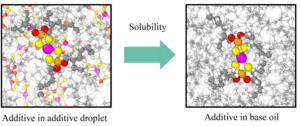
Mechanical bearings and gearboxes — like those used in electric vehicles and wind farms — are often treated with lubricants to avoid friction and wear. The voltage the components might be under impairs the effectiveness of the lubricants to such a degree that the tribological contacts are damaged. As part of the Lube.Life joint research project, researchers at the Fraunhofer Institute for Mechanics of Materials IWM have developed a virtual lubricant lab, which can be used to predict the effects of electrical fields on lubricant stability.
Saving Energy in potentially explosive environments
Electrochemical processes like water electrolysis will become increasingly important in the future in light of climate change and the resultant need for an energy and raw materials transition. The Fraunhofer Institute for Microengineering and Microsystems IMM is collaborating with hte GmbH to develop modular electrochemical cells. These flow cells are used in screening tasks, thereby helping optimize electrochemical production processes, such as water electrolysis.
What does an ambitious contract manufacturer need when customers wish to expand their orders? Exactly, new equipment! The Malmö-based Swedish company Rechon has been a reliable partner to many pharmaceutical producers for decades, from clinical trials through to commercial production. The current trend towards cartridge filling is a good reason for Rechon to continue the successful relationship with Syntegon.
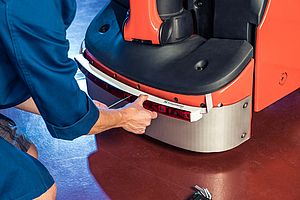
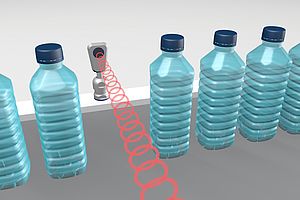
Fraunhofer Application Center develops new optical safety technology reduces transportation accidents
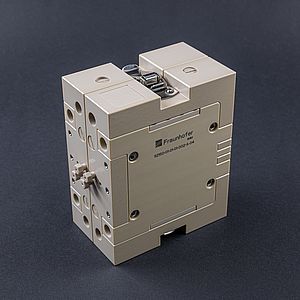
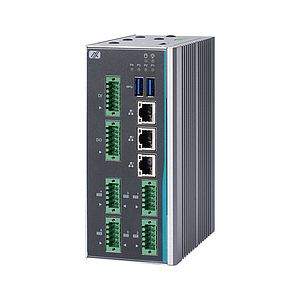
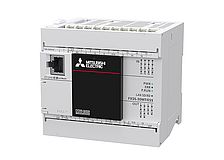
DIN-Rail Fanless Device for Hazardous Deployment
Glenn Schulz, Managing Director at FDT Group, gives us the details of the FDT 3.0 IIoT ecosystem, as well as insights on smart manufacturing and mobility, CIP security enhancements and 5G technology
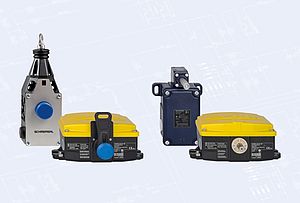
Emergency switches and belt misalignment monitor for safe and reliable shutdown
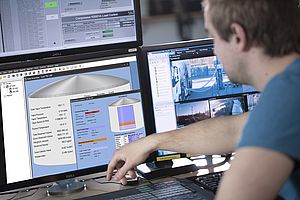
Software increases ease-of-use for operators and safety of storage tanks for liquefied gas
Vision can be deployed in a number of different ways on a food processing line to tell if food is safe to eat and meets the quality standards demanded by retailers. Now the kind of hyperspectral technology that NASA has used to study planets and plant life is being applied to the food that ends up on household plates.
Cost-effective installation with built-in redundancies for SIL 3 safety requirements
German researchers develop smart solutions for energy-adaptive production facilities
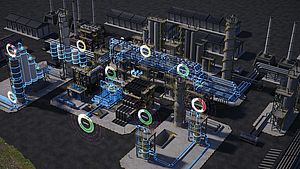
Digital transformation doesn’t have to be complex. The right approach can ensure technology investments deliver the results that matter with confidence, ease and speed. By Stuart Harris, Emerson
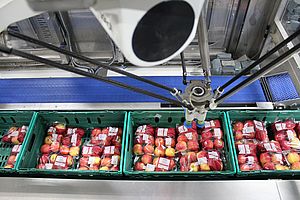
The use of collaborative robotics in the manufacturing of food and beverages can bring many advantages in terms of savings and efficiency for both large and small manufacturers.
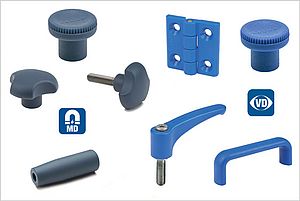
Standard parts for requirements of food and pharmaceutical production lines
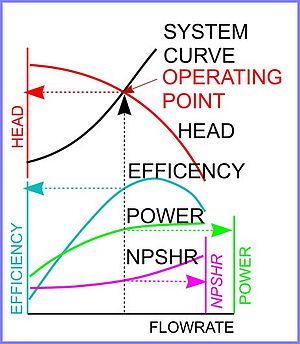
Systems Approach helps optimising operation of pumps
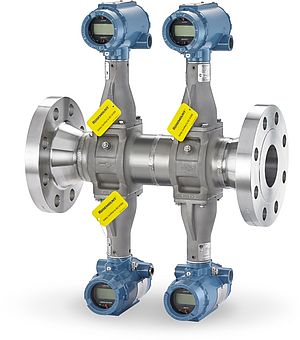
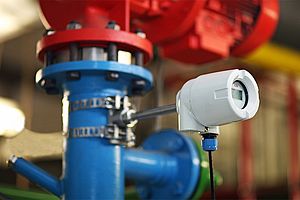
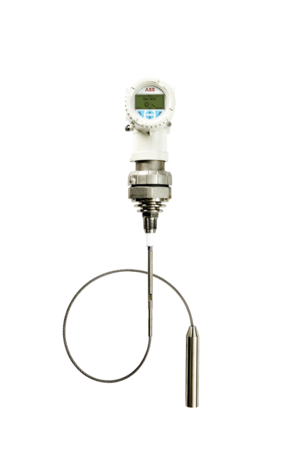
As a measurement technique, guided wave radar is established: the equipment is robust, the technology is mature, and the primary application niches have emerged. The problem - until now - was that the instrumentation was notoriously difficult to install.
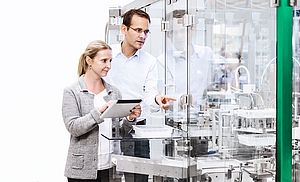
If a packaging or processing line is no longer running at full capacity, a brief consultation with the general practitioner isn’t enough. What food and pharmaceutical producers need to keep their lines going at high output and product quality.
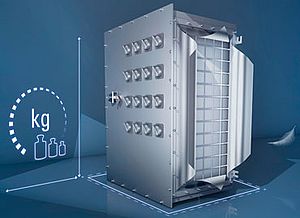
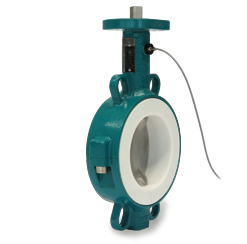
Weight and space saving solution with pressure relief
Many industrial processes depend on maintaining the correct temperatures. Ensuring that these processes remain efficient, produce goods and materials of the right quality and above all remain safe, demands accurate temperature measurement.
The first edition of the European event devoted to the Internet of Things and mobile business applications will take place on October 3, 2019 in Brussels
Easy to operate offline solution for packaging serialisation for pharmaceuticals
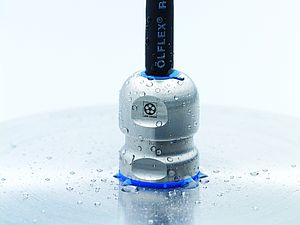
The new pms ultrasonic sensor from microsonicis a good example for Hygienic Design in food and beverage. To guarantee hygienically sound installation of this new ultrasonic sensor, microsonic its trust in the SKINTOP HYGIENIC from LAPP.
Siemens soft- and hardware help optimizing processes and saving resources
Pocket-size food scanner developed by German researchers
For 100% oil-free production processes
Author: James Doorhy, Siemens Process Instrumentation
Direct evaluation at the shaft
LAPP needed impressive products and patience to establish a foothold in Chile’s food and beverage industry. Its most high-profile customer in the South American country is a globally leading manufacturer of soft drinks
Digital Edition Download PDF