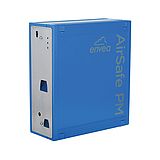
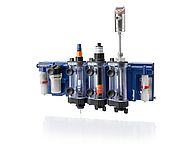
On a high-speed food and beverage line, small errors rarely stay small across the wider production environment
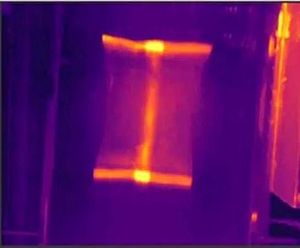
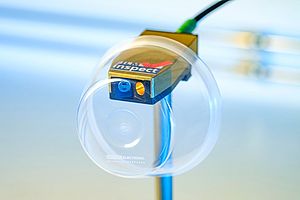
Ultra-thin barrier layers on packaging effectively protect food and medicine from oxygen, moisture, and contaminants. The Film-Inspect sensor, developed at Fraunhofer IPM, measures the quality of these barriers during the coating process, enabling process control for the first time.
The Endress+Hauser Group’s generational handover continues. The Swiss measurement and automation technology specialist has already announced a sweeping refresh of the Executive Board made necessary by the planned retirement of several long-serving members.
In September 2025, a ransomware attack on Collins Aerospace interrupted check-in and boarding systems at major European airports, heavily impacting Heathrow, Brussels, and Berlin. The attackers never breached the airport’s core IT – they didn’t need to. One compromised supplier was enough to paralyze a critical service. Here, Stephan Nobis, business development manager at automation supplier COPA-DATA, discusses why Europe’s critical infrastructure must move from compliance to continuous cybersecurity – or face severe risks.
At the Bürkert Trade Press Days we spoke with Georg Stawowy, CEO of Bürkert Fluid Control Systems about the concept of a regenerative economy.
Integrating Electrical Signature Analysis technology (ESA) in high power drives turns modernization into a digital transformation catalyst for industrial assets. These include motors, pumps, fans, mixers and conveyors operating in hot, toxic or hard-to-access environments, previously regarded as unmonitorable.
Smarter Motion. Stronger Performance
October marks the 50th year since ABB’s Low Voltage Variable Speed Drive was first brought to market. Developed by Finnish company Strömberg, which went on to become part of ABB, VSD have revolutionized industrial energy consumption and decarbonization
Looks matter, but they aren’t everything: long before croissants, biscuits or waffles are placed in protective packaging, manufacturers need to ensure that their contents are exactly as they should be. In upstream steps, producers pave the way for the highest quality, safety and shelf life of ready-to-eat products. Ingenious technologies that work towards this goal are always part of the packaging process.
Maintaining wind turbines and identifying potential vulnerabilities is expensive and time-consuming, especially when they are located offshore. As a result, rotor blades are often simply replaced, a costly process, when damage is merely suspected. The Fraunhofer Institute for Integrated Circuits IIS, working in concert with the Fraunhofer Institute for Wind Energy Systems IWES, has developed a solution that can be used to identify cracks and breakages inside the blades remotely at an early stage.
Solving different engineering challenges with the right supplier
HMIs receive confirmation of compliance with International Cybersecurity Standard IEC-62443-4-2
Integration of OPC UA with Allotrope Standards for seamlessly interoperable communications and information data in analytical labs
As businesses in industry continually aim to become environmentally sustainable, the demands are increasingly pushed throughout the supply chains. Liquid and gas flow controls, ubiquitous throughout industry, are highlighted within the sustainability drive. Optimising the performance of valves and their controls can directly improve energy efficiency for end users. Moreover, procurement teams are progressively checking that flow control suppliers are achieving a holistic position to meet sustainability goals.
The evaluation of the installed base and its further use is a key decision point in modernization projects. At the same time, Ethernet-based, state-of-the-art field device technology should often be used. For the first time, a product study by Pepperl+Fuchs presented a solution for field devices modern Profinet over Ethernet-APL and those with Foundation Fieldbus H1 (FF-H1) interface at Hannover Messe 2025.
Battery Energy Storage Systems (BESS) are essential for storing renewable energy and ensuring grid stability. However, their implementation comes with inherent risks, particularly related to lithium-ion battery fires.
To help engineers and operators meet the challenges of precision batching and ensure accurate measurements and smooth process operations, the editorial shares some key insights.
The demonstrator, designed as an interactive screen with code readers, has been made possible thanks to the collaboration of ITC Packaging and Famosa
The climate crisis is driving demand for the electrification of transportation and energy infrastructure, which in turn is accelerating the need for more powerful and safer rechargeable batteries, including li-ion, sodium-ion, and solid-state. However, one of the key issues affecting battery quality is accurate humidity monitoring and dry control during manufacture.
Robust and radiation resistant optical systems for nuclear inspection applications
Personalized medicine means an elementary change for the pharma and biotech industry aimed at the production of large quantities. Pharmabotix is developing automation and robotics solutions for filling smaller batches as they occur in cell and gene therapy. The Swiss company is thereby focusing on a hygienically designed Yaskawa Motoman HD8 industrial robot.
Product packaging has always polarized: while it is indispensable for maintaining product and consumer safety, some materials are constantly under scrutiny regarding their environmental impact. The EU’s Packaging and Packaging Waste Regulation (PPWR) introduces binding regulations across the EU to mitigate these effects by reducing and replacing certain types of packaging. Packaging manufacturers and brand owners alike can meet those challenges and become PPWR-compliant without sacrificing efficiency and packing quality.
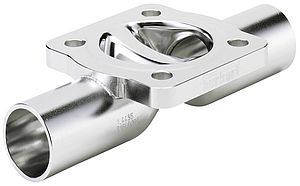
For fluid control applications in sectors such as pharmaceuticals as well as food & beverage production, manufacturers can increase productivity and reduce costs while helping to meet their sustainability objectives by integrating improved control valves. Hydroformed valve bodies for diaphragm valves achieve high strength and light weight. This makes hydroformed valve bodies far more energy efficient compared to forged or cast designs, and the manufacturing process is inherently more sustainable too.
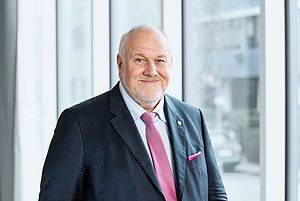
Growth in incoming orders, sales, profit and employment reported for 2023 by Matthias Altendorf and Luc Schultheiss
PCN Europe spoke to Mark Pontin, Managing Director of Resolve Optics about the challenges for lenses in optical material inspection and sorting applications.
Ethernet APL is a game changer for networking at field level – especially for the process industry. It offers consistent networking with a single protocol, high speeds for cable lengths of up to 1000 metres and intrinsic safety for areas at risk of explosion.
Under the heading "Forging Tomorrow – Unleashing the Industrial AI Benefits", a panel on the assessment of artificial intelligence by experts from the industry took place at the Emerson Exchange.
The session at the Emerson Exchange EMEA 2024 described improvements for a tank terminal in Antwerp. Dirk van Baelen, Emerson Area Sales Manager for Measurement Solutions in Flanders, described the improvement process in detail.
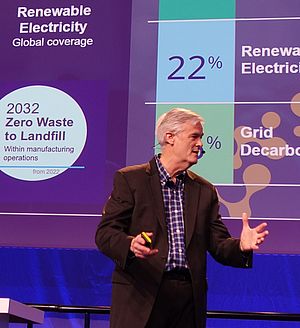
In the keynote at Emerson Exchange 2024 in Düsseldorf, Emersons’s Chief Sustainability Officer Mike Train and Chief Technology Officer Peter Zornio spoke about different aspects of their company's and customer's sustainability journey
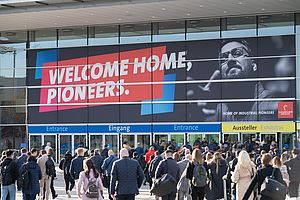
PCN Europe spoke to Hubertus von Monschaw, Global Director Trade Fair and Product Management HANNOVER MESSE at Deutsche Messe AG, about the current challenges facing the industry and HANNOVER MESSE 2024.
Optimization of offshore wind turbines and onshore facilities for Japan’s largest wind farm
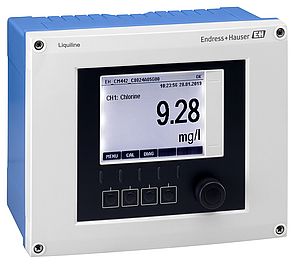
Water management is an increasingly important and challenging issue, particularly in light of concerns such as water scarcity. Greater value is thus being placed on disinfection processes. To protect against bacteria, viruses and other harmful organisms, drinking water requires disinfection and hygiene measures. This also applies to the environment in order that lakes and water-based activities can be enjoyed without hesitation. Disinfection processes play a large role in industrial processes as well. In the beverage industry, drinking water flows directly into the products, while surface waters are frequently used as a coolant in other segments such as energy generation.
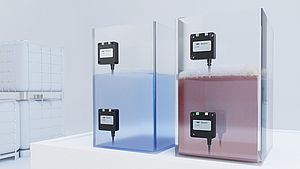
Reliable measurements despite films and adhesion
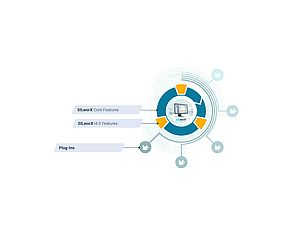
Simplified collaborative engineering for automation projects
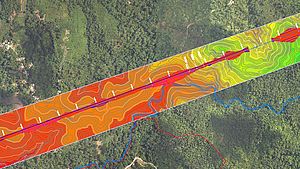
How can mining companies make their operations more sustainable to reduce their environmental footprints? One element that can be perfectly adapted to match the conditions is the efficient transport of the mined material. Here overland conveyors that can move large quantities of material over long distances are required. BEUMER Group relies on modern planning and layout tools to support operators at an early stage of the project and design the ideal conveying solution together with the customer.
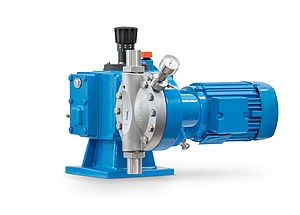
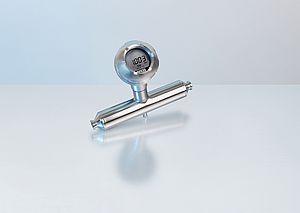
For applications with flow rates up to 2000 l/h
As a pillar of the global economy, the process industry is facing major challenges: high energy consumption and high use of fossil fuels, rising energy costs and stricter legal regulations make the decarbonization of the industry increasingly urgent. In order to achieve CO2 reductions and higher energy efficiency in their own operations, it is essential that companies drive the digitalization and automation of their entire production process. Author: Axel Lorenz, CEO Process Automation, Siemens
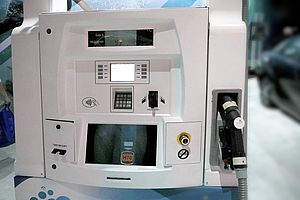
With the increase in hydrogen mobility, the network of refuelling stations is densifying. The sector is investing heavily into the infrastructure. This creates a significant demand for measurement technology, mainly to ensure the safety of the refuelling process.
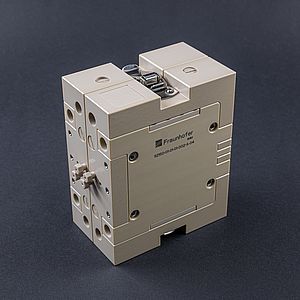
Electrochemical processes like water electrolysis will become increasingly important in the future in light of climate change and the resultant need for an energy and raw materials transition. The Fraunhofer Institute for Microengineering and Microsystems IMM is collaborating with hte GmbH to develop modular electrochemical cells. These flow cells are used in screening tasks, thereby helping optimize electrochemical production processes, such as water electrolysis.
Reduced energy consumption and cleaning effort for sterile processes
Digital Edition Download PDF