The Packaging Competence Centre (PCC) is a joint venture between packaging machinery manufacturer Gerhard Schubert GmbH and Berlin-based packaging consultancy Berndt+Partner Group. The new organisation brings together experts in the fields of regulation, packaging design, materials and automation technology to support manufacturers to develop and implement sustainable packaging.
Standardized Plug System for PROFINET over SPE
Integrated drift detection for highest process reliability
Industrial processes involving dry foodstuffs or animal feed can quickly create an explosive atmosphere by stirring up dust. Dust explosions present a huge risk not only to human life, but also in terms of destroyed equipment and unplanned production downtimes. Bormann & Neupert by BS&B offers efficient safety systems that effectively nip dust explosions in the bud or minimise their effects.
Multilingual and Open Source: OpenGPT-X research project releases large language model
Intrinsically safe phone for digital workflows in hazardous environments
VisuNet Thin Client HMI for the Pharmaceutical Industry
Reinforcement learning powered real-time processes help achieve operational excellence in complex processes.
Wireless sensors for condition monitoring prevent unplanned downtime of critical centrifugal pump
Finding possible contaminants in renewable hydrogen helps prevent equipment damages
Instrumentation manufacturer VEGA participates in chip start-up
Modules with broad range of functions and certifications for worldwide use in all areas of the process industry
Personalized medicine means an elementary change for the pharma and biotech industry aimed at the production of large quantities. Pharmabotix is developing automation and robotics solutions for filling smaller batches as they occur in cell and gene therapy. The Swiss company is thereby focusing on a hygienically designed Yaskawa Motoman HD8 industrial robot.
Ethernet-APL extends connectivity all the way to process automation field devices. This is achieved with 2-wire cabling via Ethernet-APL switches at data transfer rates of 10 MB/s. Transmissions are intrinsically safe and therefore possible into Ex zones as well. This paves the way for the straightforward collection of large volumes of field data, which facilitates plant optimization as well as the development of new business models in process engineering. Yet physical transmission is only part of the story.
Modular valve engineering for a more efficient and sustainable valve, suitable for liquids, gases and vapors
Thanks to consistent development and industrial cooperations it offers solutions for broad markets
Leak detection with robust fixed mounted solution for monitoring and advanced analytics
Clean water for rearing healthy fish – High-performance systems for sustainable production in RAS
High precision measurements despite high temperatures
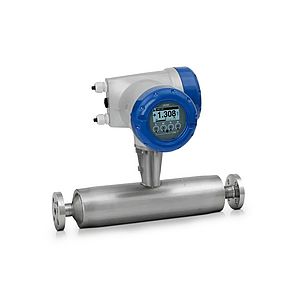
The measurement of low flow is becoming widely used in many industries. However, the smaller the flow, the trickier it is to control and measure, and finding a suitable flow measuring technology at reasonable cost can prove challenging for both users and flow sensor manufacturers.
AERZEN and HH2E agree on cooperation for large-scale production with an initial capacity of 100 MW in 2026
Digital Twin Platform in Conjunction with Digital Nameplates for the Process Industry Introduced at ACHEMA
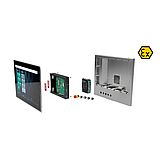
The VisuNet GXP and VisuNet FLX series HMIs from Pepperl+Fuchs set new standards for safety and efficiency in hazardous industrial environments, meeting rigorous explosion protection requirements while offering sleek designs and flexible adaptability. Featuring modular designs and advanced technologies, these HMIs ensure operational excellence and compliance with industry standards, making them a smart investment for industries prioritizing safety and productivity.
Absolute sterility, optimised processes and lower operating costs – the food industry is challenged to align its production procedures amid these conflicting interests. The measurement technology employed to check individual process parameters plays a decisive role here. WIKA has now opened up a new chapter in pressure instrumentation: an in-line process transmitter with a “dry” measuring cell takes monitoring of this variable in sterile applications to a higher level.
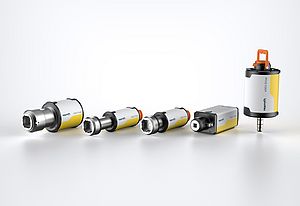
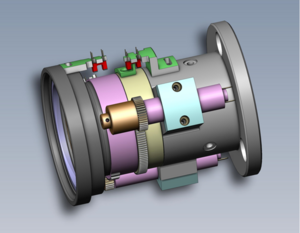
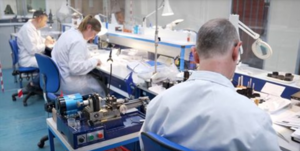
Design and manufacture service for radiation resistant lenses
Reduction of capital and operating costs in offshore systems above and below water
Modular system for continuous or batch processes in battery production
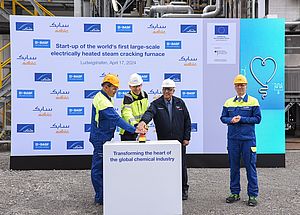
Joint development and construction of electric steam cracking furnaces at BASF’s Verbund site in Ludwigshafen. The technology has the potential to reduce CO2 emissions by at least 90% compared to conventional steam crackers.
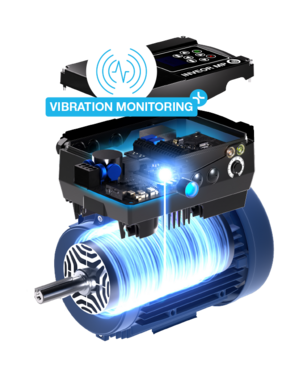
Minimising downtimes with predictive maintenance
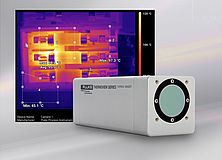
Optimised solution for a surveillance camera manufacturer
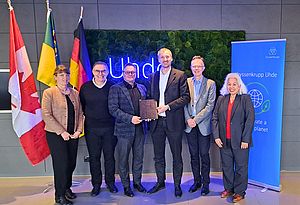
thyssenkrupp Uhde and Genesis Fertilizers announce Pre-FEED for integrated ammonia/urea/UAS/UAN plant
PCN Europe spoke to Mark Pontin, Managing Director of Resolve Optics about the challenges for lenses in optical material inspection and sorting applications.
Ethernet APL is a game changer for networking at field level – especially for the process industry. It offers consistent networking with a single protocol, high speeds for cable lengths of up to 1000 metres and intrinsic safety for areas at risk of explosion.
Digital Plant Asset Management is a topic that often comes up in discussions about process engineering facilities. Today, while intelligent field devices might be the standard, system owners have yet to exploit their full potential. To provide the connectivity needed, Softing offers the right solutions with the smartLink product family.
In December 2023, KROHNE made Ethernet-APL demo devices available to selected customers. This step marks an important milestone in the company's own Ethernet APL development project for various sensor types.
Custom Optical Module for Cutting-Edge Imaging Systems
Today, the majority of consumer goods and everyday items are made from petroleum-based plastics. In Germany alone, around six million tonnes of plastic waste is generated every year. About half of this is mechanically recycled into new materials; the rest is used for energy recovery. The incineration of this waste results in the release of CO2, a greenhouse gas. It is therefore important to keep more plastics in the material cycle for climate and environmental reasons. Eight Fraunhofer Institutes are developing new ideas and processes to significantly improve the mechanical recycling rate of plastics as part of the Waste4Future flagship project.
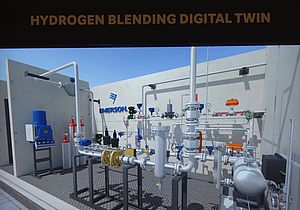
The hydrogen industry needs to scale up quickly and needs a transport infrastructure for that. Wouldn’t it be great if the existing grid could be used?
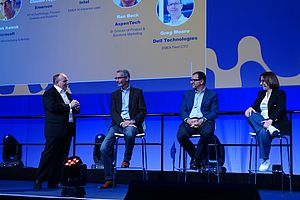
Under the heading "Forging Tomorrow – Unleashing the Industrial AI Benefits", a panel on the assessment of artificial intelligence by experts from the industry took place at the Emerson Exchange.
The session at the Emerson Exchange EMEA 2024 described improvements for a tank terminal in Antwerp. Dirk van Baelen, Emerson Area Sales Manager for Measurement Solutions in Flanders, described the improvement process in detail.
Digital Edition Download PDF