We use cookies to provide you with personalized services and improve our website. More info Ok
As digital transformation increases demand for data from automation systems – driven by new digital innovations such as advanced analytics, AI and expanded connectivity – maintaining system integrity has become a challenge. ABB’s Luis Duran explores how the concept of “separation of concerns” protect the core of the automation system in a cyber-secure way, while enabling new digital value without compromising operational performance.
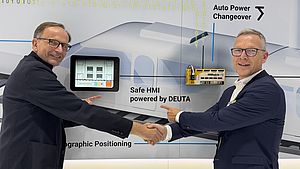
For easy installation with high accuracy and repeatability for safe processes
The fertilizer sector is caught in a global paradox between growing food to feed billions and the urgent need to decarbonise. Compressors present a largely overlooked opportunity to reduce lifecycle costs and carbon emissions, while enabling more sustainable production of ammonia. Author: Greg Gedney, Business Development Manager, Industrial Operations, Greene Tweed
A new wave of more efficient, adaptable and intelligent plant operations is emerging as conventional control systems evolve into modern, open and modular automation ecosystems. Stefan Basenach, Senior Vice President ABB Automation Technology, explains how ABB’s Automation Extended allows industrial organizations to fully embrace the opportunities of digitalization while futureproofing their operations.
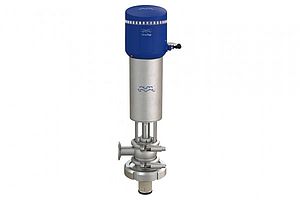
Alfa Laval is turning circularity into action with the launch of ThinkCircularity, a take-back programme that recycles materials from its ThinkTop valve control units. The pilot project has been well received by customers and partners
Robust and precise flowmeters for dispensing of aggressive media
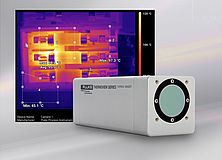
In response to the recent global shortage of Germanium, an essential material for optical components in long-wavelength infrared cameras, Optris has engineered and launched a new optical design that completely removes the need for Germanium. Germanium has long been the main material for lenses and windows in thermal imaging systems. However, issues like supply shortages, export restrictions,...
Increased safety through clarity in challenging situations for the process industry and railway sector
With the growing complexity of technical plants, demographic shifts in the workforce, and increasingly stringent regulatory requirements, traditional methods of risk assessment are reaching their limits. To meet these challenges, TÜV SÜD has developed a digital approach, called iaHAZOP, that builds on established risk assessment methods and extends them into the digital domain. The process industry now has a tool that redefines the state-of-the-art in technical risk management. Authors: Michael Pfeifer, Senior Expert Adaptive Safety and Alexander Kurdas, Expert for Machinery and Electrical Safety. TÜV Süd
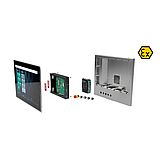
Ethernet-APL enables fast, standardized Ethernet communication down to field level, even in hazardous areas. While the technology simplifies engineering, commissioning, and diagnostics, the real value lies in integrated solutions. With engineered, certified systems tailored to customer needs, operators benefit from reduced complexity, faster deployment, and higher system availability.
Addition to the Siemens Xcelerator portfolio mainly in the range of 24 and 48 V motors for intelligent, battery-powered drive solutions.
Monitoring radioactive processes in high definition
The goal of the alliance of the companies Bizerba, FANUC, KILIVATIONS and Schmalz, announced at automatica 2025, is to drive the development and implementation of forward-looking automation solutions in a practical, innovative and customer-centric way
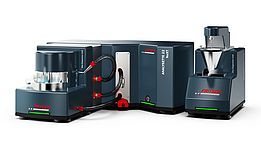
Integration of OPC UA with Allotrope Standards for seamlessly interoperable communications and information data in analytical labs
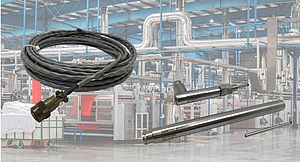
Optional Stainless-Steel Sleeve for mechanical stabilisation
Standardized Plug System for PROFINET over SPE
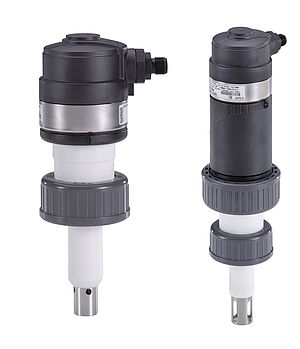
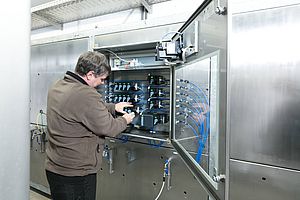
Conductivity Sensor is Key to Energy-Saving Dairy CIP System
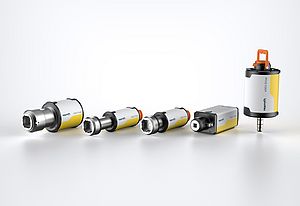
Non browning lens for small sensor cameras
The food and beverage industry is continually evolving, driven by the need for enhanced efficiency, quality, and safety. Central to these advancements is fluid process control, a crucial component in manufacturing processes such as mixing, fermentation, and pasteurisation. Recent innovations in this area have focused on precision, automation, and sustainability, significantly improving production practices.
Siemens named one of the global preferred suppliers for Merck's next-level automation, boosting global smart manufacturing with Siemens Xcelerator platform
Suitable for discharge applications in bulk handling
Wireless sensors for condition monitoring prevent unplanned downtime of critical centrifugal pump
Personalized medicine means an elementary change for the pharma and biotech industry aimed at the production of large quantities. Pharmabotix is developing automation and robotics solutions for filling smaller batches as they occur in cell and gene therapy. The Swiss company is thereby focusing on a hygienically designed Yaskawa Motoman HD8 industrial robot.
Ethernet-APL extends connectivity all the way to process automation field devices. This is achieved with 2-wire cabling via Ethernet-APL switches at data transfer rates of 10 MB/s. Transmissions are intrinsically safe and therefore possible into Ex zones as well. This paves the way for the straightforward collection of large volumes of field data, which facilitates plant optimization as well as the development of new business models in process engineering. Yet physical transmission is only part of the story.
Digital integration of measurement technology based on resistance thermometers or thermocouples
Cleaning systems of industrial large filter systems are often poorly regulated and therefore consume large amounts of expensive compressed air. That´s over now: A new feature of the solenoid valve controller HE 5750 of AXXERON HESCH electronics, allows for an exact setting of the cleaning pressure. We asked the Managing Director, Werner Brandis: How does pre-pressure control work exactly and what are further advantages for the industry?
Innovative fluid property detection for precise media detection and comprehensive monitoring of fluid properties
The measurement of low flow is becoming widely used in many industries. However, the smaller the flow, the trickier it is to control and measure, and finding a suitable flow measuring technology at reasonable cost can prove challenging for both users and flow sensor manufacturers.
Absolute sterility, optimised processes and lower operating costs – the food industry is challenged to align its production procedures amid these conflicting interests. The measurement technology employed to check individual process parameters plays a decisive role here. WIKA has now opened up a new chapter in pressure instrumentation: an in-line process transmitter with a “dry” measuring cell takes monitoring of this variable in sterile applications to a higher level.
Reduction of capital and operating costs in offshore systems above and below water
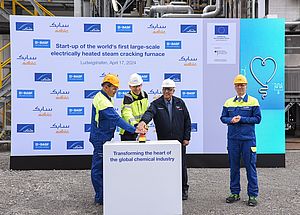
Joint development and construction of electric steam cracking furnaces at BASF’s Verbund site in Ludwigshafen. The technology has the potential to reduce CO2 emissions by at least 90% compared to conventional steam crackers.
For easier access to diagnostic data of sensors
Highly efficient cleaning device for safe processes and higher production uptime
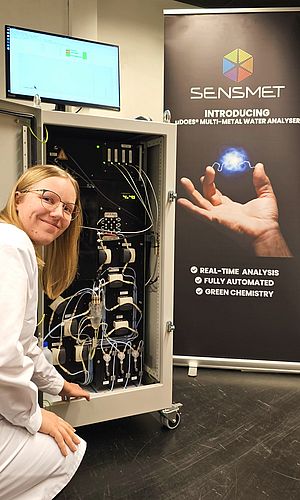
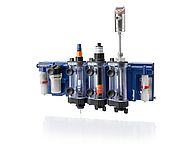
For accurate, low maintenance measurement online water analysis system
Exciting opportunity for real-time measurements in a metals refinery
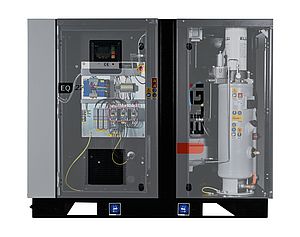
Reliable high-performance compressors in the 11–22 kW segment
First Step of Implementation for PROFINET Security Classes
Hermetically-sealed sensors for process control
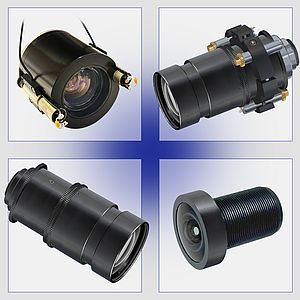
Resolve Optics has two decades of experience in radiation resistant lenses for nuclear, space and medical applications and an unmatched range of standard fixed focus and zoom lens designs to draw upon. Adapting one of these existing designs enables Resolve Optics to quickly produce a radiation resistant lens optimized to suit almost any application. All optical elements within Resolves’s radiation...
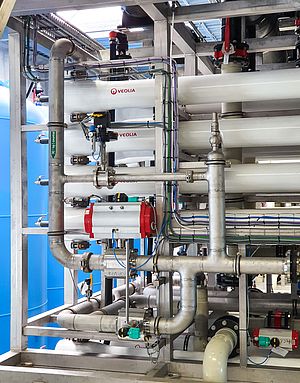
Veolia Water Technologies has built an ultra-modern plant to produce drinking water in Ostend, Belgium. In a multi-stage filtration process, the water supplier is now producing drinking water of excellent quality – far above the statutory requirements. At critical points of the process – during reverse osmosis, filtration with activated carbon and remineralisation of the water – sliding gate valves made by Schubert & Salzer Control Systems are responsible for regulating pressure and flow rate.
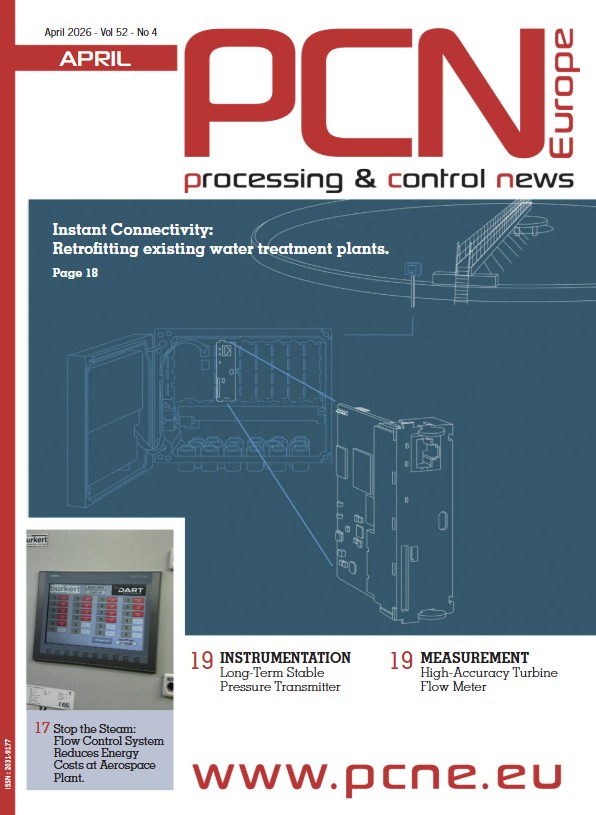
Digital Edition Download PDF