
PCN Europe March 2026 WebMAgIssue #205 - 12/03/2026
Essential source of information for professionals in the broad field of processing industries since 2004
Quick access
Contents2 Industry News: PAPURE Project for better recycling of paper packagings3 Industry News: Fraunhofer IPM | Endress+Hauser4 Industry News: Alfa Laval | Pepperl+Fuchs5 Automation Extended: Unlocking Industry’s Full Potential7 Automation & Communication: FaradaIC | Antaira8 Measurement & Instrumentation: Titan Enterprises | InfraTec9 Measurement & Instrumentation: Emerson | AW-Lake10 Measurement & Instrumentation: PIL-Sensoren | JUMO11 Measurement & Instrumentation: Yokogawa | Resolve Optics12 Compressor Efficiency Is the Hidden Lever for a Low-Carbon Fertilizer Future13 Explosion Protection & Safety: |14 Index15 Contacts16Companies in this issue
JUMO GmbH & Co. KG11ABB Automation7 Antaira Technologies Sp. Z O.o.8 AW-LAKE Company10 Emerson Automation Solutions - Systems10 FaradaIC Sensors GmbH8 Greene Tweed13 InfraTec GmbH Infrarotsensorik und Messtechnik9 JUMO GmbH & Co. KG11 Kollmorgen Europe GmbH14 Krohne Messtechnik GmbH14 PIL-Sensoren GmbH11 Resolve Optics Ltd12 Titan Enterprises Ltd9 Yokogawa Europe Solutions BV12


#2 Contents
#3 Industry News: PAPURE Project for better recycling of paper packagings
#4 Industry News: Fraunhofer IPM | Endress+Hauser
#5 Industry News: Alfa Laval | Pepperl+Fuchs
#6
#7 Automation Extended: Unlocking Industry’s Full Potential
#8 Automation & Communication: FaradaIC | Antaira
#9 Measurement & Instrumentation: Titan Enterprises | InfraTec
#10 Measurement & Instrumentation: Emerson | AW-Lake
#11 Measurement & Instrumentation: PIL-Sensoren | JUMO
#12 Measurement & Instrumentation: Yokogawa | Resolve Optics
#13 Compressor Efficiency Is the Hidden Lever for a Low-Carbon Fertilizer Future
#14 Explosion Protection & Safety: |
#15 Index
#16 Contacts
Sealing Paper Packaging Without Adhesives
Fraunhofer project for better recycling processes of paper packaging

Paper packaging offers a number of advantages over its plastic counterparts: It has a high recycling rate, lower CO₂ emissions, and lower disposal costs. However, it cannot yet be sealed without adhesives or layers of plastic, a disadvantage for manufacturing and recycling processes. In the PAPURE project, four Fraunhofer institutes are developing a laser-based process that enables completely adhesive-free paper packaging.
Since plastic packaging accounts for a large fraction of plastic waste, the demand for environmentally friendly packaging options is increasing. One material that is becoming more and more popular as a sustainable alternative to plastic is paper. However, the problem is that sealing paper packaging requires additives such as adhesives or plastic. These additives contaminate the paper, complicate the recycling process, and reduce the quality of the recycled material. This poses a significant challenge to the otherwise established and efficient paper recycling process. In the PAPURE project, the Fraunhofer institutes for Applied Polymer Research IAP, for Material and Beam Technology IWS, for Process Engineering and Packaging IVV and for Machine Tools and Forming Technology IWU are looking to improve recyclability by sealing paper packaging without any additives. The institutes are pooling their expertise to develop a sealing process using laser treatment to modify the paper so that it can then be sealed directly with a heat-sealing process. The project focuses on analyzing various papers and characterizing materials (Fraunhofer IAP), laser-based surface modification (Fraunhofer IWS), developing an innovative sealing system (Fraunhofer IVV), and establishing an industry-oriented demonstrator (Fraunhofer IWU). A laboratory-scale manufacturing unit is being built at Fraunhofer IWU in Dresden that replicates the process for manufacturing a typical packaging material.
Paper composition affects adhesive properties
In the first step, Fraunhofer IAP researchers are characterizing coated and uncoated papers for packaging applications as well as printer papers and cardboard to determine whether they are suitable for sealing without the application of further additives. Roughly three dozen types of paper are available for selection. Special attention is given to determining the hemicellulose, cellulose, and lignin content of the paper. These have a significant effect on the adhesive properties of the materials and the quantity and composition of the resulting cleavage products (reaction products from laser treatment). Analytical methods such as scanning electron microscopy (SEM), high-performance anion exchange chromatography (HPAE) and X-ray photoelectron spectroscopy (XPS) are used to analyze the chemical composition and morphology of the different papers before laser treatment and of the subsequent reaction products.
The researchers were able to show that thicker standard papers available on the market and used for producing items such as disposable paper cups and other food packaging can be used for the sealing process.
Functionalizing paper with CO lasers
In the next step, Fraunhofer IWS researchers irradiate the surface of the paper with a carbon monoxide laser (CO laser), which rapidly heats the paper, converting its primary components – lignin, hemicellulose, and cellulose – into short-chain compounds in a controlled process. This innovative process step is what enables adhesive-free sealing of the paper. After irradiation, fusible cleavage products remain on the paper surface and seal under heat and pressure without any additional material. “By irradiating the paper with a CO laser, we create refusible, sugar-like reaction products that we use instead of the synthetic materials or adhesives that would otherwise be required to seal the paper by the heat sealing process. In this way, we are essentially producing our own adhesive in the form of the cleavage products,” says Volker Franke, Group Manager Laser Micro Processing at Fraunhofer IWS in Dresden. “After laser treatment, we have succeeded in using heat sealing, an established thermal contact process, to bond two layers of paper with heat and pressure.”
Bond strength defines seam quality
The project partners at Fraunhofer IVV are developing the necessary sealing system for processing laser-treated papers with fusible cleavage products. To achieve this, the researchers are accounting for the effects of material properties, laser parameters and the properties of the fusible reaction products on bond strength based on data already recorded by the teams at Fraunhofer IAP and Fraunhofer IWS. They are also testing the extent to which bond strength and leak-tightness can be improved by using suitable sealing parameters and tool geometries and are transferring the results to a packaging solution with the goal of achieving seam properties suitable for the market. “Bond strength determines how difficult it is to tear open or to open packaging,” explains Fabian Kayatz, research scientist and project coordinator at Fraunhofer IVV in Dresden. “By measuring mechanical stability under different types of loads (shear test, T-peel test), we can demonstrate the effects of laser parameters and sealing parameters on the bond strength of the seams. Crucial sealing parameters are sealing time, sealing temperature, sealing pressure, and tool geometry. Fiber direction also plays a role, i.e., the orientation of the material relative to the sealing tool.” Marek Hauptmann, head of the joint project, adds: “We are essentially striving for a bond strength that is higher than the interply adhesion of the paper layers. We are already achieving good bonds in the shear tests. We can easily lift 20 kilograms with a seal that is only two centimeters long and three millimeters wide.”
Adhesive-free sealing integrates into existing production
At Fraunhofer IWU in Dresden, a laboratory-scale modular paper processing manufacturing unit is currently being developed that replicates the process for manufacturing a flat four-sided bag—commonly used for packaging—in a roll-to-roll process. The primary focus of the work is developing and integrating a laser and a sealing module into the approximately six-meter-long, one-meter-deep and two-meter-high industrial-type demonstrator. The adhesive-free sealing process is being adapted based on sensors proven in industry (including image and moisture sensors) and a digital twin with a trained data model. The surface of the paper web running continuously through the plant is first irradiated with the CO laser, producing the cleavage products mentioned above. A second paper web is then fed in, joined with four seams using a combined sealing and punching tool in a heat-sealing process, and is then punched out to form a bag. The heat generated during the sealing process activates the cleavage products, causing the two paper webs to bond together. In the future, a seal seam measurement system installed in the pilot plant as a quality control measure will record real-time changes in seal seam quality, enabling rapid adjustment of laser and sealing parameters. Fraunhofer IWU research scientist Christer-Clifford Schenke: “Our goal is to produce ten packages per minute on the pilot system by the end of the project in September 2026.”
Presentation at Interpack 2026
The practical, modular demonstrator shows that the process can be integrated into existing production processes in the future. Both the laser module and the sealing tool can be implemented separately in production. This makes the process especially attractive for packaging machine manufacturers, packaging material producers and packagers. The integration of PAPURE technology enables companies in this industry to position themselves as pioneers in the field of “green packaging.”
Together with interested companies from the packaging and food industries, as well as paper manufacturers and mechanical engineering firms, the project partners intend to further develop the plant for large-scale production. Fraunhofer researchers will be presenting the potential applications of this technology and showing how the system works at the Interpack 2026 trade show from May 7 to 13 in the Technology Lounge of the German Machinery and Equipment Manufacturers Association (VDMA) in Düsseldorf (Hall 4, Booth C54).
Control of Plasma Coating for Packaging with Infrared Sensor
Ultra-thin barrier layers on packaging effectively protect food and medicine from oxygen, moisture, and contaminants. The Film-Inspect sensor, developed at Fraunhofer IPM, measures the quality of these barriers during the coating process, enabling process control for the first time.

Today, packaging is primarily composed of a blend of materials consisting of different polymer layers. Although composite materials have an excellent barrier effect, they are difficult to recycle. Packaging made from monomaterials, such as pure plastics, can be recycled extremely well. In many cases, coatings can provide monomaterials with a barrier function that is just as reliable as that of composite materials. For single-type recycling, as required by the new European Packaging Waste Regulation (PPWR), the proportion of foreign material due to coating should be in the per mille range or lower. Plasma coating processes can achieve this by depositing nanometer-thin coatings, consisting of materials such as silicon or aluminum oxide, onto a polymer substrate. To reliably protect products, these superbarriers must be of flawless quality. In other words, the required layer thickness and continuous coverage must be consistently achieved across the entire surface.
100 percent quality control
A team at Fraunhofer IPM has developed a method to measure the quality of coatings thinner than ten nanometers immediately after the coating process, while still on the production line. This patent-pending method uses the material-specific infrared reflection of the coating. There is a linear relationship between the reflected infrared signal and the layer thickness, allowing conclusions about the thickness to be drawn. The Film Inspect sensor uses this relationship to measure layer thickness in just 0.2 seconds with an accuracy in the single-digit nanometer range. The sensor’s optical design allows measurements to be taken even on complex, three-dimensional surfaces. To reliably control the quality, one measurement at a single point on the surface is sufficient. Since plasma expands spatially, the entire sample will be coated homogeneously, provided the surface within the measuring range has the desired coating thickness.
Process control implemented in plasma coating system
The sensor was tested in a project partner’s production line. Plasma Electronic GmbH coats injection-molded polypropylene containers. Fraunhofer IPM installed and integrated various Film-Inspect sensors into their plant’s control system to monitor the process. If the measured layer thickness does not meet specifications, the coating process can be adjusted by changing parameters such as plasma power, process time, gas flow rates, or chamber pressure. Thus, Film-Inspect not only enables quality assurance but also reduces waste and prevents overcoating.
In addition to superbarriers for monomaterial packaging and films, scientists at Fraunhofer IPM are exploring other markets. “Ultra-thin barrier layers are used in medical and aerospace technology to ensure sterility, reduce friction, and prevent corrosion,” says project manager Dr. Benedikt Hauer. “Film-Inspect can also provide valuable information about the thickness and chemical composition of the coating in these areas.”
Change on Endress+Hauser Supervisory Board
The Endress+Hauser Group’s generational handover continues. The Swiss measurement and automation technology specialist has already announced a sweeping refresh of the Executive Board made necessary by the planned retirement of several long-serving members.

The incumbent President of the Supervisory Board, Matthias Altendorf, has decided not to seek reelection at the Endress+Hauser AG Annual General Meeting on 13 April 2026. He gave the family early notice of this to allow for a smooth succession process. “The family regrets this step but respects Mr Altendorf’s decision,” said Klaus Endress, Chairman of the Family Council, the body representing all branches of the shareholder family.
Supervisory Board President from within the family “It has always been our goal that the presidency of the Supervisory Board should one day be held once again by a young member of the family,” Klaus Endress added. “This moment has now arrived sooner than planned. We – the family and the company – are ready for it.” The Family Council has decided unanimously to recommend Steven Endress for election as the new President of the Supervisory Board at the Annual General Meeting. This underscores the strong bonds between the family and the company.
Steven Endress (47), a grandchild of the company founder, has been a member of the Supervisory Board since 2024. He has professional experience in the software and process industries and worked for a total of 12 years at Endress+Hauser UK, ultimately serving as Managing Director. He holds a degree in business administration and an MBA.
Generational handover on the Family Council
The younger generation is also taking on additional responsibility on the Family Council, the most important link between the family and the company. Sandra Genge has been appointed as this body’s Vice Chair, taking over from Urs Endress, and is expected to ultimately succeed Chairman Dr Klaus Endress. Dr Endress, who has headed the Family Council since its establishment in 2001, has announced his intention to step down from this role in 2027.
Sandra Genge (48), a grandchild of the company founder, has been representing the family on the Supervisory Board since 2022. “Her dual role enables her to further strengthen the Family Council’s vital linking function,” said Klaus Endress. A media science graduate with qualifications in marketing and communication management, Sandra Genge was a managing partner of an agency for many years. She currently works as an independent design and communication consultant.
Recognition for service over several decades
Matthias Altendorf (born 1967) has been with Endress+Hauser for nearly 40 years. He started out as an apprentice mechanic. Next came studies at university, followed by a stint abroad and further training. In 2009, he was appointed to the Executive Board, taking over as Chief Executive Officer in 2014 and leading the Group in that role with foresight and sound judgment for 10 successful years. Since 2024, he has overseen the generational handover at the top level of the company in his capacity as President of the Supervisory Board. “Matthias Altendorf has made a decisive contribution to Endress+Hauser’s successful development. This deserves recognition,” commented Klaus Endress. The family and the company express their gratitude for his contributions, achievements and distinguished service. Matthias Altendorf: “In nearly 40 years of collaboration, we always treated each other with respect. I am grateful for my time at Endress+Hauser and am delighted by the appreciation shown to me by the family and the company.”
Closing the Loop on Plastic Waste
Alfa Laval is turning circularity into action with the launch of ThinkCircularity, a take-back programme that recycles materials from its ThinkTop valve control units. The pilot project has been well received by customers and partners
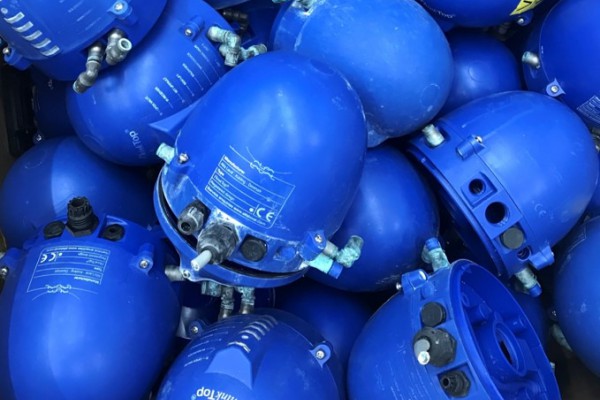
ThinkCircularity initially focuses on plastic recycling. Each ThinkTop contains 500 grams of plastic, and the pilot project has demonstrated that this material can be recycled to produce new units without compromising quality. Tests confirm that the mix of reused and virgin plastic in future units meets all performance standards – from tensile strength to durability.
Furthermore, other materials and components from the ThinkTops – such as valuable metals and electronics – are responsibly recycled.
”Circular thinking is not just a buzzword for us – it is a responsibility,” says Inger Bygum, Head of Sustainability at Alfa Laval Hygienic Fluid Handling and Heat Transfer Technologies. “With ThinkCircularity, we ensure that materials from old ThinkTops can be reused, recycled or disposed of in the most responsible and value-creating manner.”
First units returned
In food, dairy and pharma industries, there is an ongoing focus on process optimization and resource savings. For instance, by upgrading their existing ThinkTop control units, which can save 90% on water and energy used for cleaning-in-place. This is also the case in Norway, where Skala, the Alfa Laval Master Distributor, specializes in servicing hygienic industries. They recently introduced the ThinkCircularity take-back scheme to their customers and have already sent back several hundred units.
“Our customers care about water and energy efficiency – and sustainability,” says Owe Barsten, Responsible Manager at Skala Components. “Upgrades mean that older units are scrapped, but now we can offer a truly circular solution where old ThinkTops give life to the next generation.”
First step in a broader circularity strategy
Key elements in Alfa Laval’s circularity strategy include designing products for durability, high efficiency and long lifetime. With ThinkCircularity, the company now closes the loop by offering an end-of-life solution that ensures that old products are scrapped responsibly and new products in the future can be made from recycled plastic. Inger Bygum emphasizes that this pilot project is only the start:
“Recycling plastic from old ThinkTops is just a small drop in a vast ocean of circular opportunities. Still, this pilot project is important to us and has taught us valuable lessons that will help us develop new business models, partnerships and methods to scale reuse and recycling.”
So far, the ThinkCircularity initiative has been launched in selected European countries.
Global Explosion Protection Experts Meet at Pepperl+Fuchs in Mannheim
Around 170 IEC experts for explosion protection meet in Mannheim for two weeks to discuss current safety-related topics such as robotics, drones, lithium batteries and more.

Global explosion protection experts are holding their regular spring meeting in Mannheim this year. From 16–27 March 2026, around 170 leading specialists will gather at the headquarters of the long-established Mannheim-based company Pepperl+Fuchs to work together as a committee on the further development and international harmonization of explosion protection standards. The participants include representatives from manufacturers, market surveillance authorities, testing organizations, and end users from 23 countries.
Defining clear and reliable standards
The standards developed and defined by International Electrotechnical Commission Technical Committee 31 (IEC TC 31) play a key role in ensuring safety in a wide range of environments, from petrol stations and industrial mills to complex chemical plants. This year’s agenda once again addresses highly relevant topics. These include the safe use of robots and drones in hazardous areas, methods for managing ignition risks posed by lithium batteries, and developments in the rapidly emerging hydrogen sector.
"Clear and reliable explosion protection standards are more important than ever in today’s highly automated and increasingly dynamic world. They provide the foundation for safe systems and processes. We look forward to two exciting and productive weeks at our headquarters in Mannheim," commented Dr. Wilhelm Nehring, CEO of the Pepperl+Fuchs Group.
Pepperl+Fuchs is one of the world's leading suppliers of components and solutions for electrical explosion protection. The company has been actively involved for decades in committees and industry associations dedicated to developing and advancing norms and standards in the field of explosion protection.
WIKA Aquires Majority of Asystom Shares to Strengthen its IIoT portfolio
Asystom SAS, a French company specialising in industrial smart monitoring and predictive maintenance solutions is now a part of the WIKA Group.

The measurement technology manufacturer and IIoT solution provider WIKA has held a stake in Asystom since 2024. As the majority shareholder, WIKA now intends to play an even more active role in shaping the company’s strategic direction. The global network of WIKA subsidiaries is to strengthen the sales and servicing of the Asystom solutions – for example for installation. WIKA will also use its research and development resources to collaborate with Asystom on the continuous development of its portfolio.
Asystom develops advanced sensors and intelligent solutions for the remote monitoring of industrial systems. The company’s core offering is based on embedded acoustic and vibration data processing technologies, combined with AI-driven analytics and diagnostic tools that enable continuous machine health monitoring. Multisensor instruments support signal acquisition, while the IIoT software layer analyses the data and detects deviations using machine learning. This enables companies in the process and manufacturing industries to identify anomalies at an early stage and perform targeted maintenance on their systems. Users can therefore avoid costly failures and organise their maintenance processes much more efficiently.
“WIKA sees itself as a driver for the development of pioneering IIoT technologies,” says Thomas Hasenoehrl, WIKA’s Vice President IIoT Systems & Solutions. “The majority stake in Asystom is another strategic milestone in this regard. The IIoT offers enormous optimisation potential for the industry, particularly in the field of predictive maintenance. With its innovative, scalable solution, Asystom complements our partner network perfectly.”
Pierre Naccache, Asystom’s CEO, says: “Industrial players need solutions that stand the test of time. With WIKA, we combine global deployment capabilities and a shared technology vision to deliver a complete, integrable and scalable approach that brings together sensors, connectivity, software and services, addressing industrial needs in the short, medium and long term. Our ambition goes beyond predictive maintenance alone: we want to provide an open and future-proof foundation for collecting, processing and turning industrial sensor data into actionable value at scale.”
Mitsubishi Electric Europe Appoints New Head of Factory Automation
Tomohiro Yoshida is the new FA Business Unit President for Europe.

Mr. Yoshida brings with him more than 30 years of experience working at Mitsubishi Electric, having started his career at the company´s Nagoya Works in 1992. Since then, he has held a variety of senior managerial positions across the business, notably being tasked with heading up the inverter development department in 2017 and being appointed Managing Director of the Factory Automation unit at Mitsubishi Electric India in 2021.
He returned to Japan in 2024, where he was made the head of the Field Engineering Center, before taking up his current position in October 2025. Looking ahead, Mr. Yoshida will focus on growing the Factory Automation business unit´s market share throughout Europe by continuing its evolution away from a product-focused company to a strategic solutions provider for its OEM, systems integrator and end-user customer base.
Speaking about his appointment, Mr. Yoshida said: “I am delighted to be continuing my Mitsubishi Electric journey in Europe. While European industry has faced several pressing challenges in recent years, not least the significant volatility in energy pricing and growing number of OT cyber-attacks, we remain committed to helping our customers leverage the benefits of automation to stay competitive, efficient and resilient in a dynamic operating environment.”
Automation Extended: Unlocking Industry’s Full Potential
A new wave of more efficient, adaptable and intelligent plant operations is emerging as conventional control systems evolve into modern, open and modular automation ecosystems. Stefan Basenach, Senior Vice President ABB Automation Technology, explains how ABB’s Automation Extended allows industrial organizations to fully embrace the opportunities of digitalization while futureproofing their operations.
Automation & Communication

For decades, industrial automation has been built on the simple overarching principle that reliability comes first. Distributed control systems (DCS) have delivered the deterministic, real-time control that industries depend on to keep energy flowing, chemicals processing, materials moving and goods produced safely and efficiently. Today though, that foundation is under unprecedented pressure. Market factors such as volatility, sustainability targets, cybersecurity threats, workforce change and the accelerating pace of digital innovation are all forcing industries to rethink how automation evolves without jeopardizing operations.
While the advent of Industry 4.0 saw the mass adoption of digitalization, it also highlighted the limited flexibility of existing systems to accommodate change, especially in terms of realizing the full benefits of the technology. Rapid developments in IIoT, cloud, edge and data analytics have blurred the lines between traditionally distinct IT and OT systems. In addition, operators have faced the translation of big data from field devices and connected systems into measurable gains in production efficiency, sustainability and resilience.
ABB’s new Automation Extended program is a direct response to these challenges. Instead of needing customers to replace what already works, Automation Extended provides a structured, future-ready way to modernize industrial automation while ensuring continuity, protecting prior investments and infrastructure and safeguarding mission-critical operations.
From traditional DCS to Automation Extended
Modernization in process automation has historically involved disruptive system migrations, major shutdowns or long upgrade cycles that force customers to choose between innovation and operational stability. While digital technologies, including advanced analytics, AI, edge intelligence and cloud connectivity have promised significant performance gains, integrating them into legacy control environments has often entailed increased complexity and risk.
Automation Extended represents a decisive shift. It is not a new DCS in the traditional sense, nor a bolt-on digital layer detached from control. Instead, it is providing new capabilities to ABB’s existing automation platforms through a modern, open and modular automation ecosystem, built explicitly to support continuous innovation without disturbing core control functions.
Crucially, Automation Extended builds on systems that customers already trust, specifically ABB Ability™ System 800xA®, ABB Ability™ Symphony® Plus and ABB Freelance. Tried, tested and proven in multiple applications across multiple industries, these platforms remain the backbone of plant operations, while new capabilities are introduced progressively and safely around them.
Separation of concerns
At the heart of Automation Extended is a modern modular architecture, characterized by the implementation of separation of concerns principles into two distinct but securely connected environments, each optimized for a different purpose and operating as a cohesive ecosystem.
The Control Environment is where deterministic, real-time process control takes place. It remains robust, lifecycle-resilient and cyber-secure, prioritizing availability, safety and reliability. This environment aligns closely with the traditional strengths of a DCS and continues to handle the immediate responses required for safe plant operation.
Sitting alongside it is the Digital Environment. This environment is essentially a flexible, modular space where innovation happens and where features and tools such as advanced analytics, AI-driven applications, condition monitoring, predictive maintenance, alarm management and decision-support tools can be deployed, updated or removed without affecting the core control functions.
This separation is what sets Automation Extended apart from previous approaches, by allowing each environment to evolve within its own lifecycle, at its own pace, while remaining securely interconnected. Lifecycle Services are integral to the automation ecosystem, enabling not only continuous updates but also optimizations without disrupting critical operations. This creates a trusted operational foundation for customers, allowing the automation ecosystem to remain innovative while safeguarding installed assets and ensuring seamless adaptation to future demands.
Innovation with continuity
For industrial operators, Automation Extended gives the ability to adopt new digital capabilities step by step that are aligned with their operational priorities, risk tolerance and business strategy. Rather than large, one-time transformations, modernization can now be achieved incrementally, with enhancements such as security patches, performance improvements and new applications added as and when necessary, without the cost, disruption and potential errors of carrying out a full upgrade or replacement.
With operators facing ever-pressing pressures on costs, this approach directly addresses the need to maximize the return on existing automation investments. With Automation Extended, the life and value of even decades-old plants can now be extended and augmented through access to modern technologies such as AI, edge intelligence and real-time analytics.
Automation Extended also helps customers manage the growing complexity of integrating different systems from different providers. Open standards such as OPC UA, together with cloud-native technologies and container-based architectures, enable interoperability across vendors, systems and domains. By removing issues such as compatibility and interoperability between different communications protocols, for example, they make it easier to integrate new tools, connect IT and OT environments, and scale solutions across sites or fleets.
Equally important is cyber security. The clear separation between control and digital domains, combined with lifecycle-driven services, helps organizations stay compliant with evolving regulations while reducing exposure to cyber risk.
Empowering a changing workforce
With humans still very much at the heart of industrial operations, there is a need to consider not only what new technology can do, but also how it interacts with those who need to use it.
As experienced personnel retire and are replaced by a new generation of digital-native engineers, there is a need to ensure that their operational knowledge is both preserved and made as easily accessible as possible.
Automation Extended provides intuitive, connected and collaborative tools that resonate with modern skill sets, while preserving the proven control logic and operational knowledge embedded in existing systems. Features such as advanced visualization, analytics and intelligent decision-support applications ensure that human expertise is augmented, helping operators and engineers make better decisions faster.
Crucially, Automation Extended provides the foundations for accommodating future changes. By anticipating future use cases, from predictive maintenance to expanding autonomous operations, it creates an environment where skills can evolve alongside technology, reducing the impact of knowledge gaps and supporting long-term operational resilience.
Enabling sustainability and performance at scale
Sustainability and regulatory pressures on energy, emissions and resources are increasingly reshaping the priorities of industrial companies. Meeting these pressures depends on better data, deeper insight and tighter integration between process and electrical systems.
By extending the reach of control systems into data-driven optimization, Automation Extended supports these goals. Enhancements such as continuous condition monitoring, AI-assisted performance analysis and real-time energy insights all enable more efficient operations without compromising safety or availability. Over time, these capabilities can help achieve the transition toward lower-carbon, more resource-efficient production models, while maintaining the reliability that essential infrastructure demands.
A unified lifecycle approach
Another defining element of Automation Extended is ABB’s comprehensive lifecycle services. Managing control and digital environments independently requires a coordinated approach to updates, maintenance and optimization. ABB’s lifecycle services ensure that systems remain secure, supported and future-ready throughout their operational life.
This proactive, service-driven model reduces total cost of ownership, improves system availability and assures customers that their automation environment can adapt to future demands whether driven by regulation, market shifts or technological change.
Unlocking industry’s full potential – today and tomorrow
With Automation Extended, ABB is not asking customers to abandon the systems that have served them well, but rather extending their value into the next era of industrial automation.
Automation Extended also reflects a broader shift in how industrial automation is evolving. By adopting emerging industry concepts such as NAMUR Open Architecture, software and hardware decoupling, and hyperautomation, ABB opens up new possibilities in industrial operations through greater openness, modularity, human-centric design and secure innovation.
Rather than locking customers into rigid upgrade cycles, ABB is positioning automation as a continuously evolving ecosystem that balances stability with agility, and reliability with innovation. For industries facing an uncertain future, this balance will be invaluable, providing the scalability and adaptability to meet future changes and challenges.
Read more about Automation Extended Automation extended | ABB
Stefan Basenach
He has worked at the Swiss group ABB for over 20 years and is currently Senior Vice President of Global Process Automation Technology. He is committed to implementing sustainable practices and played a key role in leading the ABB Process Automation Energy Division in Germany in supporting the energy industry in its transition towards a net zero economy.
He holds a Diplom Ingenieur degree in Technische Kybernetik (Technical Cybernetics) from the University of Stuttgart, specialising in control methodology for technical and non-technical systems with a focus on biochemical engineering.
From Assumption to Measurable Proof
Sensor Solution for Atmosphere Integrity Monitoring and Verification
Automation & Communication, Measurement & Instrumentation

Faradaic Sensors GmbH and blulog today announce the launch of SEALPROOF™, a next-generation atmosphere integrity monitoring solution designed to verify low-oxygen conditions in sealed packaging. Built on Faradaic’s breakthrough MECS-Technology® (Micro-Electro-Chemical-Systems) and integrated into blulog’s proven IoT ecosystem, SEALPROOF™ delivers measurable proof of packaging integrity—transforming how food, fresh produce, and sensitive goods like semiconductor materials are monitored from production to global transport.
Addressing a Critical Industry Gap
Fresh produce and high-value food products rely on Modified Atmosphere Packaging (MAP) and Controlled Atmosphere Packaging (CAP) to maintain shelf life, quality, and safety. Yet in most cases, the protective atmosphere inside packaging is assumed—not verified. This can result in reduced shelf life, avoidable waste and returns, limited transparency across the cold chain, and insufficient documentation for audits or customer claims. SEALPROOF™ changes that paradigm. It is a compact oxygen (O₂) monitoring solution that provides continuous verification of low-oxygen conditions inside sealed packages and containers. By detecting oxygen ingress early, SEALPROOF™ enables proactive quality control and reliable documentation for compliance and continuous improvement.
Powered by MECS-Technology®
At the heart of SEALPROOF™ is Faradaic’s proprietary MECS-Technology®, a fully solid-state electrochemical gas sensor platform manufactured using MEMS-type processes. The Faraday-Ox® Digital Oxygen Gas Sensing Module combines ultra-low power consumption (<5 μA), fast response times (T90 < 1 s), factory calibration, and integrated temperature and humidity compensation in a miniature footprint of just 10.2 × 25.0 × 5.0 mm. Faraday-Ox® ensures precise, stable, and long-term performance, and detection of oxygen ingress in the low-% range without electrolyte leakage or typical aging effects when not in use. Its compact, chip-based design makes it ideally suited for high-volume applications in packaging, logistics, and industrial IoT.
Seamless Integration with IoT Ecosystem
SEALPROOF™ is engineered with blulog, a Polish-French technology company with over 15 years of R&D experience in M2M and IoT systems. The solution integrates directly into blulog’s logger and software ecosystem, enabling timestamped data storage, cloud or app-based access, and automated reporting.
The system workflow is simple and scalable: sealed package or container → SEALPROOF™ sensor module → blulog logger → data export and reporting (QR, NFC, app, or cloud optional). The result is a clear “Atmosphere OK” verification or immediate identification of leak or oxygen ingress, complete with digital proof for QA teams and customers. SEALPROOF™ extends FaradaIC’s oxygen monitoring platform, demonstrated in the semiconductor industry under some of the harshest conditions, including 0% RH environments. With this robust validation the SEALPROOF solution and is now introduced and expanded into dry food, pharmaceutical, seeds, medical, and smart packaging applications.
Prototype Program 2026
SEALPROOF™ is currently available as part of a Prototype Program 2026 for selected partners and early adopters. The program enables forward-thinking companies to integrate atmosphere verification into their packaging lines and logistics operations—reducing risk, improving data transparency, and unlocking measurable ROI.
Hardened 95W PoE++ Injector with Multi-Gigabit Support
For use in rugged applicactions from -40 to 75 °C
Automation & Communication

Antaira Technologies announced the INJ-0201X-bt-AC-95-T, an ultra-high power 10 Gigabit Ethernet PoE injector purpose-built to eliminate infrastructure bottlenecks in power-hungry, high-bandwidth industrial networks. Combining 95W PoE++ delivery with full multi-gig copper support up to 10GBase-T, the INJ-0201X-bt-AC-95-T enables single-cable deployment of next-generation machine vision cameras, Wi-Fi 6E/7 access points, and intelligent PTZ surveillance systems—even in the harshest industrial environments.
Most industrial facilities, factories, warehouses, and buildings have readily available AC outlets or wiring. With integrated AC input, the INJ-0201X-bt-AC-95-T eliminates the requirement for a separate external DC power supply, adapter, or converter, simplifying installation, reducing components, and lowering costs. AC input allows plug-and-play setup where grid power is present, avoiding the need to source or maintain specific DC voltages, such as 12V, 24V or 48V batteries or solar power.
Engineered for Critical Applications
The INJ-0201X-bt-AC-95-T delivers wire-speed 10Gbps throughput across dual RJ45 copper interfaces while simultaneously providing up to 95 watts of IEEE 802.3bt-compliant power. This unique combination addresses the escalating demands of industrial automation and security infrastructure, where devices increasingly require both extreme bandwidth for 4K/8K video streams and substantial power for motorized optics, IR illuminators, and edge AI processing.
The INJ-0201X-bt-AC-95-T eliminates costly compromises in PoE-structures of either sacrificing bandwidth for adequate power or running separate power cables, delivering 10-gigabit speeds alongside 95 watts of reliable PoE++ power in a hardened package rated for -40°C to 75°C operation and IP40-rated protection. The IEC C14 power input socket provides universal compatibility with standard power infrastructure, while dual mounting options (DIN-rail and wall-mount) enable rapid deployment in equipment cabinets, outdoor enclosures, and space-constrained installations.
NSF-Approved Flowmeter Series
Robust and precise flowmeters for dispensing of aggressive media
Measurement & Instrumentation
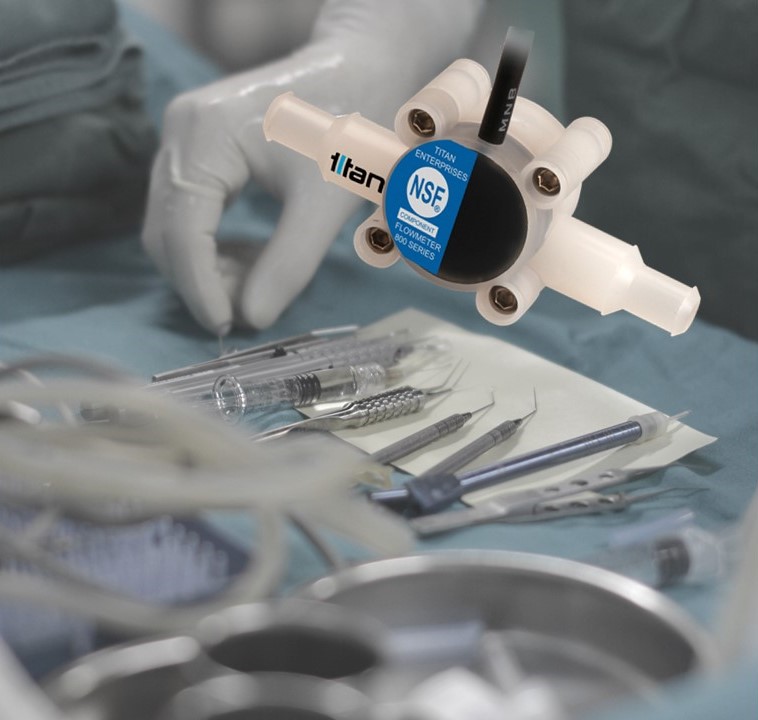
Peracetic acid (PAA) is widely used in medical, pharmaceutical, and hygiene applications as a fast-acting, broad‑spectrum disinfectant. Its strong oxidizing properties allow it to eliminate bacteria, viruses, fungi, and spores even at low temperatures, while breaking down into environmentally benign by-products such as acetic acid, oxygen, and water.
However, PAA’s effectiveness depends on precise concentration control. Underdosing can compromise disinfection, while overdosing risks equipment corrosion, material degradation, and unnecessary chemical exposure. Reliable, accurate, and chemically resistant flow measurement is therefore essential - qualities that define Titan Enterprises’ NSF‑Approved 800 Series flowmeters.
The Role of PAA in Critical Hygiene Environments
Peracetic acid is used widely because it fills several important roles in medical and other decontamination workflows:
- High-Level Instrument Disinfection: PAA is widely used in automated endoscope reprocessors and washer disinfectors for flexible endoscopes and other heat sensitive instruments. These systems require precise dosing to ensure effective disinfection without damaging delicate components.
- Surface Disinfection in Clinical Areas: Hospitals and labs apply diluted PAA as sprays or mists for operating rooms, isolation zones, and critical surfaces. Consistent, controlled dilution is essential to maintain reliable antimicrobial performance.
- Low Temperature Chemical Sterilisation: For devices unsuitable for steam autoclaves, such as those with electronics or sensitive coatings, liquid PAA offers a dependable sterilisation alternative. Accurate, repeatable flow and dosing control is key to safe, effective cycles.
- Pharmaceutical, Bioprocessing & Food Processing Applications: Beyond healthcare, PAA is frequently used in clean-in-place (CIP) and sterilise-in-place (SIP) systems within pharmaceutical manufacturing facilities, biotechnology labs, and food production environments. Its strong oxidising properties make PAA ideal for fruit and vegetable washing, meat and poultry processing, and packaging line sanitation, providing reliable microbial control without leaving chemical residues. Here again, Titan’s NSF-Approved flowmeters provide precise flow monitoring, essential to maintain high hygiene standards and meet stringent regulatory standards.
Engineering Flowmeters for Chemical Resistance and Precision
To meet these diverse and demanding application requirements, Titan’s 800 Series flowmeters are built from materials carefully selected for their robustness and compatibility with aggressive chemicals like peracetic acid. Approved under the NSF standard 169 as ‘Special Purpose Food Equipment and Devices’, the meters incorporate PVDF, seal materials and sapphire, each chosen for specific performance advantages:
- PVDF (Polyvinylidene Fluoride): Offers excellent resistance to acids and oxidizing agents, making it ideal for long-term contact with PAA.
- A variety of seal options including Viton™, EPDM and Kalrez®, chosen for their specific chemical compatibility.
- Sapphire Bearings: Provide extremely low friction and high wear resistance, ensuring long operating life even under continuous use.
One of the unique engineering strengths of the NSF-Approved 800 Series is Titan’s proprietary turbine flowmeter design, which utilises fully encapsulated magnetic components. In typical turbine flowmeters, exposed magnets or metallic elements can degrade when exposed to aggressive chemicals. Titan’s design eliminates this failure mode entirely, offering a reliable, contamination-free solution for PAA dosing systems – while maintaining the flowmeter’s competitive low cost. The 800 Series excels in these situations due to its high sensitivity to low flow velocities and the fast pulse output for precise electronic monitoring to ensure consistent and repeatable measurement performance. These characteristics enable operators and automated systems to maintain tight dosing control, ensuring that every millilitre of PAA is dispensed accurately.
Safety & Efficiency
Accurate flow measurement is not merely a technical convenience, it is a safety and performance requirement By delivering consistent, verifiable flow data, Titan’s 800 Series meters support safe sterilisation outcomes, reduced chemical waste, extended equipment life, preventing corrosion or material degradation resulting from over-concentrated acid and regulatory compliance.
Thermographic Zoom Camera
Flexible adaptation to different user requirements
Measurement & Instrumentation

Thanks to its universal applicability, the InfraTec ImageIR® 6300 Z is ideal for demanding temperature measurements in research and development, as well as for stationary or flight-based inspection and monitoring tasks. The thermographic zoom camera is also well suited for quality assurance, material testing, or integration into production processes.
Radiometrically calibrated across the full focal length
The camera owes its flexibility to the integrated 7.5x zoom lens. Motorized focus enables quick and convenient focusing on any measurement object. In addition, users can adjust the desired field of view at the touch of a button while maintaining the same resolution and a constant measurement distance. No further adjustments are required to obtain accurate measurements, as the zoom camera is radiometrically calibrated across the entire focal length range.
Many thermographic cameras are equipped with a fixed-focal-length lens that is optimally matched to a specific measurement situation. However, if the measurement task changes, the lens must be replaced with a more suitable one. Such a change is not only elaborate; each additional lens also increases the required investment. The ImageIR® 6300 Z, with its integrated motorized focus zoom lens, not only saves users the time needed for converting and adjusting the camera but also eliminates the cost of purchasing additional interchangeable lenses.
Hybrid Continuous Gas Analyser for Improved Regulatory Compliance and Emissions Control
Combination of laser and paramagnetic detection methods for a for a wide range of applications
Measurement & Instrumentation

Emerson announced the release of its Rosemount™ QX1000 Continuous Gas Analyzer, suited for use in continuous emissions monitoring systems (CEMS), but also a good fit in many other types of applications. The QX1000 uses paramagnetic detection for O₂ and quantum cascade laser direct absorption spectroscopy for all other gases to meet stringent performance requirements. This integration of different technologies and a modular approach provide a flexible, single-system solution tailored to diverse application needs.
Easy integration in existing infrastructures
The QX1000 uses cold/dry technology, with a sample conditioning system transporting gas extracted from the process to the analyser through a thermoelectric chiller to reduce the temperature to about 4 degrees Celsius (39 Fahrenheit), so most moisture condenses and drops out. Users can easily integrate the QX1000 into existing plant infrastructure, or it can be provided as part of an integrated Emerson system solution, including the sample conditioning system.
Measurement support of key regulatory gases
Measurements made by the QX1000 are ideal for CEMS applications due to the analyser’s high selectivity and accuracy. CEMS are required at most sites with a stack emitting gases to atmosphere, and they are widely used in chemical, oil and gas, power generation, pulp and paper, refining, water/wastewater and other industries. Leveraging the intrinsic high selectivity of laser-based measurement, this new analyser provides precise monitoring of complex gas streams while delivering continuous, real-time data. Off the shelf, it supports measurement of key regulatory gases, including CO, CO₂, O₂, NO, NO₂, and SO₂, with different configurations typically offering detection of one to four gases. Measurement of additional gases, such as CH₄ and N₂O, is also available.
Designed with reliability in mind, the QX1000 eliminates moving parts that are prone to failure and frequent replacement, minimising maintenance and reducing total cost of ownership. Its low-consumable technology is especially critical in the CEMS market, where ongoing operational costs can be a barrier. By reducing system downtime and maintenance needs, the analyser helps end users avoid costly penalties associated with taking systems offline, ensuring continuous compliance with regulatory requirements.
High-Accuracy Turbine Flow Meter
Stainless-steel body for high pressures and a broad temperature range
Measurement & Instrumentation

AW-Lake announces the launch of its TH Series High Accuracy Turbine Flow Meter. It is a precision liquid flow measurement solution for demanding industrial applications where every fraction of a percent in accuracy matters. Precision machining, tight internal tolerances, and stainless-steel construction provide stable, long-term performance in continuous operation. Designed for low-viscosity liquids such as oils, water, and many process chemicals, the TH Turbine meter delivers laboratory-grade performance in a rugged, field-ready package.
High measurement accuracy
The measuring accuracy is specified to ±0.5% under controlled conditions with linearization. The repeatability offers ±0.1% for high-confidence flow control. This accuracy supports critical operations such as batching, dosing, blending, and test stands where even small deviations can create scrap or off-spec product. The series offers a all-welded stainless-steel construction, hardened rotor support, and precision bearings deliver durability in harsh, high-duty-cycle systems. The design supports high operating pressures and broad fluid temperature ranges for oilfield, process, and general industrial service.
Flexible integration
With multiple line sizes and flow ranges the flow meters cover applications from low-flow test loops to high-flow transfer lines. The turbine can be paired with electronic displays, transmitters, or wireless totalizers for seamless integration with PLCs, DCS, and plant historians. For engineers who require a turbine flow meter that combines high accuracy & repeatability, fast response times, and a rugged design, the TH Series offers a tightly controlled measurement platform for critical liquid processes.
Hygienic Ultrasonic Sensors in 18 or 30 mm Diameter
Encapsulated stainless-steel housing for use in demanding production environments
Measurement & Instrumentation

With the P53 series, PiL Sensoren offers robust ultrasonic sensors for applications with stringent hygienic requirements. The fully encapsulated stainless-steel housing (1.4404) features a gap-free design and a polished surface finish (< 0.8 µm), meeting the requirements of EHEDG and FDA. Thanks to protection class IP69 and ECOLAB certification, the sensors are resistant to acidic and alkaline cleaning agents and can be cleaned efficiently using CIP (Cleaning in Place) processes. The P53 sensors operate without contact and accurately detect solid, liquid, and pasty media.
Integrated temperature compensation
The fully encapsulated stainless-steel housing provides reliable protection against steam, dust, and moisture, making the series particularly suitable for use in harsh industrial environments. Available with housing diameters of Ø18 mm and Ø30 mm, the series covers measuring ranges from 150 to 1500 mm and is designed for ambient temperatures of up to 70 °C. Analog or switching outputs, along with integrated temperature compensation, make these sensors ideal for a wide range of applications, including filling and packaging systems, coagulators, and pharmaceutical production lines.
Compact PID Controller with Easy-to-Read Display
Intuitive user interface for operation in four languages
Measurement & Instrumentation

The JUMO favoTRON is a compact PID controller for entry-level applications. It is a two-state and three-state controller with program controller function, autotuning, and universal measurement input offers a modern and powerful solution for a wide variety of processes. The device’s high degree of control quality ensures efficient and reliable processes in the food and beverage industry, water and wastewater treatment, thermoprocess technology, and HVAC applications.
An intuitive user interface with plain text display in 4 languages (English, German, French, and Spanish) enables quick and straightforward operation, parameterization, and configuration. As a result, the user requires significantly less time. Key highlights are the simple configuration via the USB-C setup interface as well as the fast and secure cabling using spring terminals with PUSH IN technology. The integrated service and operating hours counter supports predictive maintenance planning and minimizes downtime.
Pressure Transmitter with High Long-Term Stability
Extended functionalities for stable plant operations and improved maintenance efficiency
Measurement & Instrumentation

Yokogawa Electric announces the release of the OpreX™ Pressure Transmitter EJX S Series as the successor to its core EJX A lineup of plant field instruments. Building on the proven silicon resonant sensor technology the EJX S Series offers enhancements in accuracy, long-term stability, and durability that ensure stable plant operations and improve maintenance efficiency.
Improved accuracy and stability
The accuracy of the transmitters is in a range of ±0.025%, with optional specification code /HAC. The series offers a high long-term stability (±0.1% per 20 years) and rangeability of up to 400:1. HART and PROFINET communication protocols are supported. With an IP68 dustproof and waterproof rating, compliance with SIL2 requirements, and enhanced noise immunity, the EJX S Series is even more reliable and robust. In addition, a new color backlit graphic display significantly improves visibility of process variables and device status information.
Streamlined specifications for reduced costs
Compliance with a variety of explosion-proof standards, support for dual power connections, and advanced diagnostic functions are all provided as standard features with the EJX S Series, allowing these devices to cover a wider range of applications and reducing the need for the ordering of products with specific model and suffix codes. Furthermore, a modular design allows parts replacement and maintenance work to be carried out easily and efficiently. Together, these characteristics help to improve maintenance efficiency and reduce inventory costs. In addition, the LCD color display supports NAMUR NE107-compliant alert indications, enabling intuitive recognition of device status even from a distance. This facilitates faster on-site inspections.
The OpreX Pressure Transmitter EJX S Series pressure transmitters were designed to reduce environmental impact over the entire product lifecycle. CO2 emissions have been significantly reduced during the production process, helping customers reduce their Scope 3 emissions. A modular design allows for easy disassembly and disposal contributes to the optimization of customers' maintenance parts and inventory, as well as a reduction in environmental impact after use.
Custom Endoscopes for High Temperature Imaging
For safe inspection of processes in hazardous environments
Equipment & Services, Maintenance, Measurement & Instrumentation

Resolve Optics is a leading developer of high-temperature endoscopes design optimised to work in conjunction with high-temperature cameras. Providing a live view into operating boilers, furnaces and process plant – these high temperature endoscopic imaging systems deliver the peace of mind of constant video monitoring to help you stay one step ahead of costly delays. Resolve Optics has supplied sensor optimised endoscopes to non-invasively monitor high temperature processes including incineration, recycling, smelting and chemical manufacturing. These high temperature endoscopes allow you to minimize downtime and invest in a solution that will last many years, even in the harshest conditions.
Operating under pressure
Custom endoscopes can also improve safety by enabling remote visual inspection of hazardous, high-temperature processes without requiring human entry or extensive equipment disassembly. Recently, Resolve Optics developed an endoscope for a high temperature SWIR camera used to inspect the blades inside an operational gas turbine engine. To enable inspection during gas turbine operation required that this custom endoscope had to operate up to 950°C and 150PSI pressure at its tip and be able to withstand severe vibration.
Compressor Efficiency Is the Hidden Lever for a Low-Carbon Fertilizer Future
The fertilizer sector is caught in a global paradox between growing food to feed billions and the urgent need to decarbonise. Compressors present a largely overlooked opportunity to reduce lifecycle costs and carbon emissions, while enabling more sustainable production of ammonia. Author: Greg Gedney, Business Development Manager, Industrial Operations, Greene Tweed
Equipment & Services, Explosion Protection & Safety, Pumps, Valves & Compressors

The fertilizer industry lives in a permanent balancing act. It must feed the world while cutting its own contribution to climate change. Ammonia, the lifeblood of modern agriculture, is both the solution and the problem. Without it, food security would collapse. With it, vast amounts of energy are burned, mainly in the service of compression.
Central to the production of ammonia is the Haber–Bosch process, a catalytic reaction that converts nitrogen and hydrogen into ammonia at high temperature and pressure. Developed in the early 20th century, it uses an iron-based catalyst to drive the gases to react efficiently, and despite countless incremental improvements, the fundamentals have remained unchanged for more than a century. Natural gas is stripped for its hydrogen, nitrogen is pulled from the air, and the two are combined under immense pressure to create ammonia. That pressure is generated by industrial compressors the size of houses, running continuously, day and night. The compressors are amongst the highest consumers of electricity of any other piece of machinery on the site, and their appetite translates directly into carbon emissions when the power comes from fossil fuels.
For years, these machines were overlooked in the debate on decarbonisation. The focus was elsewhere, on the promise of carbon capture, on switching to renewable hydrogen, and on other grand new processes. Yet hidden in plain sight was an opportunity that could deliver meaningful savings today: the performance of compressors themselves.
Why compressors matter
The main air compressor plays a critical role in ammonia production. Positioned at the front end of the air separation unit, it pulls in oxygen and nitrogen, setting the pace for the process. These are not small machines. They require tens of thousands of horsepower to operate, and they run for years without a break. Even a marginal improvement can deliver striking savings in large-scale ammonia production. Tests on MAN Energy Solutions, now Everllence, centrifugal compressors showed that cutting internal leakage with advanced labyrinth seals delivered about a one percent performance gain, saving roughly $300,000 in electricity over a single compressor’s lifecycle. A labyrinth seal is a precision-engineered ring of interlocking ridges that creates a tortuous path for gas or fluid, minimising leakage and maintaining pressure in high-speed rotating equipment such as compressors and turbines.
Across a fleet running 24/7, that figure compounds into millions. A one percent drop in productivity may sound trivial in a meeting room. In the real world, it can mean millions of kilowatt hours wasted over a decade.
That is why the numbers start to matter. A one to two percent gain in compressor performance translates to annual savings of tens of thousands of dollars, and more importantly, thousands of tonnes of carbon dioxide avoided. Multiply that across an installed base of fertilizer plants worldwide, and the potential becomes obvious.
Compressors may not be a glamorous subject, but they are important to manage costs, reduce emissions, and improve reliability. Ignore them, and the industry leaves money on the table and emissions in the atmosphere.
Why has the change been slow
Reliability has always been paramount. In fertilizer production, a breakdown can shut down an entire plant, breach contracts, and wipe out output. That risk keeps engineers loyal to proven designs. Metallic labyrinth seals, enshrined in American Petroleum Institute (API) standards, have been the default choice for decades, trusted to keep compressors running under punishing conditions. Yet the very dependability of these seals has slowed the search for alternatives, even as energy costs and emissions sharpen the case for efficiency gains.
The trade-off was accepted. Metal seals require large clearances to avoid galling or rotor damage during upset conditions. Those clearances mean inefficiency, with gas leaking back across the profile.
Occasionally, the corrosion problem forced a change. Hydrogen sulfide, chlorine or mercury in process streams would attack aluminium, and operators would switch to stainless steel. That solved the corrosion issue but brought other headaches: more hard surfaces that threatened catastrophic rotor damage. Optimisation barely became part of the discussion.
This well-established caution is understandable. The fertilizer sector draws heavily on practices from the hydrocarbon and chemical industries, where “failure is not an option” is more than a slogan. API specifications serve as the rule book, and procurement teams have strong incentives to choose equipment with a long operating record rather than untested alternatives.
The materials shift
Change came through materials science. Engineers developed advanced thermoplastics with a combination of properties that metals could not match. These new polymers were chemically inert, resistant to high temperatures, and crucially, they did not gall. That allowed for tighter clearances, which in compressor language meant less leakage and more output.
Greene Tweed’s Arlon® 4020 and related high-performance PEEK composites gave engineers confidence to look beyond traditional metal seals. Developed by Greene Tweed for demanding turbomachinery, the material offers exceptional chemical resistance, shrugging off corrosive gases such as H₂S, mercury, and chlorine. It absorbs virtually no moisture, resists swelling, and maintains its shape under continuous high-temperature and high-pressure loads. Those properties allow designers to tighten clearances and reduce leakage without gambling with reliability. For the first time, efficiency gains could be captured without sacrificing peace of mind.
The claims were not marketing fluff. Finite element analysis and computational fluid dynamics, that originated in aerospace, were turned on compressors. Every profile was modelled. Laboratory rigs subjected the seals to cycles of heat and pressure. Gradually, the numbers held up.
Proving it in practice
The breakthrough came when compressor OEMs put the theory under their own microscopes. A programme with Everllence, became the inflection point. On the test stand in Germany, leakage across metallic seals was measured at around four percent. With thermoplastic seals in place, that figure halved.
It was not just theory. Field deployments lasted for nearly a decade. When seals were finally inspected, the verdict was startling: almost no wear, no damage to the rotor, no evidence of distress. Maintenance cycles that once defaulted to five years could now stretch to ten.
The economics were equally clear. A one-and-a-half percent improvement in energy use translates to $30,000 a year saved on a single compressor. Throughout its life, the gain was approximately $300,000. For a piece of equipment that is unavoidable, the business case is obvious.
For fertilizer producers using the same integrally geared compressors as those in the energy and chemical industries, the lesson is transferable. They can use the same components that can be specified in new builds or retrofitted into existing machines for similar results.
Attitudes began to shift. What had once been a last-ditch option for corrosion resistance became a proactive strategy for efficient compressor performance. Engineers who insisted on maintaining safety clearances began to request tighter tolerances to capture the gains. OEMs built compressors around the new materials. End users specified them as standard rather than exceptions.
This was more than a technical change. It marked a shift in industry practices. The fertilizer industry began to accept that efficiency and reliability could coexist. The evidence, accumulated over a decade of test data and field experience, had become too solid to ignore.
Digitalisation brings another layer
At the same time, plants were becoming smarter. Sensors and analytics were spreading across the shop floor, delivering streams of vibration and temperature data. Predictive maintenance systems began to replace calendar-based servicing with condition-based interventions.
Advanced materials fit neatly into this environment. Seals that last nine years instead of five give predictive models better data to work with. Monitoring systems confirm their condition, extending intervals further. The two trends reinforce each other: digital tools unlock more value from longer-lasting components, and those components make predictive maintenance more profitable. For operators, the result is fewer surprises, fewer outages, and a smoother relationship between emissions targets and production schedules.
The world outside the plant gate is changing just as quickly. Governments are setting stricter targets for carbon reduction. Investors are demanding transparent pathways to net zero. Customers in agriculture and beyond are beginning to ask about the carbon intensity of fertilizers.
In that climate, performance stops being a nice-to-have and becomes part of the compliance toolkit. A one percent improvement may not sound like much at first glance, but when multiplied across an installed base, it helps meet 2030 or 2050 targets. They also demonstrate a serious willingness to tackle emissions. Cost competitiveness comes as an added advantage. Energy remains the largest variable input in fertilizer production. A plant that consumes less energy has a lower cost base, more resilience against price spikes, and an advantage over rivals who ignore resource optimisation.
The attraction is not limited to new projects. Retrofitting has always been the harder sell: operators worry about downtime, compatibility, and re-engineering. Yet thermoplastic seals can often be machined to the same dimensions as metallic predecessors. In many cases, they are a direct swap.
In the early days, conservative operators insisted on identical clearances. They wanted corrosion resistance without disturbing the balance of the compressor. As confidence grew, those same operators began to request engineered tolerances, seeking the productivity they had once overlooked.
It is an evolution rather than a revolution. Plants do not have to redesign compressors or endure extended outages. They can capture efficiency in the natural rhythm of maintenance cycles, progressively decarbonising their operations without the drama of wholesale replacement.
Ammonia’s future role
The role of ammonia is expanding and it is being studied as a marine fuel, promising carbon-free combustion at sea. It is being positioned as a hydrogen carrier, which is easier to transport and can be cracked back into hydrogen at the point of use.
Both paths will demand more from compressors. Pressures will rise, chemistries will shift, lifetimes will stretch further. Advanced materials will not be optional; they will be critical. Already, development work is underway on seals designed for rapid gas decompression and other stresses unique to emerging energy systems.
For the fertilizer sector, this is both a challenge and an opportunity. By adopting advanced materials now, producers not only decarbonise their current operations but also prepare for the role of ammonia in the global energy transition.
The fertilizer industry cannot avoid its dual challenge. It must produce more and emit less. There will be no single solution. Carbon capture will play a role, as will renewable hydrogen and process redesign. But alongside those headline projects, incremental measures matter.
Compressor performance is one of them. It may not be glamorous, but it is practical, proven, and readily available today. Advanced materials show that reliability and efficiency need not be trade-offs. The financial and environmental case is clear.
The path to a low-carbon fertilizer future will be paved with many steps, large and small. Compressors may not make the headlines, but they will make a difference. The industry that ignores them risks wasting both money and carbon. The sector that embraces them gains a hidden lever, one that pulls in the right direction for both competitiveness and climate.
Servo Motors for Hazardous Environments
ATEX and IECEx certified series with high power density and a wide range of mounting and encoder options
Processing Machinery

Kollmorgen introduces the AKME Series of hazardous location servo motors with ATEX and IECEx certification for use in locations that require Zone 2 and Zone 22 ratings. Built on the proven performance, quality and reliability of the AKM servo motor platform, the AKME series allows machine builders to achieve new standards of compact, versatile performance in environments involving ignitable gases or dusts.
AKME servo motors are available in IEC frame sizes 2-7 to work with drives powered by 48, 75 Vdc, 120, 240 or 400 Vac and speeds up to 5,000 rpm. The series supports a wide range of feedback options, including resolver, SFD-M, ComCoder, EnDat, Hiperface and BiSS B options. The motors are also ideally matched with AKD, AKD2G and Kollmorgen Essentials™ (KED) servo drives to deliver optimum torque density, responsiveness and precision in a complete, feature-rich motion solution. The AKME servo motors give more options to engineers than ever before to fit a more cost-effective, HazLoc motor to their Zone 2 and Zone 22 machine applications.
Globally certified for hazardous environments
The AKME series joins Kollmorgen’s existing portfolio of motors for hazardous environments with extensive global certifications. It has earned ATEX certification under the European Union safety standard for equipment used in potentially explosive environments, including gas Zone 2 and dust Zone 22 locations. It has also earned IECEx certification under the global standard that ensures the safety of equipment and personnel in explosive atmospheres, as established by the International Electrotechnical Commission (IEC).
Variable Area Flowmeter
With SIL 2 certification for limit switches and 4…20 mA output
Measurement & Instrumentation

The Krohne H250 M40 variable area flowmeter receives new SIL 2 certifications, setting a new benchmark for functional safety of variable area flowmeters in the process industry: certification body exida has awarded SIL 2 certification to the device’s limit switches and, for the first time, to the device's 4...20 mA analogue output.
The certification does not only include the random failure rates of the hardware, which were determined by an FMEDA and confirmed with field data, but also proof of the systematic capability of the software and hardware due to suitable development and manufacturing processes in accordance with the requirements of IEC 61508:2010 Part 1-3. It replaces the previous manufacturer’s declaration (SIL 2 for limit switches and SIL 1 for the 4…20 mA output).
Reliable measurement for liquids and gases
The H250 M40 is the standard variable area flowmeter for applications in the process industries and OEM sector. It combines reliable measurement of liquids and gases with modern communication and diagnostic functions. Additional electronic modules can be added or replaced at any time without interrupting the process, allowing the device’s functionality to be adapted to new requirements – from analogue flow measurement without auxiliary power to full digital integration into fieldbus systems.
Extreme temperatures and aggressive media
The robust all-metal flowmeter is available in a wide range of materials and configurations and is suitable for demanding process conditions, including high pressures (up to 1000 barg / 14,500 psig), extreme temperatures (–196…+400 °C / –320…+752 °F), and aggressive media. It can also be installed horizontally or in vertical downflow lines up to DN150 / 6"". Variants for hygienic applications further enhance the portfolio. Additional device and application diagnostics – such as detection of float blockages, gas compression oscillations of the float or pulsating flows – help to improve operational safety in demanding plant environments and extend the lifetime of the device if corrective measures are taken in the application on the basis of theses diagnostics.
A
ABB Automation 7 Antaira Technologies Sp. Z O.o. 8 AW-LAKE Company 10E
Emerson Automation Solutions - Systems 10F
FaradaIC Sensors GmbH 8G
Greene Tweed 13I
InfraTec GmbH Infrarotsensorik und Messtechnik 9J
K
Kollmorgen Europe GmbH 14 Krohne Messtechnik GmbH 14P
PIL-Sensoren GmbH 11R
Resolve Optics Ltd 12T
Titan Enterprises Ltd 9Y
Yokogawa Europe Solutions BV 12TIMGlobal Media BV
177 Chaussée de La Hulpe, Bte 20, 1170 Brussels, Belgium
o.erenberk@tim-europe.com - www.pcne.eu
- Editorial Director:Orhan Erenberko.erenberk@tim-europe.com
- Editor:Kay Petermann k.petermann@tim-europe.com
- Associate Publisher:Marco Marangonim.marangoni@tim-europe.com
- Production & Order Administration:Francesca Lorinif.lorini@tim-europe.com
- Website & Newsletter:Marco Prinarim.prinari@tim-europe.com
- Marketing Manager:Marco Prinarim.prinari@tim-europe.com
- President:Orhan Erenberko.erenberk@tim-europe.com
Advertising Sales
Tel: +41 41 850 44 24
Tel: +32-(0)11-224397
Fax: +32-(0)11-224397
Tel: +32 (0) 2 318 67 37
Tel: +49-(0)9771-1779007
Tel: +39-02-7030 0088
Turkey
Tel: +90 (0) 212 366 02 76
Tel: +44 (0)7594 239 182
John Murphy
Tel: +1 616 682 4790
Fax: +1 616 682 4791
Incom Co. Ltd
Tel: +81-(0)3-3260-7871
Fax: +81-(0)3-3260-7833
Tel: +39(0)2-7030631
- PCN Europe WebMag August 2026 Essential source of information for professionals in the broad field of processing industries since 2004
- PCN Europe WebMag July 2026 Essential source of information for professionals in the broad field of processing industries since 2004
- PCN Europe WebMag May 2026 Essential source of information for professionals in the broad field of processing industries since 2004
- PCN Europe March 2026 WebMAg Essential source of information for professionals in the broad field of processing industries since 2004
- PNC Europe WebMag January 2026 Essential source of information for professionals in the broad field of processing industries since 2004
- PCN Europe December 2025 WebMag Essential source of information for professionals in the broad field of processing industries since 2004
- PCN Europe WebMag October 2025 Essential source of information for professionals in the broad field of processing industries since 2004
- PCN Europe WebMag August 2025 Essential source of information for professionals in the broad field of processing industries since 2004
- WebMag PCN Europe July 2025 Essential source of information for professionals in the broad field of processing industries since 2004
- PCN Europe WebMag April 2025 Essential source of information for professionals in the broad field of processing industries since 2004
- WebMag January/February 2025 Essential source of information for professionals in the broad field of processing industries since 2004
- PCN Europe WebMag August 2024 Essential source of information for professionals in the broad field of processing industries since 2004
- WebMag PCN Europe July 2024 Essential source of information for professionals in the broad field of processing industries since 2004
- PCN Europe WebMag May 2024 Essential source of information for professionals in the broad field of processing industries since 2004
- PCN Europe WebMag January/February 2024 Essential source of information for professionals in the broad field of processing industries since 2004