
PCN Europe WebMag August 2025Issue #186 - 20/08/2025
Essential source of information for professionals in the broad field of processing industries since 2004
Quick access
Contents2 Industry News: Atlas Copco | Endress+Hauser, CodeWrights3 Industry News: Fraunhofer IIC | SIEMENS4 Technology for Chemical Recycling of Contaminated Polystyrene5 Taking a Look at the Smallest Details: High-Precision Material Analysis in the Micrometer Range6 Safety & Security: Phoenix Contact | Leine Linde7 From Collaboration to Innovation: How a Long-Term Partnership Led to a Breakthrough Dispensing Solution8 Measurement & Instrumentation: HIMICRO | WIKA Alexander Wiegand9 Measurement & Instrumentation: VPInstruments | Krohne | Optris10 Plug-And-Play Conveyor Solutions11 Pumps & Valves:12 Index13 Contacts14Companies in this issue
HIKMICRO9 IDS Imaging Development Systems GmbH6 Krohne Messtechnik GmbH10 Leine & Linde AB7 Netzsch Pumpen und Systeme GmbH12 Optris GmbH & Co. KG10 Phoenix Contact GmbH & Co. KG7 Pumpenfabrik Wangen GmbH12 Rexnord FlatTop Europe B.v.11 Schubert & Salzer Control Systems GmbH12 Sulzer Chemtech5 Titan Enterprises Ltd8 VPInstruments10 WIKA Alexander Wiegand SE & Co. KG9


#2 Contents
#3 Industry News: Atlas Copco | Endress+Hauser, CodeWrights
#4 Industry News: Fraunhofer IIC | SIEMENS
#5 Technology for Chemical Recycling of Contaminated Polystyrene
#6 Taking a Look at the Smallest Details: High-Precision Material Analysis in the Micrometer Range
#7 Safety & Security: Phoenix Contact | Leine Linde
#8 From Collaboration to Innovation: How a Long-Term Partnership Led to a Breakthrough Dispensing Solution
#9 Measurement & Instrumentation: HIMICRO | WIKA Alexander Wiegand
#10 Measurement & Instrumentation: VPInstruments | Krohne | Optris
#11 Plug-And-Play Conveyor Solutions
#12 Pumps & Valves:
#13 Index
#14 Contacts
Atlas Copco Group Acquires Italian Chopper Pump Manufacturer
Italian Pump Manufacturer CRI-MAN S.p.A. to Become Part of Atlas Copco Group

CRI-MAN was founded in 2000 and is located in Correggio, Italy. As part of the acquisition 85 employees will join Atlas Copco Group. The company manufactures and sells chopper pumps, separators, and mixers for anaerobic flow, processing slurry in biogas and domestic and industrial wastewater treatment plants. Main customers can be found within the biogas and wastewater industries.
“We are very pleased to welcome CRI-MAN to Atlas Copco Group. With this acquisition we are further adding complementary technology to our existing industrial pump portfolio which will benefit our current customers and provide additional opportunities for growth”, said Andrew Walker, Business Area President Power Technique.
The purchase price is not disclosed. In 2024 the company had revenues of approximately 30 million Euro (342 MSEK in av. exchange rate 2024). The acquisition is subject to regulatory approval and is expected to close during the fourth quarter 2025. The company will become part of the Industrial Flow division within the Power Technique Business Area.
Endress+Hauser Acquires Full Ownership of CodeWrights from Pepperl+Fuchs
Endress+Hauser is now the sole owner of the software company CodeWrights GmbH, based in Karlsruhe, Germany. The Swiss specialist in measurement and automation technology acquired the remaining 33 percent of the shares from the sensors and electronics manufacturer Pepperl+Fuchs with effect from 1 July 2025. Since 2002, Endress+Hauser held two-thirds of the shares, while Pepperl+Fuchs owned the remaining third.

CodeWrights was founded in 2002 as a joint venture between Endress+Hauser and Pepperl+Fuchs and employs nearly 50 people. As a service provider, the company develops customized software solutions for providers of measurement and automation technology, for example apps and cloud applications, software for industrial automation and embedded software for devices. This has contributed to CodeWrights’ profitable growth and its reputation as a trusted software partner.
Professional team and strong business model
“We are excited to assume full ownership of CodeWrights. At the same time, we would like to thank Pepperl+Fuchs for more than 20 years of constructive partnership,” says Dr Rolf Birkhofer, managing director of Endress+Hauser Digital Solutions, the Group’s product center for the Industrial Internet of Things (IIoT). “We believe strongly in the expertise of the team and the strength of the business model. Together, we look forward to driving further growth and success.”
“We look back on decades of successful collaboration built on mutual trust and respect, for which we would like to express our genuine appreciation. We are confident that, with Endress+Hauser as the sole owner, CodeWrights is ideally positioned to drive its strategic development and realize its full potential,” says Lutz Liebers, COO for Process Automation at Pepperl+Fuchs.
No changes for customers
“By transferring the shares, we are creating a clearer ownership structure and strengthening our company’s strategic ability to act. This decision enables faster coordination and provides new impetus for our shared growth,” adds Thomas Debes, managing Director CodeWrights GmbH. He emphasizes that the acquisition will have no impact on the service provider’s day-to-day operations. “CodeWrights will continue to serve all customers with the same commitment and maintain its established service portfolio. Employees at both CodeWrights and Endress+Hauser can expect continuity in their work and collaboration.”
Listening for Damage to Wind Turbines
Maintaining wind turbines and identifying potential vulnerabilities is expensive and time-consuming, especially when they are located offshore. As a result, rotor blades are often simply replaced, a costly process, when damage is merely suspected. The Fraunhofer Institute for Integrated Circuits IIS, working in concert with the Fraunhofer Institute for Wind Energy Systems IWES, has developed a solution that can be used to identify cracks and breakages inside the blades remotely at an early stage.

Cracks, breakage and erosion in rotor blades are common causes of failure in wind turbines. Offshore wind farms are at special risk, as they are exposed to exceptionally strong winds, rain and other severe weather conditions at sea. Because these facilities are hard to access, inspections are costly and time-consuming, which is why rotor blades are sometimes simply replaced when damage is merely suspected. The costs can run to well over 200,000 euros per blade per incident.
Structure-borne sound sensors detect damage
A division of Fraunhofer IIS is working with Fraunhofer IWES on a solution: “Our goal is to use acoustic emission sensors to reliably monitor damage to rotor blades remotely, thereby helping to ensure that wind turbines are available and do not fail,” says Björn Zeugmann, group manager at Fraunhofer IIS in the area of analog integrated circuit design, describing the project’s objectives.
To that end, he and his colleagues worked together to develop a special chip used in the sensors. The sensors, which are stuck to the individual rotor blades from inside, absorb sound waves traveling through the structure of the blades. One challenge is that unlike with a steel beam, for example, the material is not homogeneous. Instead, rotor blades consist of different layers. The newly developed chip captures signals known as surface waves, which are created in the event of damage such as a crack. It then transmits these signals, for example via mobile communications.
What makes this technique special is that unlike conventional measurement systems such as radar systems or drones that collect and transmit all the raw data, the Dresden-based researchers’ new chip transfers only anomalous information: “We use an acoustic system that detects damage based on the sounds it makes, so it can tell the difference between a crack that is forming inside the rotor blade and a break, for example,” Zeugmann explains. Fraunhofer IWES developed this acoustic solution in a previous project. Extracting characteristic features makes it possible to significantly reduce the data volume so it can be transmitted via a mobile network in the first place. “Our chip is always listening, which means ideally it can classify and transmit information on potential damage from inside the rotor blade itself.”
Reducing unnecessary service missions
Going forward, this should make it possible to determine, first, whether damage has in fact occurred at all and the turbine needs to be shut down in the worst case. Second, it will also help reduce the number of unnecessary service missions to hard-to-reach offshore wind farms and optimize service because damage can be monitored over a longer period. If the damage gets worse and emits noise, the sound is detected, so technicians can perform a targeted inspection and repair the issue as needed.
Compared to existing measurement methods, the new solution is smaller and more energy-efficient and uses significantly less data since it transmits smaller data packages. This means there is also no need for a broadband internet connection to transmit relevant information from the wind farms to the mainland.
Development of lightning strike detection
In two prior projects, Fraunhofer IIS and Fraunhofer IWES already worked together to develop an initial prototype of the chip that can be used to detect damage. The successor project, now in progress, was launched on June 1. In the project, the researchers are planning to expand the overall system so it can also detect lightning strikes – and the potential consequences – down the road. This has not been possible thus far, but especially for offshore wind farms, this additional information is crucial.
Zeugmann is delighted at how far the new technology has come: “I’m fascinated by working in a field of the future like the energy transition and creating value for society that way.”
Siemens completed the acquisition of ebmpapst’s industrial drive technology business
Addition to the Siemens Xcelerator portfolio mainly in the range of 24 and 48 V motors for intelligent, battery-powered drive solutions.

Siemens AG closed its acquisition of ebm-papst's industrial drive technology business. In the future, it will be marketed using the name "Mechatronic Systems" at Siemens. The business has about 650 employees and its portfolio includes intelligent, integrated mechatronic systems in the extra-low voltage protection range, innovative driving systems used in free-moving, driverless transport systems, and other applications. This acquisition complements the Siemens Xcelerator portfolio, strengthening Siemens' position as a leading provider of flexible manufacturing automation solutions. Integrating the new portfolio into the existing automation portfolio and leveraging Siemens' global sales network will open up new markets and significant business potential in the field of intelligent, battery-powered drive and robot solutions.
“The new portfolio elements significantly expand and enhance our offerings to customers who want to automate and digitalize their production processes in smart factories. Our integrated mechatronic drive systems offer increased flexibility, productivity and efficiency in the growing global market for conveyor and autonomous transport systems, including mobile robots, driverless transport systems and shuttles," explains Achim Peltz, CEO of the Motion Control Business Unit at Siemens Digital Industries. Their seamless compatibility with Simatic controllers and the software-based safety solution Safe Velocity for mobile robotics offer extra advantages.
The expanded portfolio includes two main variants: the Simotics E-1EE1 (brushless internal rotors), which are particularly suitable for battery-powered conveying, storage and sorting systems; and the Simotics E-1EV1 (brushless outrunners), which impress with their high efficiency and compact design in intralogistics applications. The portfolio is available in 24 V and 48 V versions. The portfolio also offers transmission solutions, which are only available in conjunction with Simotics E motors. A notable innovation is the Simotics E ArgoDrive driver steering system, which was specially developed to meet the growing demands of intralogistics and automated production. Available in Light, Standard and Heavy variants, it enables the safe and precise omnidirectional control of automated guided vehicles, even when carrying heavy loads.
Locations in Germany and Romania
These systems support Siemens' sustainability goals by providing energy-efficient solutions and helping create flexible, scalable and secure digital factories. The newly integrated business comprises three locations: two in Germany (St. Georgen and Lauf an der Pegnitz) and one in Romania (Oradea).
The ebm-papst Group first announced its intention to sell its Industrial Drive Technology (IDT) division to Siemens AG in March of 2024, and both parties signed an agreement to this effect. The sale to Siemens AG has now been completed, giving IDT access to the international market through Siemens' global Sales organization. All of the division's employees have been taken on by Siemens. The parties involved have agreed to not disclose the price.
Technology for Chemical Recycling of Contaminated Polystyrene
Innovative technology transforms heavily contaminated polystyrene waste into valuable resources
Equipment & Services, Processing Machinery

Sulzer is proud to announce the launch of its licensed EcoStyrene technology, a groundbreaking solution for the chemical recycling of contaminated polystyrene materials. The EcoStyrene process addresses one of the chemical recycling industry's most significant challenges: effectively processing waste polystyrene materials that contain multiple types of contaminants. Unlike conventional recycling methods that require pristine feedstock, the technology efficiently processes polystyrene waste containing flame retardant components and food residue, transforming these previously unrecyclable materials into valuable resources that can be reintroduced into the production cycle, including food contact applications.
Partnership across the value chain
The technology has been developed in partnership with a leading technology and solution provider with commercial experience providing fluid-bed reactor technology. Combining Sulzer’s process and equipment expertise in the field of polymer recycling with a proven reactor technology spearheaded the development. The strategic collaboration has accelerated the development process, making the technology commercially available today.
Sulzer Chemtech and its partner are building a polystyrene alliance across the value chain, from waste manager to brand owner, to valorize polystyrene waste. Chemical recycling operators can now implement this solution to expand their acceptable feedstock range, reduce environmental impact, meet sustainability targets, and generate additional value from materials previously considered too contaminated for conventional recycling methods.
Taking a Look at the Smallest Details: High-Precision Material Analysis in the Micrometer Range
Precise material analysis plays a central role in many industries - from the pharmaceutical and food industries to construction materials, biotechnology and environmental sciences. Whether for quality assurance or for predicting material behaviour, the precise characterisation of particles is crucial.
Measurement & Instrumentation

Development laboratories, materials research institutes and testing facilities face a variety of challenges when it comes to analysing materials: Particles can vary widely in form and origin - be it powder, liquid, tablet, sand, microplastic or pigment. In order to analyse this diversity, laboratories have to master a balancing act between precision, efficiency and practical requirements. Accuracy and reproducibility are particularly important, as even the smallest deviations in particle size distribution - often in the micro- or nanometre range - can have a significant impact on material properties. At the same time, the high throughput in production environments requires numerous samples to be analysed quickly without compromising on measurement quality.
This is where dynamic image analysis (DIA) comes in. This innovative technology makes it possible to record a large number of parameters for determining particle size and shape in real time. "Dynamic image analysis has proven itself as a viable R&D and quality control method in various industries. Particles are recorded as they flow through a measuring cell using high-speed cameras or other imaging sensors and then analysed using software," explains Dr Christian Moitzi, Research & Development at Anton Paar GmbH. The Austrian company specialises in particle characterisation. The devices developed by the company for this purpose are designed to capture high-speed images of moving particles. One of the most important components in their successful dynamic image analysers is a uEye Warp10 high-speed camera from IDS Imaging Development Systems GmbH in addition to the sample chamber and lighting system.
"With the Litesizer DIA series, the size and shape of particles can be characterised easily and reliably by directly analysing the particle images. The most powerful device in the series, the Litesizer DIA 700, can measure particle sizes from 0.5 micrometres to 16 millimetres," emphasises Dr Moitzi. Thousands or even millions of particles can be visualised in a matter of seconds during a measurement. Thanks to the high frame rate and fast data transmission, it is possible to image an unrivalled number of particles within a short measuring time and analyse them in real time.
1 million particles for errors of less than 1 per cent
"It starts with the preparation of a representative sample. This sample can consist of various materials, e.g. powders, granulates, suspensions or even biological preparations such as cells. As a rule, more than one million particles are required to achieve a maximum error of less than one per cent. Samples are fed in using one of three interchangeable dispersion units, which enables both dry powders and dispersions to be measured," says Dr Moitzi.
The sample is placed in a chamber in which it is continuously moved or dispersed. Various mechanisms such as vibration, air flow or fluid circulation can be used to keep the particles in motion. The particles, which move through the image field at a speed of up to 30 m/s, are illuminated like stroboscopes. To avoid motion blur, the illumination pulse is shorter than 100 nanoseconds. The magnification can be adjusted by automatically changing three lenses.
The challenge of high-speed processing
"Large amounts of data have to be processed in real time," says Christian Moitzi, citing an important requirement for the system. The 10GigE Vision high-speed camera integrated with the help of the IDS peak SDK records an image sequence at the required high frame rate and thus enables the observation of fast particle movements.
In addition to the speed, the interface and sensor are decisive for the selection of the camera model. The uEye Warp10 with integrated Sony IMX255 global shutter CMOS sensor delivers everything the demanding task requires: high resolution, high frame rates and noise-free image reproduction. Readout noise and dark current are among the lowest values in the entire sensor market. With its resolution of 5.10 MP (2472 x 2064 px) at 220 fps, the camera is particularly suitable for applications where high speeds are required. The high resolution ensures that even the smallest details are captured.
"Compared to 1GigE cameras, the uEye Warp10 achieves up to 10 times the transmission bandwidth. Together with the combination of high resolution and high dynamic range, the GV-7090WP presents itself as an ultra-fast, powerful all-rounder," says Marcus Rembold, Product Owner 2D Cameras at IDS, describing the camera model used. The robust, GenICam-compliant uEye Warp10 camera can forward image information in the Gigabit Ethernet-based network with virtually no delay. It therefore shows its strengths precisely in inspection tasks such as this, where objects need to be recorded and analysed in full detail and without motion blur.
Sophisticated image analysis algorithms
"The camera images are transferred to the PC, where they are segmented and various size and shape parameters of each individual particle are calculated," says Christian Moitzi, explaining the next steps in image processing. "The heart of DIA lies in analysing the captured images. Sophisticated image analysis algorithms and software are used to process the images and extract relevant information about the particles. The user receives, practically in real time, averaged size distribution functions as a result. However, it also has the option of analysing individual particles and filtering images of particles with special properties from the whole."
Example building materials industry
The analysed parameters provide detailed insights into the properties and behaviour of a material sample. These can be bulk material properties such as density, flowability, ballistics and others. Useful information for sectors such as the building materials industry. "The quality of cement depends heavily on the size and shape of its particles, which affect its surface, compressive strength and curing time," says Christian Moitzi. Particles that are too fine cause the end product to set exothermically, while particles that are too large do not hydrate completely. The flowability and water requirement of cement can vary drastically between regular (spherical) and irregular particles. These factors can lead to cracking, shrinkage or porosity and thus severely impair the quality, durability and mechanical properties of the cement.
Outlook Investing in a dynamic image analyser such as the Litesizer DIA 700, which is equipped with an ultra-fast, extremely high-resolution 10 GigE industrial camera, pays off in the long term. Thanks to fast image processing and precise analysis in real time, process sequences are optimised and production decisions are made on the basis of better data. More precise particle characterisation enables better process control and optimised material usage - for example through more precise dosing and the reduction of faulty batches. The availability of this high-speed camera technology and fast image processing makes dynamic image analysis a particularly attractive, future-proof alternative to traditional methods such as laser diffraction
Safety Modules with an Operating Temperature Range of up to 70°C
Functional safety up to SIL 3 in potentially explosive areas
Explosion Protection & Safety

The configurable safety modules of the PSRmodular XC product family from Phoenix Contact have been certified for use in potentially explosive areas. This extends the range of applications further.
The PSRmodular XC product family is designed for use in extreme ambient conditions. With the easy configuration, safety-related applications up to SIL 3 and PL e can be realized. The modules in the XC series already had an extended operating temperature range of up to 70°C and special corrosion protection with an additional conformal coating on the printed circuit board. The modules can now also be used in zone 2 (ATEX) and Class I zone 2 (HAZLOC) hazardous areas up to temperature class T4. The XC portfolio comprises a total of five modules, particularly for process engineering applications.
SIL3 Approved PROFIsafe Encoder
Functionally safe, reliable performance in the toughest industrial environments
Explosion Protection & Safety
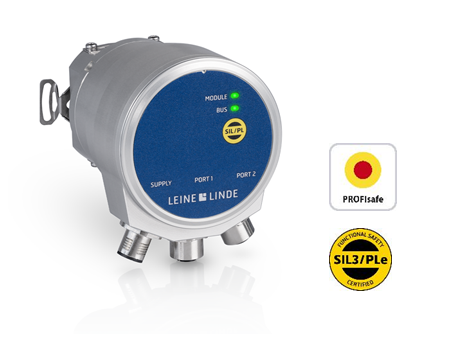
Leine Linde is proud to launch a comprehensive new safety range alongside the cutting-edge FSI 600 series. The series is a family of safety-certified rotary encoders, engineered to meet the highest functional safety standards. With this initiative, Leine Linde enables industrial players to enhance workplace safety while meeting growing global regulatory demands. As safety requirements in industrial automation continue to rise, so does the need for certified, high-performance safety products. Leine Linde’s new solution delivers on both – helping leading manufacturers protect people, machinery and production environments worldwide.
Certified for the most demanding applications
The FSI (Functional Safety Integrated) 600 series marks a significant step forward in Leine Linde’s portfolio. With its SIL3 and PLe category 4, functional safety compliance it is certified for use in the most demanding safety applications. The absolute inductive sensing offers a durable, contactless technology for long-term reliability in harsh environments. PROFIsafe over PROFINET ensures safe communication in real-time industrial networks.
The first product in the FSI 600 series, FSI 608, is a unique safety encoder that fully complies with the latest standard: IEC 61800-5-3, covering functional, electrical and environmental encoder safety. FSI 608 is among the first encoders on the market to meet this level. With multiple mechanical options, scalable resolution and comprehensive built-in safety functions, the FSI 608 offers easy integration into diverse automation setups.
From Collaboration to Innovation: How a Long-Term Partnership Led to a Breakthrough Dispensing Solution
Titan Enterprises, a leading UK manufacturer of liquid flow measurement solutions, has had a long-standing supplier relationship with John Guest, part of the RWC family of brands, since designing their first beverage flowmeter in the early 1990s. Following discussions with a customer, the two companies teamed up to develop a streamlined, state-of-the-art single unit for beer dispensing systems, fully integrating Titan’s turbine flow technology within RWC’s pioneering PolarClean connector.
Measurement & Instrumentation

Starting out in 1949 as Reliance Manufacturing Company Pty Ltd (RMC) with a drive to transform industry, RWC was later born from the desire to challenge convention. A major landmark for the company came in 2018 with the acquisition of John Guest and its globally renowned push-fit brands.
Titan’s NSF-Approved beverage meter, 800-series turbine flowmeters, and the Atrato® ultrasonic flowmeter range all incorporate John Guest connectors, which are extensively used in the food and beverage industry for their specialised ‘push-to-connect’ solutions.
A Partnership Built on Trusted Technology and Precision Engineering
In 2023, following years of evolving innovation since the launch of JG PolarClean by John Guest in 2010, RWC teamed up with Titan Enterprises to deliver an exciting solution for the beverage industry. A mutual customer discussion sparked the R&D collaboration, as users were already pairing RWC’s PolarClean push-fit connectors alongside Titan’s Beverage meters in beer dispensing systems. However, integrating the two products required additional modifications - introducing cost and complexity to a customer’s installation. Together, RWC and Titan set out to change that.
To simplify installation and enhance efficiency, RWC and Titan began a partnership that led Titan to leverage its expertise in turbine technology and design, while RWC contributed its innovative tooling capabilities. The aim of the collaborative project was to provide a streamlined, state-of-the-art single unit for beer dispensing systems by fully integrating Titan’s turbine flow technology within RWC’s pioneering PolarClean connector.
Phil Lacey, RWC’s Global Fluid Tech Business Development Director, stated “When we knew we needed a flowmeter for our PolarClean system, Titan made absolute sense as they are the market leader in the space. They have been an absolute pleasure to develop this product with and we look forward to seeing how the wider market receives this new innovation.”
Overcoming Challenges Through Collaboration
The primary challenge was fitting the turbine into the PolarClean tube/connector without compromising either system. Through workshops, prototyping and design, the teams developed a modified version of RWC’s straight PolarClean union. SLA (stereolithography apparatus) 3D-printed models were used to create prototypes, which were then tested and calibrated by Titan before customer trials.
Neil Hannay, Senior R&D Engineer at Titan Enterprises, reflected: “Working with RWC was refreshing. Their expertise in toolmaking made the development and prototyping process a smooth journey. Open, frank, and realistic discussions, along with regular meetings, kept the project on track.”
Josh Smith, Project Manager at RWC, explained: “By combining Titan’s expertise in flowmeters and our own expertise in push-fit technology, this new product has represented a shared commitment to quality, innovation and delivering value to our customers.”
Delivering a Differentiated Solution to Customers
Once the final design was validated, RWC developed the injection moulding tool for the PolarClean body, while Titan managed the sensor and turbine technology. After minor modifications, the first units were shipped to customers for final performance validation.
The partnership resulted in a fully integrated innovative solution for the beverage industry: the JG PolarClean system uses ‘tube-in-tube’ technology to ensure beer is kept extra cold and conditioned from the keg to the beer font, even without the need for a cellar. Featuring a standard 3-wire connector, this state-of-the-art product simplifies beer dispense system installations. The JG PolarClean Coaxial Flow Meter accurately measures liquid flow enabling system users to monitor demand or supply usage in coaxial cooling systems.
New Coriolis and Ultrasonic Flow Meters
Expanding into the global instrumentation market with a fully in-house designed setup
Measurement & Instrumentation

HIKMICRO, a subsidiary of HIKVISION has formally entered the global instrumentation market with the introduction of high-precision Coriolis and Ultrasonic flow meters. This strategic expansion marks a significant step towards HIKMICRO’s ambition to deliver a comprehensive industrial platform that unites production control, predictive maintenance and safety within a single, affordable solution.
“Factories increasingly need affordable solutions for production control and digital transformation,” said Stefan Li, Overseas Market Director of HIKMICRO. "Our expansion into instrumentation naturally extends from our thermal imaging expertise. As a subsidiary of HIKVISION established in 2016, HIKMICRO is one of the few manufacturers that integrates chip design and manufacturing, core algorithm development, and testing and production."
The new flow meters build on HIKMICRO’s core competencies in sensor development, signal processing and calibration. The FC00 Coriolis Mass Flow Meter delivers ±0.1% liquid and ±0.5% gas measurement accuracy, making it ideal for food and beverage industries where precision is critical. Its AI-enhanced temperature compensation ensures ≤±0.001 g/cm³ density accuracy while built-in diagnostics monitor system integrity. The product features ultra-fast 8000 samples/sec digital processing that significantly enhances measurement reliability and response times for demanding industrial environments. Meanwhile, the FU00 Ultrasonic Flow Meter achieves ±0.5% accuracy in water applications with its non-invasive design that eliminates pressure loss and downtime. Its smart AI diagnostics continuously evaluate signal quality and probe performance to maintain optimal operation. Though the instruments themselves deliver impressive accuracy and adaptive performance, they are part of a broader objective: to help industries digitise processes without incurring the high costs that have historically slowed adoption.
HIKMICRO’s entry into flow measurement underscores its commitment to bringing reliable, high-accuracy technology to a wider market. By combining in-house chip design and advanced algorithms with manufacturing scale, the company is in a strong position to deliver instruments that meet demanding industrial standards without the traditional price barrier.
Vibrating Level Switch
Level switch approved for hygienic applications
Measurement & Instrumentation
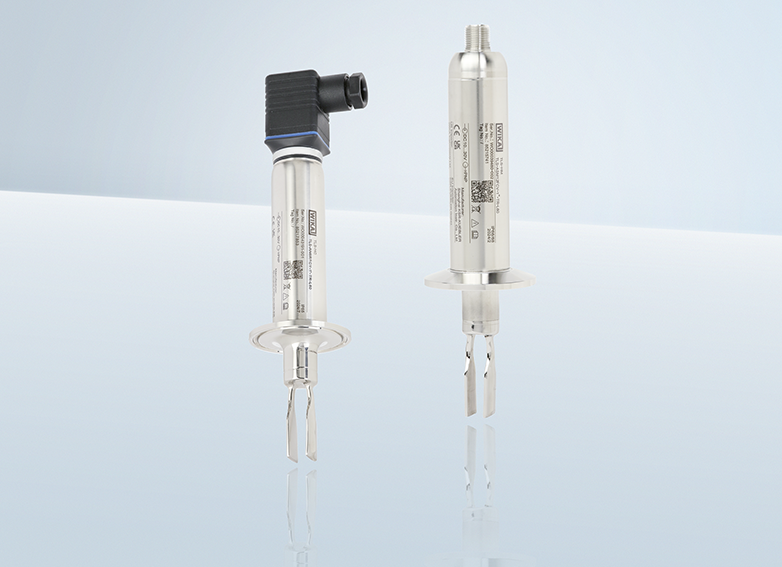
WIKA has extended its portfolio in the field of level measurement. The TLS vibrating level switch is now available with EHEDG approval for hygienic applications. The new TLS-H version fulfils the criteria of the EHEDG classification “TYPE EL CLASS I”. The instrument is therefore ideal for use in sensitive production areas such as the food and pharmaceutical industries. In addition, the TLS-H fulfils the standards of EC Regulation 1935/2004 and Good Manufacturing Practice (GMP). These certifications guarantee maximum safety and quality in the production and processing of food and pharmaceutical products. With its robust and easy-to-clean design, the vibrating level switch contributes to compliance with the strictest hygiene guidelines.
The TLS-H in hygienic design can be used for CIP (cleaning in place) and SIP (sterilisation in place). It is available with two electrical outputs: TLS-HC with ASC4 connector and TLS-HM with M12 connector. TLS-H is available with different surface roughnesses to meet the specific requirements of the respective application. A large number of hygienic process connections enables easy integration into different processes. The vibrating level switches are, depending on the version, suitable for a process temperature of -40 ... +150 °C [-40 ... +302 °F] and an operating pressure of -1 ... +64 bar [-14 ... +928 psi].
Reliable In-Line Measurement for Compressed Air and Technical Gases
Advanced 4-in-1 flowmeter designed to optimize compressed air and industrial gas consumption
Measurement & Instrumentation

The VPFlowScope M Thermal In-line ifrom VPInstruments s a multi-functional device offering bi-directional flow measurement, pressure measurement, temperature measurement and total flow monitoring. Designed for point-of-use consumption measurements, this state-of-the-art thermal mass flow sensor guarantees efficiency, reliability and unparalleled ease of maintenance.It is available with 4-20 mA/Modbus RTU or PoE (Modbus TCP) connectivity. Quick Connect technology enables easy installation and safe, precise alignment. The patented VPSensorCartridge® enables quick on-site servicing. Ideal for smaller diameters (1" to 2"), the FlowScope is perfect for point-of-use and submetering applications.
Recycable sensor cartridge
Thanks to its VPSensorCartridge® technology, the VPFlowScope M Thermal In-line eliminates the need for traditional recalibration. Users can simply exchange the sensor cartridge on-site instead, significantly reducing downtime and maintenance costs. This innovation ensures continuous, precise measurements with minimal operational disruption. Used VPSensorCartridges can be returned for refurbishment, reducing waste and conserving resources. Users will receive a refund for each returned cartridge, and as an added bonus, VPInstruments will plant a tree on their behalf for every cartridge returned.
Empowering industries with real-time insights
The VPFlowScope M Thermal In-line is designed for a wide range of industrial applications, including compressed air monitoring for leak detection and cost allocation. It can measure industrial gases such as N₂, O₂, CO₂, He and Ar, as well as other dry, non-corrosive gases. It can also be used for energy optimisation and predictive maintenance in manufacturing and production facilities.
Pressure Transmitter With Ceramic Diaphragm
Compact and cost-effective for pressure and level measurements
Measurement & Instrumentation

The new KROHNE OPTIBAR PC 1010 is offered in a version with a ceramic diaphragm in the ultra-compact pressure transmitter range. Users can now also benefit from the advantages of the material in low-cost, small pressure transmitters. Thanks to its measuring cell made of high-performance ceramics, the gauge pressure transmitter offers significantly increased resistance to pressure surges, water hammer, abrasion and corrosion compared to metallic diaphragms. This makes the OPTIBAR PC 1010 particularly suitable for water applications in which the jerky start-up of pumps can severely damage the stainless-steel measuring cell of conventional pressure transmitters.
Robust design with IP68 option
For pump control in manholes prone to flooding, the pressure transmitter is available as an IP68 rated version designed to be waterproof. Thanks to its robust design, the pressure transmitter is also ideal for long-term stable pressure and level measurement in many other industries as well as in factory automation. It offers a cost-effective solution for simple applications with gases, vapours and liquids up to 40 bar and temperatures up to +125°C.
The dry capacitive measuring cell of the pressure transmitter ensures increased process reliability. It works without filling oil. Leakage of filling oil into the process is therefore ruled out from the outset by the design. The OPTIBAR PC 1010 is available with both a recessed and a front-flush ceramic diaphragm. The pressure transmitter is extremely temperature and long-term stable and has excellent accuracy for its device class. It is also available in an intrinsically safe version with ATEX/IECEx approval for use in Zone 0.
Infrared Temperature Measurement Devices with Network-Enabled Protocols
Digital Interfaces for Efficient Process Automation with Pyrometers or Infrared Cameras
Measurement & Instrumentation
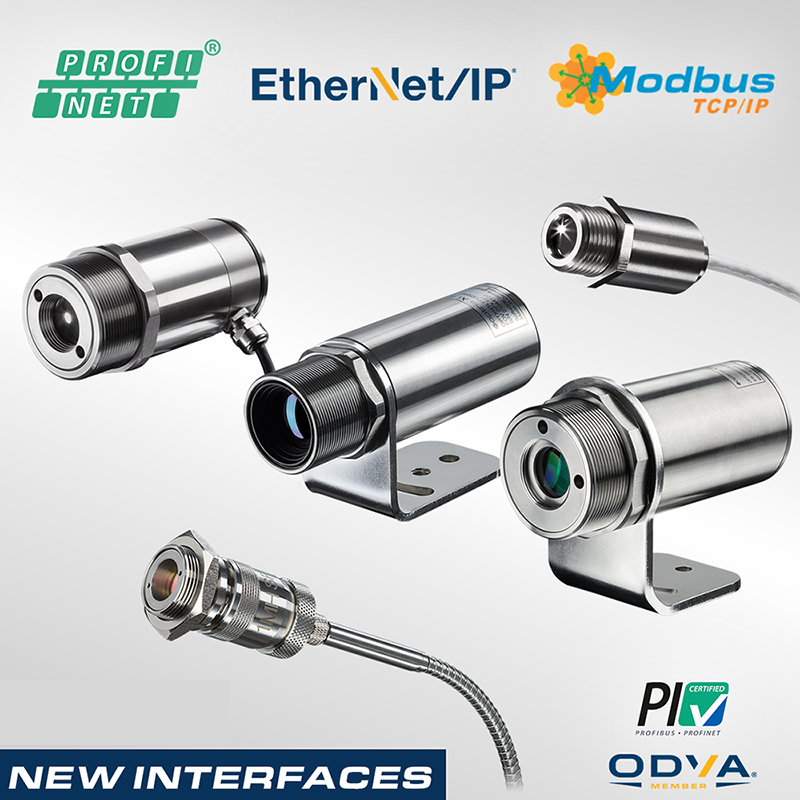
Optris is introducing new digital interfaces for process automation for the latest pyrometer models from the CT, CTlaser, CTratio, and CSvision series, as well as the Ethernet-based Xi series infrared cameras (ETH). This enabes even more seamless integration into industrial automation systems.
With the new digital interfaces, Optris supports common industrial protocols such as Profinet, EtherNet/IP, Ethernet TCP/IP, and Modbus TCP. This ensures reliable real-time transmission of temperature measurements, enhancing control and monitoring of manufacturing processes.
Robust Networking for Demanding Environments
The new Industrial Ethernet interface modules, like all previous interfaces, are seamlessly integrated into the CT electronics. Installation is simple via a 4-pin D-coded socket with IP67 protection and standardized industrial network cables.
For CSvision and Ethernet-based Xi Series (ETH), the new interfaces are provided as separate interface boxes. A wide range of cable lengths allows for perfect adaptation to different installation conditions. All components are designed to meet IP67 standards, ensuring optimal protection for industrial use in demanding production environments.
For quick and hassle-free commissioning, Optris provides pre-configured EDS and GSD files. These enable easy device implementation into existing control systems and significantly reduce integration effort. Additionally, the digital interfaces are certified to ensure seamless compatibility with common industrial standards.
Optimized Processes Through Smart Temperature Monitoring
Thanks to enhanced network connectivity, Optris' infrared temperature measurement devices can now be integrated even more precisely and flexibly into industrial processes. This enables improved process control, reduces downtime, and increases production efficiency.
Plug-And-Play Conveyor Solutions
Solving different engineering challenges with the right supplier
Processing Machinery

For most members of the public, the thought of their local bakery calls to mind the smell of freshly baked bread and a delicious choice of pastries – sweet and savory. Yet behind the scenes, industry insiders know that the process of getting baked goods to the consumer is full of engineering challenges. Hygiene standards, packaging challenges, sticky dough and hot ovens mean that a lot of expertise and investment goes into delivering these treats.
Daniel Nussbaum, Manager Powertrain and Inside Sales at Regal Rexnord, explains how plug-and-play conveyor solutions can reduce cost and add simplicity for processing and packaging solutions.
In the fast-paced world of bakeries, the production line is always under pressure to keep up with the demand for freshly baked goods. There is no opportunity to store up a reserve of product to mitigate unexpected downtime, so reliable operation and ease of maintenance is essential to remain competitive. Conveyor systems are essential infrastructure for mass production, from the initial proving stages, through to baking, packing and sorting, so it makes sense to make sure they are as efficient and reliable as possible.
System integration vs. commodity procurement
For some operators, the components that make up conveyor systems - such as bearings, chains, belts and motors – are viewed as ‘commodity products’. Parts that need to be bought and replaced fairly frequently to avoid costly downtime, but that can’t really add any specific value to the overall productivity of the system. As such, they instruct their procurement managers to simply source products based on considerations such as price and availability.
However, this is rarely the ideal process. Regal Rexnord brought a multitude of brands together, each with specialized products designed specifically for food processing and baked goods, which can each be integrated into a single, engineered package.
Whether a customer is investing in a brand-new production line, or is looking to upgrade their existing facility, engineers are able to approach the challenge as a true systems integrator should; building a solution that is specified and designed with each unique challenge in mind.
For example, engineers can specify bearings from various brands depending on the specific needs of the client’s application. For systems that would be hard to access, Regal Rexnord can supply sealed for life bearings that require little to no maintenance; for mixing applications with high levels of flour dust there are the IP69K-rated Sealmaster™ bearings; or for systems that are subjected to daily washdowns there are stainless steel solutions.
With a single engineering team specifying all the components within the conveyor system, the end-user can rest assured that all the parts will be fit for purpose and integrate seamlessly.
Single source supply – the proof is in the pudding
Procurement specialists and maintenance engineers can also benefit from the single source solution on offer from Regal Rexnord. While the components can be specified across multiple brands, end-users can specify all products and engineering services from a single entity, using the most convenient sales center depending on the client’s locations.
All brands within the Regal Rexnord family can offer expert advice and systems integration across the whole powertrain. For procurement teams this guarantees that pricing is direct from the manufacturer whilst only a single supplier needs to be onboarded. By managing its global supply chain to maximum effect, the company makes your logistics a lot simpler.
The benefits here extend to aftersales support, where maintenance teams can access spare parts and service engineers from local Regal Rexnord facilities. These teams can support with condition monitoring and preventative maintenance plans which means that they work to prevent costly, unplanned downtime.
Rotary Lobe Pump for Demanding Applications
Efficient conveying of fluids with high viscosity
Pumps, Valves & Compressors

NETZSCH is expanding its rotary lobe pump product portfolio with the new TORNADO® T1 XXLB-F size. The pump has been specially developed for demanding applications and enables efficient conveying in numerous areas of application with high flow rates. With the new TORNADO® T1 XXLB-F, NETZSCH is setting new standards in the pumping of highly viscous, solids-laden or thick fluids. Sensitive liquids are conveyed gently by the pump. Challenging applications such as MBR filtration, sewage lifting systems, wellpoint dewatering or the pumping of highly viscous media such as molasses or magma in the sugar industry are no problem for the rotary lobe pump.
The XXLB-F enables pumping at higher pressures and larger flow rates, even with varying operating pressures. Easy cleaning and maintenance of the pump result in less wear, less downtime and therefore cost savings. The new size is the optimum choice for applications with the highest demands on the pump used.
Three-Way Ball Sector Valve with Electric Actuator
Actuation with supply voltage range from 24 to 240 DC and AC
Pumps, Valves & Compressors

With the new type 4083, Schubert & Salzer is extending its product range by a three-way ball sector valve with electric actuator for operation in diverting or mixing functions. The quarter turn valve with a supply voltage of 24–240 V DC/AC (50/60 Hz) enables high-precision control (rangeability of 100:1) over a wide control range with Kvs values that are around 20% higher than those of common alternatives. Due to the special contour of the ball sector, the total Kv value (volumetric flow) remains virtually constant in any valve position.
Due to their unique properties, electrically or pneumatically actuated three-way ball sector valves offer particularly high added value in the temperature control and mixing processes of the steel, chemical, food and beverage industries as well as in power generation, the manufacture of plastic and rubber products and for use in test benches.
Next-Generation Twin Screw Pump
Enhanced pump design for higher performance
Pumps, Valves & Compressors

Wangen Pumps has enhanced the design of its trusted TWIN NG pump, significantly improving its performance and reducing maintenance requirements. The result is a proven hygienic pumping solution that performs better for longer, boosting uptime and reducing lifecycle costs for customers in the food, pharmaceuticals and cosmetics manufacturing sectors. Twin NG screw pumps are designed to reliably handle low to highly viscous, volatile, or gaseous products in applications that demand maximum hygiene and efficiency. Available in several sizes, the TWIN pumps offer a maximum flow rate of 200 m³/h and a maximum differential pressure of 25 bar.
Improved TCO
The first design enhancement involves replacing the Twin NG’s motor coupling with a lantern coupling. This innovative feature prevents pump shaft misalignment, which reduces stress and vibration, thereby enhancing the lifespan of the pump and motor. With less wear on pump shafts and bearings, maintenance requirements are minimised, and service intervals are extended. When maintenance is necessary, it is easier to perform since no shaft alignment is required. This lantern design thus lowers the total cost of ownership (TCO) and optimises uptime.
Another benefit of the new lantern design is smoother operation in demanding conditions, particularly where the Twin NG is used to pump viscous and abrasive fluids under high pressure. The lantern coupling also enables better sealing arrangements, minimizing leaks and the risk of product contamination.
Better hygiene
The second design improvement to the Twin NG pump is the option to install the pump using hygienic machine feet instead of a base plate. These feet are much easier to clean than traditional base plates because they minimise surfaces where dirt and bacteria can accumulate, greatly reducing the risk of hidden contamination associated with solid base plates. The individual feet also facilitate more effective wash-down and drainage, without the need for elaborate drainage slopes and holes.
Like the pump’s lantern coupling, the machine feet help to dampen noise and vibration, reducing wear on the pump and associated equipment. Individually adjustable, machine feet enable precise levelling, making it easier to align the pump with existing piping and reducing the risk of errors during installation. The feet also provide better access to the pump during routine maintenance, whereas base plates may require disassembly before vital components can be reached. Machine feet therefore improve pump availability by reducing servicing time.
Additional benefits of machine feet include a better ability to compensate for thermal expansion, preventing damage to the pump and piping, as well as better stability during maintenance at the pump’s fluid end. Furthermore, machine feet generally require less room than a base plate, which is important in confined spaces. Eliminating the base plate also reduces material and fabrication costs, making pump transportation and handling easier.
H
HIKMICRO 9I
IDS Imaging Development Systems GmbH 6K
Krohne Messtechnik GmbH 10L
Leine & Linde AB 7N
Netzsch Pumpen und Systeme GmbH 12O
Optris GmbH & Co. KG 10P
Phoenix Contact GmbH & Co. KG 7 Pumpenfabrik Wangen GmbH 12R
Rexnord FlatTop Europe B.v. 11S
Schubert & Salzer Control Systems GmbH 12 Sulzer Chemtech 5T
Titan Enterprises Ltd 8V
VPInstruments 10W
WIKA Alexander Wiegand SE & Co. KG 9TIMGlobal Media BV
177 Chaussée de La Hulpe, Bte 20, 1170 Brussels, Belgium
o.erenberk@tim-europe.com - www.pcne.eu
- Editorial Director:Orhan Erenberko.erenberk@tim-europe.com
- Editor:Kay Petermann k.petermann@tim-europe.com
- Associate Publisher:Marco Marangonim.marangoni@tim-europe.com
- Production & Order Administration:Francesca Lorinif.lorini@tim-europe.com
- Website & Newsletter:Marco Prinarim.prinari@tim-europe.com
- Marketing Manager:Marco Prinarim.prinari@tim-europe.com
- President:Orhan Erenberko.erenberk@tim-europe.com
Advertising Sales
Tel: +41 41 850 44 24
Tel: +32-(0)11-224397
Fax: +32-(0)11-224397
Tel: +32 (0) 2 318 67 37
Tel: +49-(0)9771-1779007
Tel: +39-02-7030 0088
Turkey
Tel: +90 (0) 212 366 02 76
Tel: +44 (0)7594 239 182
John Murphy
Tel: +1 616 682 4790
Fax: +1 616 682 4791
Incom Co. Ltd
Tel: +81-(0)3-3260-7871
Fax: +81-(0)3-3260-7833
Tel: +39(0)2-7030631
- PCN Europe WebMag May 2026 Essential source of information for professionals in the broad field of processing industries since 2004
- PCN Europe March 2026 WebMAg Essential source of information for professionals in the broad field of processing industries since 2004
- PNC Europe WebMag January 2026 Essential source of information for professionals in the broad field of processing industries since 2004
- PCN Europe December 2025 WebMag Essential source of information for professionals in the broad field of processing industries since 2004
- PCN Europe WebMag October 2025 Essential source of information for professionals in the broad field of processing industries since 2004
- PCN Europe WebMag August 2025 Essential source of information for professionals in the broad field of processing industries since 2004
- WebMag PCN Europe July 2025 Essential source of information for professionals in the broad field of processing industries since 2004
- PCN Europe WebMag April 2025 Essential source of information for professionals in the broad field of processing industries since 2004
- WebMag January/February 2025 Essential source of information for professionals in the broad field of processing industries since 2004
- PCN Europe WebMag August 2024 Essential source of information for professionals in the broad field of processing industries since 2004
- WebMag PCN Europe July 2024 Essential source of information for professionals in the broad field of processing industries since 2004
- PCN Europe WebMag May 2024 Essential source of information for professionals in the broad field of processing industries since 2004
- PCN Europe WebMag January/February 2024 Essential source of information for professionals in the broad field of processing industries since 2004