
PCN Europe WebMag October 2025Issue #189 - 30/09/2025
Essential source of information for professionals in the broad field of processing industries since 2004
Quick access
Contents2 Industry News: Merck, Siemens | Körber, Pepperl+Fuchs3 Industry News: Endress+Hauser | MOL Group4 Industry News: Europump | HIMA Group, Sella Controls5 JUMO (Advertisement)6 Hygienic Processes & Packaging: From Flour to Finished Masterpieces7 Packaging & Intralogistics: Customized Transport Solution for the Beverage Industry8 Gericke | Wangen Pumps9 Digitalization: Safety Without Blind Spots10 Condition Monitoring & Maintenance: Sensonics | FLIR11 Measurement & Instrumentation: Accurate Greenhouse Gas Monitoring for Carbon Capture and Storage Processes12 Measurement & Instrumentation: Servomex | Emerson13 Pumps & Valves: Bürkert | Schubert & Salzer14 Energy Efficiency: Getriebebau Nord | VPInstruments | Teknic16 Index17 Contacts18Companies in this issue
JUMO GmbH & Co. KG6Bürkert Fluid Control Systems14 Ek Robotics GmbH8 Emerson Automation Solutions - Systems13 FLIR SYSTEMS TRADING BELGIUM11 Gerhard Schubert GmbH Verpackungsmaschinen7 Gericke9 Getriebebau NORD GmbH & Co. KG16 Hutchinson Etanchéité De Précision15 JUMO GmbH & Co. KG6 Netzsch Pumpen und Systeme GmbH15 Pumpenfabrik Wangen GmbH9 Schubert & Salzer Control Systems GmbH14 Sensonics11 Servomex Group Ltd13 Signal Group Ltd12 Teknic16 TÜV SÜD AG10 VPInstruments16


#2 Contents
#3 Industry News: Merck, Siemens | Körber, Pepperl+Fuchs
#4 Industry News: Endress+Hauser | MOL Group
#5 Industry News: Europump | HIMA Group, Sella Controls
#6 JUMO (Advertisement)
#7 Hygienic Processes & Packaging: From Flour to Finished Masterpieces
#8 Packaging & Intralogistics: Customized Transport Solution for the Beverage Industry
#9 Gericke | Wangen Pumps
#10 Digitalization: Safety Without Blind Spots
#11 Condition Monitoring & Maintenance: Sensonics | FLIR
#12 Measurement & Instrumentation: Accurate Greenhouse Gas Monitoring for Carbon Capture and Storage Processes
#13 Measurement & Instrumentation: Servomex | Emerson
#14 Pumps & Valves: Bürkert | Schubert & Salzer
#15
#16 Energy Efficiency: Getriebebau Nord | VPInstruments | Teknic
#17 Index
#18 Contacts
Partnership of Merck and Siemens on End-to-End Digital Workflows from Drug Discovery to Manufacturing
Merck and Siemens are deepening their strategic partnership with the aim of accelerating AI and data-driven drug discovery and development
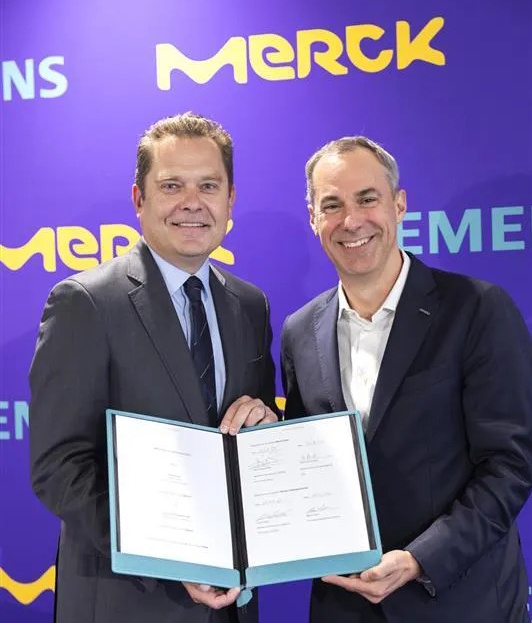
Merck and Siemens have signed a new Memorandum of Understanding (MoU), extending their strategic partnership to accelerate digital transformation in the life science industry by connecting digital and physical products. The agreement focuses on delivering integrated software solutions, systems and consumables that harness automation, data and AI to connect drug discovery, development, and manufacturing. This agreement marks the first joint use of technology acquired by Siemens as part of the acquisition of Dotmatics that was completed in July 2025.
Faster paths to therapies
“Through this collaboration with Siemens, we are opening new possibilities for scientists to move faster from an idea in the lab to a therapy for patients,” said JeanCharles Wirth, Member of the Executive Board and CEO Life Science, Merck. “By combining our strengths, we aim to change how science advances, unlocking new ways to accelerate scientific progress.”
“We are partnering with Merck to give scientists around the world the instruments to speed up the development of life-saving medication”, said Cedrik Neike, Member of the Managing Board at Siemens AG and CEO of Siemens Digital Industries. “Every few years the cost for developing a new drug is doubling. Data, AI and digitalization are key to break this paradigm. We are connecting every step of drug development through a digital backbone – so that data flows seamlessly, insights emerge faster, and medication reaches the patients faster.”
One environment for data-driven decision-making
The collaboration will focus on digital-first solutions that close workflow gaps in drug discovery and biomanufacturing by integrating Merck’s software-as-a-service (SaaS) products with Siemens’ digital ecosystem. Initial pilot projects include making Merck’s AI tools and digital applications available in Luma, Siemens' Scientific Intelligence Platform acquired as part of Dotmatics. This will give scientists a single environment that links product ordering with immediate access to the digital tools and insights they need to make faster, data-driven decisions.
Building on these projects, Siemens and Merck will pursue additional joint projects and explore deeper integration over time. These initiatives include co-developing smarter data management tools and intuitive interfaces that make advanced processes easier for scientists to use. The partnership is also evaluating digital marketplaces that would give customers streamlined access to complementary technologies and services.
Together, Merck and Siemens see digital innovation as central to the future of life sciences. This partnership is designed to set a new standard for digital transformation, giving scientists and manufacturers the tools to deliver breakthroughs faster. It also builds on earlier MoUs between the two companies in smart manufacturing, reflecting a shared commitment to advancing innovation across the industry.
New Partnership between Körber and Pepperl+Fuchs
The collaboration is paving the way for seamless MES deployment on HMI Systems in pharma and biotechnology

This partnership brings together two established industry leaders. Pepperl+Fuchs’ GMP-compliant VisuNet HMI systems enable the operation of PAS-X MES, Körber’s world-leading Manufacturing Execution System. The two companies have jointly developed a recommendation that significantly simplifies installation and rollout. For manufacturers in the pharmaceutical, biotech, and cell and gene therapy sectors, this means easier system implementation and reduced manual configuration effort.
For stationary and mobile units
The VisuNet product family from Pepperl+Fuchs covers a wide range of HMI solutions for highly regulated, hygienic, and hazardous production environments – including Zone 1/21. In addition, Pepperl+Fuchs offers mobile devices and smartphones in explosion-proof designs, specifically developed for safe use in hazardous areas, enabling flexible data capture and mobile communication. The VisuNet HMI systems themselves are modular, allowing components such as display or computing units to be replaced quickly and easily on-site. They are designed for both stationary and mobile use in cleanrooms and hazardous areas. Peripheral devices such as handheld scanners, antimicrobial keyboards, and RFID readers further support secure and efficient user authentication and operation.
“With Pepperl+Fuchs, our customers gain a partner that not only delivers technological excellence but also brings decades of experience in highly regulated production environments,” said Lars Hornung, Senior Principal Alliances & Technology Partners Software at Körber Business Area Pharma. “The combination of PAS-X MES and VisuNet HMI systems enhances process safety, efficiency, and flexibility – even under the most demanding production conditions.”
“We are delighted to have Körber, the leading MES provider, as a partner at our side,” added Yannick Klein, Product Marketing Manager at Pepperl+Fuchs. “Our vision is to provide plant operators with a solution that enables even more seamless interaction between VisuNet HMIs and PAS-X MES, simplifies user workflows, and ensures reliable long-term integration.”
Heading to the Last Round Again
Endress+Hauser is once again among the three finalists for this year’s German Sustainability Award (GSA) in the measurement and control technology sector.

“The fact that we are once again among the finalists for the German Sustainability Award confirms our consistent path toward sustainable transformation – both in our own actions and in what we implement together with our customers. This recognition motivates us to continue actively shaping our responsibility,” shares Julia Schempp, Corporate Sustainability Officer of the Endress+Hauser Group.
Partner for sustainable transformation
Being a partner to the process industry, Endress+Hauser approaches sustainability holistically: products, solutions and services in measurement and automation technology support customers worldwide in using resources efficiently, reducing emissions and making processes safer and more environmentally friendly. At the same time, as a family-owned company, Endress+Hauser’s sustainable approach to its own processes is at the core of its long-term thinking, throughout generations. The company’s greenhouse gas targets, including its commitment to reaching net-zero greenhouse gas emissions across the value chain by 2050, have been validated by the Science Based Targets initiative – one of many declared targets in its sustainability strategy.
Recognition for ecological and social commitment
The GSA aims to promote sustainable development in key sectors of society. Since 2008, the award has been recognizing representatives from business, science and the public sector in 100 industries for their contributions to the sustainable transformation of the German economy. The award is based on demanding assessments. Transparent processes and objective criteria allow the nominated companies and organizations to further improve their sustainability performance.
This year’s award winner will be announced at the German Sustainability Day on 5 December 2025 in Düsseldorf.
Using Plastic Waste as Feedstock for New Materials
The Hungarian MOL Group has achieved a significant milestone in its SHAPE TOMORROW Strategy by successfully completing its first ISCC PLUS-certified production run using circular feedstock at its MOL Petrochemicals site in Tiszaújváros.

The pilot test demonstrates MOL’s ability to convert circular feedstock, namely post-consumer plastic waste-based feedstock into high-quality polyethylene (PE) and polypropylene (PP). This marks a major step in MOL Group’s SHAPE TOMORROW strategy to integrate circular economy into production and establish itself as a leader in sustainable petrochemicals in Central and Eastern Europe.
“This successful test shows that MOL Group can now process circular feedstocks according to ISCC PLUS certified process, turning plastic waste into new, high-value products,” said Péter Császár, Senior Vice President, MOL Group Chemicals. “It is a significant step towards sustainable petrochemicals and strengthens our position as a leading circular economy player in Central and Eastern Europe.”
During the pilot, circular feedstock based on post-consumer waste was introduced to MOL’s steam cracker. This process allows the production of circular-based monomers (the smallest building block of plastics) and then converts them into polymers. During the process, the mass balance approach was applied, a methodology that tracks and accounts for circular material when processed together with traditional inputs, ensuring the balance of the total process flows.
This achievement follows the ISCC PLUS certification, which was achieved by MOL Petrochemicals in Tiszaújváros and Slovnaft in Bratislava in 2024 for steam cracker and polymerization units. Maximizing synergies with waste management is central to MOL Group’s SHAPE TOMORROW strategy. The company aims to continue the transformation towards circular chemicals and to utilize up to 1.5 million tonnes of feedstock for the energy industry by 2030. This is supported by a growing portfolio that includes a concession to manage municipal waste in Hungary, past acquisitions in plastics recycling in Hungary and partnerships to advance chemical recycling technologies.
MOL Group will continue testing additional circular feedstocks and developing new processes to expand the role of waste as a raw material for plastics production.
About:
ISCC PLUS certification is an extension of the ISCC EU standard, offers a voluntary pathway to certification for a wide range of resources in the bioeconomy and circular economy. These include biomass, waste, residues, non-biological renewable energy sources, and recyclable carbon materials.
Alexandre Lacour Appointed as New President of Europump
The European Pump Association has announced the appointment of Alexandre Lacour as its new President for the period 2025–2027. He succeeds Lubos Michlik, CEO of Sigma and member of the Executive Council of the Czech Pump Manufacturers Association (CPMA), who has successfully led the association over the past two years.

Mr. Lacour, who represents the French organisation EVOLIS and serves as President of the French pump manufacturer SOMEFLU and CHABOT, was unanimously elected during Europump’s General Assembly held in Prague in May. His appointment reflects the strong confidence of Europump’s membership in his leadership and strategic vision for the industry.
During the meeting, outgoing President Lubos Michlik was warmly thanked for his commitment and achievements, notably for launching a comprehensive strategy revision and for establishing a new sponsorship program that will support Europump’s long-term growth and visibility.
In his acceptance remarks, Alexandre Lacour stated:
“I am honoured to take on this new role. My goal is to strengthen the voice of Europump at EU level, through fostering a closer cooperation and better knowledge exchange between our members across Europe. There is a lot at stake and we wish to remain front runners in providing sustainable solutions in an EU regulatory environment supporting competitiveness, innovation and high quality industrial products.”
Mr. Lacour will be supported in his presidency by two Vice-Presidents, Markus Holmberg of Xylem, representing the Swedish Pump Manufacturers Association (SWEPUMP) and Jim Wall of Sulzer Ireland, representing the British Pump Manufacturers Association (BPMA)
Together, they will guide Europump in advancing its mission to promote innovation, sustainability, and industrial excellence across the European pump industry.
HIMA appoints CEO for Sella Controls
Carl Ramsden has taken over the newly created position effective October 1, 2025. This newly created position represents an important milestone in the further integration of the British company into the HIMA Group.

As CEO of Sella Controls, Carl Ramsden will assume overall responsibility of the company and will lead it alongside Chris Parr (CTO) and Eddy Turnock (CSO). Carl will also take on the responsibilities previously held by John Blackwell, who will retire as Chief Financial Officer (CFO) on October 31, 2025 after many years of service.
With Carl Ramsden, the HIMA Group gains an experienced leader. He brings more than 20 years of international leadership and financial expertise from the industrial and technology sectors, including senior positions at a chemical company and an automation manufacturer. He has worked on both the manufacturing and end-customer fronts, giving him a comprehensive understanding of both perspectives within the industrial value chain.
Jörg de la Motte, CEO of HIMA Group, said: "We are delighted to have Carl Ramsden, an experienced and strategic manager, join us in this key position. With his expertise and clear value-driven leadership style, Carl Ramsden will further accelerate growth in the process and rail industries in the UK and Ireland and help us to further expand our global position as a solutions provider."
Sella Controls was acquired by the HIMA Group in February 2023 following a long-standing partnership. Sella Controls now serves as the regional centre for the UK and Ireland and as the HIMA Group's global centre of excellence for railway activities, currently employing over 130 people at its Stockport and Ashby sites.

From Flour to Finished Masterpieces
Looks matter, but they aren’t everything: long before croissants, biscuits or waffles are placed in protective packaging, manufacturers need to ensure that their contents are exactly as they should be. In upstream steps, producers pave the way for the highest quality, safety and shelf life of ready-to-eat products. Ingenious technologies that work towards this goal are always part of the packaging process.
Automation & Communication, Processing Machinery

Liqueur pralines have a high-proof – as anyone who bites into them will immediately notice. Less obvious, but just as present, is alcohol in other products, although not necessarily for culinary reasons. For example, industrially produced baked goods often contain ethyl alcohol with 70 to 96 per cent by volume for preservation. The alcohol has an antimicrobial effect, inhibiting the growth of germs – and is therefore an integral part of the production process.
In addition to careful handling and hermetic packaging, preservation ensures that an elaborately manufactured product becomes safe for consumption – and does not pose a risk to consumers, for example through contamination. Unlike with some chocolate creations, however, the alcohol is not added to the products for preservation but rather applied to them. After baking, conveyor belts transport croissants or sponge cakes into a film tube. Spray nozzles located above the transport system spray the ethanol onto the dough products. Although the alcohol content in the sprayed baked goods varies, it is in a very low percentage range.
Tools instead of manual work
So much for product protection on the baked goods themselves. No matter how sophisticated the preservation technique, it would be pointless if subsequent processes couldn’t prevent contamination just as effectively. External factors are at the top of the list of things to avoid: particles and germs need to be minimised by manufacturers. But how? The answer to this challenging question is automation and cleaning. Where there is little human intervention in processes, the risk of contamination – for example, from particles entering the process – is dramatically reduced. Robots are therefore taking on transport and distribution tasks, especially within large packaging lines, where the sheer volume of products is too much for humans to handle.
Robots can perform these functions with great speed, lifting products from feed belts onto transport modules or into trays, for example. These agile helpers enable hygienic processes thanks to their easily accessible, easy-to-clean surfaces. There are also product-specific gripping or suction tools made from food-safe materials, which can now be easily manufactured using 3D printing. Unlike human hands, the devices always pick up baked goods with the same force and speed. In addition to the high level of process hygiene, robots also offer another clear advantage: intact waffles, biscuits and croissants that show no defects such as breakage or pressure marks – causing as little waste as possible.
In the eye of the scanner
For this to succeed, another more inconspicuous technology monitors quality: several scanners check the products at different times, for example at the infeed and outfeed. The systems developed primarily by Schubert are located above the conveyor belts and resemble elongated lights under which the baked goods pass. Built-in cameras inspect every detail. Depending on the type, the scanners record different product characteristics that significantly influence product quality.
In addition to orientation, colour and shape – the main focus of 2D scanners - 3D variants also determine height, which is important for filled products such as biscuits. All parameters are specified in advance by the manufacturers. The scanners simply compare the baked goods on the conveyor belts with these specifications. Advanced systems such as those developed by Schubert can easily handle up to 5,000 units per minute. Should the values not match, faulty products are not picked up and fall into designated containers at the end of the belt. A broken biscuit or an unevenly shaped wafer never even makes it into the flowpacks or trays – and never reaches the shops.
Films for protection
Before opening, the packaging naturally has to form a perfect barrier. Flow-wrapped pouches support product safety: their barrier layer and seal effectively keep out unwanted foreign bodies. Depending on the type of film used, different layers provide the required barrier function: in composite films, for example, polyamide (PA) blocks UV rays and moisture while retaining the flavours of sensitive, fresh products.
When it comes to product protection, monofilms are in no way inferior to multi-material films. Single-layer films consist mainly of PP, which is both easy to heat and inexpensive, with low foreign substance content such as EVOH. The transparent plastic, which is applied in liquid form, creates a high oxygen barrier. Paper films also have a plastic layer that can be applied to the paper either as a water-soluble dispersion or, in the case of laminates, as a laminating film to promote sealing and barrier properties.
In addition to the film barrier, the seal itself fulfils a key protective function, as it hermetically seals the ends of the moulded plastic tube to the outside. However, not all film options can be sealed equally efficiently: composite films are made of more heat-resistant materials than PP monofilms with a low melting point. It is therefore important to adjust the temperature of the sealing tools for single-material films to prevent burning. Ultrasonic sealing provides a remedy here, as vibrations generate friction that gently heats the films. Alternative heat-sealing technologies are also available.
Customised sealing
Flowpackers from Schubert with box-motion ultrasonic sealing technology enable this. The technology is suitable for very high sealing requirements, for example for recyclable flowpacks made from monofilms and even for paper-based films. In contrast to rotary sealing systems, box-motion sealing tools move closed during sealing and synchronise with the film speed in its direction of travel. This ensures optimum sealing quality with hermetically sealed seams.
The result is improved tightness and sealing quality, especially with thicker or multi-layered materials. To ensure that the films deliver what they promise, leading manufacturers test them thoroughly in advance: Schubert uses various leak testing devices at its in-house technical centre to determine the position and presence of possible leaks and to rectify them if necessary.
Stability on the go
However, individual baked goods in flowpacks rarely reach the market without additional packaging. Trays and other outer packaging such as boxes help keep the often delicate creations stable – and therefore safe – during transport. Boxes minimise damage during transport. As mentioned above, robots assist with erecting, filling and closing suitable boxes. The agile machines are fully automated and ensure consistent quality of the transport and/or sales packaging.
Here, too, product safety is paramount: cartoning machines from Schubert’s TLM series, for example, first erect blanks at a high cycle rate and glue them before multi-axis robots gently place the pre-packaged products into the cartons. Here too, precise movements and precisely calibrated tools are also used. Both processes – erecting and loading – are carried out separately to ensure that the baked goods are placed in their second packaging as quickly and safely as possible. From there, they are transported to the wholesale or retail shelves.
Shelf life, quality and safety are the result of the interaction of different systems. beyond the packaging, they ensure that baked goods reach consumers in perfect condition at all times. If one of the components is missing, product and consumer safety are at risk. This makes integrated concepts that combine technologies from a single source all the more important – for production that runs as smoothly as possible and meets the highest standards.
Customized Transport Solution for the Beverage Industry
Niederrhein-Gold Tersteegen GmbH & Co. KG in Moers, Germany has been relying on automated guided vehicles (AGV) from ek robotics. After the system was expanded in 2019 to include vehicles for transporting industrial pallets, new transport robots were added in 2024, opening further functional areas and ensuring even higher throughputs and efficient material flows with their continuous operation.
Automation & Communication, Equipment & Services

With the first expansion stage of the transport system, a fleet of custom-built vehicles from the CUSTOM MOVE series went into operation. Equipped with two roller conveyors, the vehicles each transport two Euro pallets weighing up to one ton and supply the filling lines with empty pallets in three shifts. They also transport the finished goods to the pallet wrapper and on to the storage areas. A characteristic feature of the solution is the contactless energy transfer in the floor, which also serves as inductive track guidance – battery operation is therefore not necessary. In 2019, the system was expanded to include additional CUSTOM MOVE vehicles. This expansion also enabled the transport of industrial pallets (1,200 x 1,000 mm) and the automated connection of the high-bay and cold storage warehouses.
The next expansion stage followed in 2024: new vehicles open up additional filling lines and storage areas. The planning was based on detailed material flow simulations, which were used to determine the optimal number of vehicles and future transport volumes. "The simulations provide us with reliable key figures to ensure the performance of the overall system even as requirements increase," explains Clemens Wollmann, sales engineer at ek robotics. All vehicles are custom-built, designed for high transport performance, short filling intervals, and the specific environmental conditions of beverage production.
Customized transport solutions for the beverage industry
In the international beverage industry, ek robotics primarily uses specially manufactured custom vehicles in addition to series vehicles for projects, including for Arla Foods, Gerolsteiner, and Royal Swinkels Family Brewers (Bavaria). Together, the systems ensure reliable material flows and transport more than one billion liters of beer, juice, and milk annually.
Dense Phase Pneumatic Conveying System
Gentle, energy-efficient handling of bulk materials
Processing Machinery

Dense phase conveying systems are designed for applications where product quality is paramount. Whether handling powders, granules, flakes, or pellets, Gericke’s dense phase conveying technology ensures minimal changes in bulk density and particle size distribution, while also reducing the risk of demixing. This makes them ideal for industries requiring gentle handling of fragile or blended materials. A key advantage of the system lies in its use of pressure vessels without rotating parts. This significantly reduces maintenance requirements and eliminates the risk of metal contamination. The systems are completely dust-tight, offering a clean and safe solution with no leakage—unlike rotary valve systems used in dilute phase conveying. Operating at pressures of up to 6 barg, they enable high solids loading and low gas consumption. This translates into energy efficiency and reduced operational costs.
For a range of different industrial needs
Gericke’s dense phase systems are capable of conveying materials over distances of up to 500 metres and at capacities reaching 150 m³/h. They are available in carbon steel or stainless steel, with vessel volumes ranging from 20 to 5,200 litres, and comply with PED 2014/68/EC, ASME, and GB 150 standards. This flexibility makes them suitable for a wide range of industries, including food, chemical, and raw material processing. The systems support a variety of applications, from gentle transfer of spray-dried products to demixing-free transport from mixers to filling lines, and even direct reactor loading. They also accommodate batch weighing, high-capacity handling, inert gas conveying, and gentle unloading from trucks or railcars.
Gericke offers three conveying modes tailored to specific needs: the “DenseFlow” PHF system for continuous layer transport at moderate gas velocities, the “PulseFlow” PTA system for pulsed plug conveying at low velocities, and the “PulseLine” PTA PL system, which enhances long-distance conveying with external air injectors for maximum process safety. With the addition of the Gericke GUC -C controllers, these systems are not only powerful but also user-friendly, offering intuitive operation, precise control and link to SCADA systems.
Next-Generation Twin Screw Pump
Enhanced pump design for higher performance
Pumps, Valves & Compressors

Wangen Pumps has enhanced the design of its trusted TWIN NG pump, significantly improving its performance and reducing maintenance requirements. The result is a proven hygienic pumping solution that performs better for longer, boosting uptime and reducing lifecycle costs for customers in the food, pharmaceuticals and cosmetics manufacturing sectors. Twin NG screw pumps are designed to reliably handle low to highly viscous, volatile, or gaseous products in applications that demand maximum hygiene and efficiency. Available in several sizes, the TWIN pumps offer a maximum flow rate of 200 m³/h and a maximum differential pressure of 25 bar.
Improved TCO
The first design enhancement involves replacing the Twin NG’s motor coupling with a lantern coupling. This innovative feature prevents pump shaft misalignment, which reduces stress and vibration, thereby enhancing the lifespan of the pump and motor. With less wear on pump shafts and bearings, maintenance requirements are minimised, and service intervals are extended. When maintenance is necessary, it is easier to perform since no shaft alignment is required. This lantern design thus lowers the total cost of ownership (TCO) and optimises uptime.
Another benefit of the new lantern design is smoother operation in demanding conditions, particularly where the Twin NG is used to pump viscous and abrasive fluids under high pressure. The lantern coupling also enables better sealing arrangements, minimizing leaks and the risk of product contamination.
Better hygiene
The second design improvement to the Twin NG pump is the option to install the pump using hygienic machine feet instead of a base plate. These feet are much easier to clean than traditional base plates because they minimise surfaces where dirt and bacteria can accumulate, greatly reducing the risk of hidden contamination associated with solid base plates. The individual feet also facilitate more effective wash-down and drainage, without the need for elaborate drainage slopes and holes.
Like the pump’s lantern coupling, the machine feet help to dampen noise and vibration, reducing wear on the pump and associated equipment. Individually adjustable, machine feet enable precise levelling, making it easier to align the pump with existing piping and reducing the risk of errors during installation. The feet also provide better access to the pump during routine maintenance, whereas base plates may require disassembly before vital components can be reached. Machine feet therefore improve pump availability by reducing servicing time.
Additional benefits of machine feet include a better ability to compensate for thermal expansion, preventing damage to the pump and piping, as well as better stability during maintenance at the pump’s fluid end. Furthermore, machine feet generally require less room than a base plate, which is important in confined spaces. Eliminating the base plate also reduces material and fabrication costs, making pump transportation and handling easier.
Safety Without Blind Spots
With the growing complexity of technical plants, demographic shifts in the workforce, and increasingly stringent regulatory requirements, traditional methods of risk assessment are reaching their limits. To meet these challenges, TÜV SÜD has developed a digital approach, called iaHAZOP, that builds on established risk assessment methods and extends them into the digital domain. The process industry now has a tool that redefines the state-of-the-art in technical risk management. Authors: Michael Pfeifer, Senior Expert Adaptive Safety and Alexander Kurdas, Expert for Machinery and Electrical Safety. TÜV Süd
Explosion Protection & Safety

Industrial companies are currently being confronted with dynamic transformations. Production processes are becoming more modular and flexible, markets demand shorter response times, while requirements for efficiency and sustainability are increasing. At the same time, valuable knowledge is being lost as many experienced professionals retire. This makes comprehensive and reliable risk assessment increasingly difficult, in particular when it is still based on static paper reports or isolated files.
Traditional HAZOP technique captures hazards and their potential impacts, but they are usually static and tied to a specific point in time, often established during construction of the plant. This creates dangerous gaps between documented and actual plant conditions, especially when processes are changed at short notice. In this context, approaches that not only preserve past analyses but also actively interact with live process data are gaining importance. The described method is in its application not limited to modular process plants – it also supports regular plants.
An adaptive approach
The essence of interactive HAZOP (iaHAZOP) lies in merging proven HAZOP principles with modern digital technologies. Rather than relying purely on manual assessments, the system integrates data streams from sensors, digital plant models, and predefined safety rules into a single framework. This transforms static risk assessment into a continuous, adaptive process.
Unlike conventional spreadsheets or document collections, iaHAZOP provides a platform that mirrors the real-time status of a facility. It makes it possible to both access stored safety information quickly and identify hazards instantly. The software is designed to support, not replace, human expertise: automated evaluations provide guidance, but critical decisions remain with qualified staff.
Core components
The functionality of iaHAZOP is built on several technological and methodological pillars, including:
- Digital twins that simulate the behaviour of machines and systems virtually to test scenarios that would pose risks in real operations. These models can be hosted locally or in the cloud.
- Knowledge graphs combine available information such as HAZOP studies, expert knowledge, and incident records into networks, making hidden interrelations visible.
- Real-time sensors continuously provide data on parameters such as pressure, temperature, and flow. Deviations from safe ranges can be detected immediately.
- Hazard rules inform operators on the fundamental physical and chemical properties which need to be observed to prevent potentially hazardous situations.
- Regulatory requirements are integrated into the system so that evaluations are always checked against applicable standards.
These elements combined provide a dynamic and comprehensive perspective on safe plant operation.
A concrete impact
How can run-time risk assessment impact a process facility in the real world? The following examples illustrate incidents where iaHAZOP could have supported in early anticipation or prevention:
- Faulty valve leading to explosion: A valve appeared closed in the control system but was leaking internally due to wear and tear. Because this information was not shared between departments, the hazard went unnoticed, resulting in an explosion due to unwanted backflow. iaHAZOP could have indicated the risk with the help of information sourced from its various core components, such as sensor readings or digital twin simulations.
- Residual pressure in boiler: During maintenance, it was assumed that a vessel was depressurised. Undetected residual pressure caused steam to escape, injuring staff. Cross-checking live sensor data with digital twins would have provided an early warning.
- Outdated risk assessment after process changes: Following operational modifications, risk documentation was not updated. This led to an acid leak, costly cleanup, and weeks of downtime. iaHAZOP would have adjusted the risk status in real time and highlighted the inconsistency.
Benefits for modular and large plants
The process industry increasingly operates in two directions: flexible modular plants and large, complex facilities. In modular plants, each change requires a complete reassessment of risks. iaHAZOP accelerates and standardises these evaluations by applying safety rules automatically to the new configurations. In large, static plants, the system connects data from otherwise isolated departments. This creates a unified view of the actual safety status, making dependencies more transparent and enabling faster intervention in emergencies. But safety is not the only benefit — by mapping hazards and their triggering events (failure modes) semantically, departments beyond just safety gain advantages. Added value is also generated for operations and maintenance teams.
Compliance and documentation
Beyond hazard prevention, iaHAZOP supports companies in meeting legal and organisational requirements. Documentation, which is often time-intensive, can be partially automated. Risk reports can be generated directly from the system, improving transparency and traceability. This reduces administrative burdens and increases legal certainty.
Flexible implementation and outlook
Not all companies have the same digital maturity. iaHAZOP is therefore designed for phased implementation. For operators with more advanced infrastructures, it can be incorporated into the system more promptly, whereas others might need to start small and build up to a modern risk management system progressively.
The long-term vision is to embed safety as an integral part of daily operations rather than treating it as a periodic obligation. By incorporating intelligent analytics into routine workflows, companies foster a culture of foresight that minimises both accidents and downtime.
Conclusion
The demands on risk management in the process industry continue to grow. Traditional methods based on periodic reviews are no longer sufficient. iaHAZOP bridges the gap by combining the strengths of established HAZOP studies with digital capabilities. It provides a real-time view of plant conditions, connects knowledge and data, and empowers experts to make well-founded decisions. In doing so, it shows how safety, productivity, and regulatory compliance can be aligned. Companies adopting such dynamic solutions position themselves to thrive in an increasingly complex environment.
Vibration Monitoring Package for Cooling Tower Fans
Effective monitoring of critical infrastructure is an essential requirement across the power generation, Oil, Gas and Petrochem industries where smooth running and trouble-free system operation is vital, especially in today’s highly competitive and energy cost-conscious environment.
Maintenance, Measurement & Instrumentation
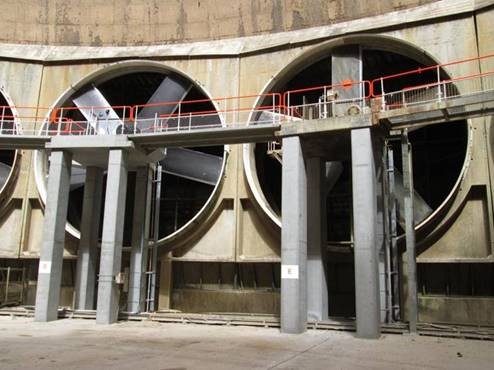
Condition monitoring specialist SENSONICS are experts in developing highly effective monitoring systems based on over 50 years of experience, including vibration monitoring products. A good example of this is the recent completion of a cooling tower monitoring project at a major Petrochemicals plant.
The Project Engineer at the site confirmed they were looking for a suitable system to monitor and protect cooling tower fans to prevent issues in case of failure of the fan blades. The requirement would be for individual systems to monitor each of the twenty motor / gearbox driven fans which were located between the motors and fans around the base of the cooling tower.
Early warning to avoid major damage
Confirming the specific requirements of the application, the Project Engineer commented, “The fan speed is 131RPM / 2.18Hz and what we want is to have a single transducer mounted on the gearbox (each fan is mounted on the gearbox output shaft) and the issue we want to address is the potential failure of the fan blades. When this has happened, the vibration has been so severe it damaged the concrete platform that the fan assembly is mounted on, as well as damaging adjacent fans from the fan projectiles”. Also, it was confirmed that, “The atmosphere where the fan is mounted is very wet and windy as the fans pull moist air out of the cooling tower packing and blows it across the gearbox and motor.”
Confirmation of these specific issues and challenges initially suggested the need to install a suitably ranged 4-20mA vibration transducer and then feed this to a closely located unit that has the start / stop buttons for the fans, enabling the tripping of a fan if the vibration is too high.
There was also a need to feed the overall vibration levels to the main plant DCS system. Due to the specific requirements of this application the frequency of response of the transducers would need to be lower than below 2Hz and there was no requirement for any local display or further diagnostics. A simple system which would reliably trip the fan out if it were failing and additionally to give an indication on DCS for the overall vibration level.
Conclusion
Once the specific requirements of this vibration monitoring application were confirmed, Sensonics were able to suggest and supply a combination of their DN26 G3 dual channel protection system along with their VEL/GLF low frequency (slow speed) velocity transducers. Established in the condition monitoring market for many years Sensonics has supplied thousands of these compact and innovative, din rail mountable DN26 G3 dual channel vibration monitors which have delivered reliable and cost-effective vibration monitoring across a wide range of installations. This high performance fully programmable signal conditioning unit is capable of monitoring 2 channels of absolute vibration, shaft vibration or shaft position, while a third channel option is available for measuring speed or for use a phase reference.
To complete the solution for this application is Sensonics VEL/GLF, a low frequency velocity transducer (slow speed) option proved to be ideally suited to the large fans which were operating at a minimum RPM. This electro dynamic sensor provides a superior performance compared to piezo-electric devices by combining high measurement sensitivity with a frequency response down to 0.5 Hz.
This level of sensitivity, along with excellent noise performance, provides the necessary dynamic range required for detailed analysis of gearbox vibration, so is ideal for measuring velocity vibration on equipment with speeds down to 30 RPM. Furthermore, the VEL/GLF has advantages over traditional piezoelectric based velocity vibration sensors which are susceptible to many forms of interference in low frequency applications that can result in spurious readings and alarms.
As a result of its robust design, the VEL/GLF offers high noise immunity due to the low impedance electro dynamic nature of the sensor assembly.
In addition to the filtering of high frequency events and since no electronic integration is required, means the design of the sensor is immune to the saturation problems that impair the reliability of other piezoelectric devices.
Thermal Camera with App-Enabled Functionality
Structured Data for faster workflows and better decision making
Maintenance

Flir introduces the iXX-Series of next-generation app-enabled thermal cameras that are set to transform inspection tasks across a multitude of asset condition monitoring, building inspection, and other applications. Built on Flir’s new ACE platform, the iXX combines the power of apps with a high-performance thermography inspection tool, enabling scalable, intuitive, and connected condition monitoring. Notably, direct integration with Flir Assetlink browser-based software automatically connects Flir radiometric images to an asset hierarchy structure, speeding workflows and delivering critical insight.
Traditional thermal inspections are often complex, inconsistent, and disconnected. Scaling traditional thermography programs can be difficult, yet failing to do so results in safety and productivity related costs. The new Flir iXX solves these challenges with a high-quality, app-driven platform that simplifies inspections, standardizes data, and scales effortlessly across teams and sites.
Plugging the Skills Gap
Around 60% of maintenance teams report a shortage of skilled thermographers. To help overcome this issue, intuitive, app-guided workflows on the new Flir iXX-Series enable maintenance workers of any skill level to undertake efficient and secure inspections.
The FLIR iXX comes with everything needed to get started, even providing an onboarding app to ensure successful adoption. The result is a shallower learning curve for less experienced users looking to perform expert-level inspections and accurately assess asset condition.
Better Asset Health Insight
Reporting demands up to 50% of a technician’s time using traditional workflows. However, this percentage drops to zero with connected workflows, allowing users to focus on inspections, not paperwork.
The iXX comes loaded with Flir's new Assetlink browser-based software, which allows users to plan inspections, connect thermal images to asset data, and produce inspection reports with the goal of simplifying workflows, improving asset health, and reducing reporting time. Furthermore, trend visualization provides insight on asset condition not possible with a single snapshot, while dashboard data visualization simplifies communication and improves operator understanding of condition monitoring programs.
Accurate Greenhouse Gas Monitoring for Carbon Capture and Storage Processes
As the world urgently seeks ways to decarbonise, James Clements from Signal Group explains how gas analysis will perform a vital role – particularly in carbon capture, and not just for CO2 but for all of the important greenhouse gases.
Measurement & Instrumentation

The climate crisis is forcing nations to urgently find ways to lower their greenhouse gas (GHG) emissions, and carbon capture is likely to be one of the key technologies in enabling this goal. This, in turn, is prompting a demand for GHG analysers to help assess capture technologies and to verify that GHG reduction claims are valid.
Measurement is basic requirement
Carbon capture and storage (CCS) involves the capture of CO₂ emissions from industrial processes, such as steel and cement production, or from the combustion of fossil fuels to generate power. Primarily, this CO₂ is then stored underground in geological formations. Alternatively, it could be utilised in industrial processes by converting it into plastics, concrete or biofuel, for example. This is known as Carbon Capture Utilisation and Storage (CCUS). However, with all of these options, as the saying goes: ‘you can’t manage what you don’t monitor’ so the measurement of GHGs such as carbon dioxide, methane and nitrous oxide will be essential.
It is important to acknowledge that carbon capture may not be the silver bullet that solves the climate crisis. Firstly, it has yet to be implemented on a large scale, secondly, even if it is successful, it will only partially lower GHG emissions, and thirdly many environmental groups are unhappy with reliance on carbon capture because it risks extending the use of fossil fuels. Nevertheless, given the climate emergency, enormous investments in carbon capture are either underway or planned.
According to the Global CCS Institute, in its Global Status Report 2024, over the previous 12 months, the number of CCS facilities in operation globally had risen to 50, while the total number of facilities in the development pipeline has surged 60% to 628. At the same time, the carbon capture capacity of facilities under construction increased by 57%.
The UK is one of the countries leading the growth in carbon capture capacity. In October, for example, the UK government announced £21.7 billion of funding for carbon capture projects over 25 years. The announcement is in line with the UK’s ambition to store 20 to 30 million tons of CO₂ per year by 2030 by using CCS technology.
Many other countries are also legislating for and investing in decarbonisation strategies including carbon capture. The EU for example has set a target of 50 Mtpa CO₂ injection capacity by 2030, introduced by the Net-Zero Industry Act, which came into force in June 2024. In the USA the DOE has awarded or is negotiating awards for over US$2.2 billion from the 2021 Bipartisan Infrastructure Law (BIL) to advance carbon management projects. 231 Class VI CO₂ injection well permit applications are being evaluated for 88 projects across 18 US states and one tribal nation under the US EPA’s Underground Injection Control (UIC) program.
At Signal Group’s main involvement with carbon capture has been with combustion processes involving fossil fuels or waste derived from fossil fuels. To-date these projects have largely been in the pilot stage, as researchers and process operators seek to refine and prove the technology before investing in a full-scale facility. For example, Signal analysers are being utilised at a pilot carbon capture unit at a natural gas combustion plant in southern Arkansas, USA. The company Aqualung Carbon Capture is trialling its novel carbon capture technology on a generic gas-fired boiler, and approached Signal for help with its requirement to continuously check for non-combusted hydrocarbons in the boiler’s emissions.
Explaining the advantages of Aqualung’s membrane technology, Jonathan Garbett says: “Traditional carbon capture techniques such as absorption with amines are relatively expensive, with a requirement for amine, heat and a steady stream, so they are only used commercially in larger applications. In contrast, our patented membrane technology requires less power and works well on smaller, de-centralised plants.”
Signal’s gas analysis system included an S4 SOLAR heated FID VOC analyser with a heated line and model 346 front-end filter. In most countries, FID (flame ionisation detection) is the standard reference method for the measurement of total hydrocarbons, and the sampling handling system is designed to ensure that the sample being delivered to the analyser is truly representative of the emissions, with no possibility of condensation in the sample line, or the analyser.
Choosing a GHG analyser
In the example above a Signal analyser is being used to detect incomplete combustion; not just for safety reasons, but also because fossil fuels are inevitably an important part of the transition to a decarbonised economy, so it is vital that where they are used, they are utilised as efficiently as possible.
In order to be able to check and verify carbon capture it is necessary to measure GHGs both before and after the capture process. Consequently, it is preferable to deploy analysers that are able to take samples from two different locations concurrently, and frequently it will also be necessary to be able to continuously measure more than one GHG.
S4 PULSAR gas analysers employ Gas Filter Correlation technology to measure only the gas, or gases, of interest, with negligible interference from other gases. The optical bench is enclosed in a heated chamber which means that an external chiller is not necessary for non-condensing samples. By using two sample cells of different lengths, in series, it is possible to select a low-range and a high-range. This is important for applications such as carbon capture where high levels exist before capture, and very low levels after. A parallel twin optical bench version is also available for applications requiring the measurement of two different gases or two ranges of the same gas running continuously.
In addition to their remote connectivity software (S4i), Signal’s S4 analysers also feature a rugged, detachable tablet which serves as a control screen, and connects wirelessly to the analyser via an inbuilt 802.11 wifi that can connect up to 50 metres away. This provides users with the enhanced ability to view live data from a different (safer or more convenient) location, and even manage data logging, alarms and calibration.
At the moment, many carbon capture projects are still at the pilot stage, and GHG analysis is performing a vital role within them, helping to evaluate and verify carbon capture techniques. As full-scale projects are implemented, gas analysis will play an even more important role, demonstrating not just that carbon has been captured, but also how much. This function will be critically important in carbon markets. In addition, where captured CO₂ is sold or transferred for utilisation, the accurate measurement of CO₂ concentration will be required.
COP29 moved towards the establishment of a global carbon market
A significant outcome from COP29 in Baku was agreement on the remaining sections of Article 6 of the Paris Agreement, to enable the development of a global carbon market. Article 6 details how participants can pursue voluntary cooperation to reach their climate targets – with the Paris Agreement Crediting Mechanism identifying and encouraging opportunities for verifiable emission reductions.
Following protracted negotiations in Baku, developed nations also agreed to help channel at least $300bn a year into developing countries by 2035 to support their efforts to deal with climate change. This finance will be used for adaptation, mitigation, renewable energy, agriculture, loss and damage, and debt restructuring. Of these measures, mitigation (reducing emissions and enhancing sinks) will help drive the growth in carbon capture.
Signal Group very much welcomes initiatives to accelerate GHG emissions reductions. Some carbon credit projects do not involve the direct measurement of GHG gases – wind farms and forest conservation for example. However, it is important to note the word ‘verifiable’ in carbon trading texts, and this is where our GHG analysers will play a critically important role, because, where GHGs are emitted, it is only possible to claim GHG emissions reductions (by carbon capture for example) if they are measured, and one of the most important ways to do this is with an accurate, reliable gas analyser. Further measurements will be necessary if the captured carbon is stored or utilised (CCS or CCUS).
Signal’s S4 PULSAR analyser employs NDIR technology to measure a range of critically important gases including GHGs such as carbon dioxide, nitrous oxide and methane. The S4 PULSAR is an extractive gas analyser, capable of drawing samples from both before and after carbon capture, so that effective GHG emissions reduction can be demonstrated.
To generate carbon credits, a project’s emission reductions need to be measured and quantified. This involves calculating how much CO₂ (or equivalent GHGs) has been avoided or removed compared to the baseline. The calculation depends on the specifics of the project and involves standard methodologies set by certifying bodies. It is important to note that although the term ‘carbon credits’ is applicable, it is actually a term that applies to all GHGs – hence the mention of ‘or equivalent GHGs’.
With the ability to measure a range of GHGs, the S4 PULSAR uses reference method gas analysis for important gases such as methane and nitrous oxide. Why are they important? Well, methane is about 25 times more powerful as a GHG than carbon dioxide, and nitrous oxide is 300 times more powerful!
Summary
The successful achievement of global net zero targets will depend on an enormous array of factors. However, accurate, reliable, verifiable data will be essential if the data produced by organisations and countries are to be trusted.
Flexible Gas- and Water Analyser
IEC Ex approved device for use reliable process control in hazardous areas
Measurement & Instrumentation

Servomex has upgraded its SERVOTOUGH SpectraExact 2500F flexible gas and liquid water analyser for hazardous areas. The innovative analyser is IEC Ex approved and meets compliance requirements across Europe, the USA and Canada. It provides highly accurate data while reducing maintenance needs and costs. Its digital communication systems ensure seamless integration. The SpectraExact 2500F is designed to offer a flexible analytical solution adaptable to a range of applications and hazardous areas. The rugged build allows analysis of toxic, flammable or corrosive samples without damage to equipment or the environment. Wall-mounting options enable flexible placement, even in the harshest of conditions.
Enhanced service intervals and simple maintenance
The analyser enhances process control by delivering high-precision measurements, from ppm levels to percentages. This enables optimization of processes improving operational efficiency and the safety of people and environments. Users can expect increased uptime and reduced ongoing costs thanks to non-depleting, NDIR sensing technologies that extend calibration intervals. Servicing is simple, with a removable sample cell that is separate from the electronics, making scheduled maintenance quick and easy.
As the latest edition to Servomex’s SpectraExact range, the 2500F offers a direct upgrade for existing 2500 users. Digital communication systems ensure smooth integration with existing setups, while enhanced usability provides rapid response times and simplifies data access. Real-time data can be monitored remotely, further improving safety and efficiency.
Temperature Transmitter with Superior Accuracy
Efficient and safe operations with long term accuracy and advanced diagnostics
Measurement & Instrumentation

Emerson announced the release of the Rosemount™ 3144S Temperature Transmitter, a new industrial measurement solution with the flexibility to meet the most demanding temperature measurement challenges, allowing for increased efficiency and safety. The transmitter addresses these issues with 0.05 degrees Celsius (0.09 Fahrenheit) of accuracy needed for processes that require the highest measurement performance. It is available with an optional 20-year stability specification and a 20-year limited warranty, assuring that it is one of the most reliable solutions on the market.
Emerson’s new ReadyConnect™ Technology allows ease-of-use by enabling plug-and-play sensor configuration with a push of a button, eliminating the need to manually input sensor information and Callendar-Van Dusen coefficients, saving configuration and commissioning time. The Rosemount 3144S Temperature Transmitter fits well in a wide variety of applications across a broad range of industries, making it a versatile choice for many different types of temperature measurement needs.
Task-based menu and quick service buttons
An operator interface with a simplified, task-based menu and common navigation structure across host and configuration tools also allows further ease-of-use. To further increase productivity, Quick Service Buttons provide local access to basic commissioning and maintenance tasks, such as viewing the current configuration, performing a loop test and rotating the display. Bluetooth® wireless technology provides remote access to the device at distances up to 50 feet for increased productivity, reliability and safety.
With the Loop Integrity diagnostic and RTD Measurement Protection, the transmitter provides full diagnostic coverage from the temperature sensor to the control room, including sensor health diagnostics, dual input capabilities and continuous electrical loop monitoring, enabling real-time insight into each measurement point.
Upgrading Pneumatic Control Valves with a Digital Conversion
Upgrading pneumatic control valves with digital capabilities can enhance process quality and efficiency. Though a full digital control system redesign might be prohibitive, integrating digital positioners and process controllers can offer many of the same benefits without requiring a complete overhaul. Author: Kieran Bennett, Industry Manager, Food & Beverage at Bürkert.
Automation & Communication, Pumps, Valves & Compressors

Upgrading pneumatic control valves to digital communication and control can optimise precision and repeatability, as well as opening access to real-time process data. While redesigning to a full digital control system could be advantageous, the initial time and cost requirements might be prohibitive. As an alternative, integrating digital positioners and process controllers for pneumatic control valves can fulfil many of the advantages without committing to a complete digital transition. This approach is ideal to modernise existing systems as well as improve new designs involving pneumatic control valves.
To offer a seamless transition, Bürkert has introduced the SideCONTROL series of electropneumatic positioners and controllers. The range achieves universal mounting to virtually any existing pneumatic control valve actuator, including partturn and linear actuators that comply with NAMUR standards. An interface for nonstandard actuators is also available, including a special adapter kit for Type 3277 Samson actuators, enabling a digital upgrade for valve strokes from 7.5 mm to 30 mm.
IO-Link and Ethernet
The simplest approach to digital retrofit is via IO-Link connectivity, a standardised protocol for connecting sensors and actuators with automation systems. Unlike analogue communications, IO-Link enables bidirectional data exchange. The advantages of two-way, high-speed communications include rapid feedback for precise valve positioning, as well as detailed diagnostics and parameterisation of devices.
IO-Link connectivity through a positioner like Bürkert’s Type 8791 Digital electropneumatic positioner SideCONTROL is fast and simple to integrate. It relies on standard cabling, provides plug-and-play connection with IO-Link master modules, and point-to-point connectivity between the positioner and controller removes the need for additional switches.
Optimising the digital transition further still, real-time Ethernet-based connectivity is also available for pneumatic control valve retrofits. Bürkert’s Type 8792 positioner, as well as the Type 8793 Digital electropneumatic Process Controller, add connectivity via protocols including EtherNet/IP, PROFINET, Modbus TCP, PROFIBUS DP-V1 or the CAN-based Bürkert system bus (büS). These advantages typically require an Ethernet gateway in coordination with a PLC.
Industry 4.0 advantages
Whether IO-Link or an Ethernet protocol is integrated, digitisation not only improves valve control precision, but it also enhances monitoring to deliver the benefits of Industry 4.0. This level of data analysis can improve process quality, as well as optimising process efficiency. A new level of diagnostics can also be achieved, aided by built-in functions within the positioners and controllers, enabling proactive maintenance that can reduce unplanned downtime and increase productivity.
The SideCONTROL products can be retrofitted with no intervention or downtime required to the fluidic process. Meanwhile, the X.Tune commissioning tool offers automated valve tuning by optimising the valve's response time, stability, and accuracy by automatically adjusting the control parameters for the specific actuator and process conditions. It’s also possible to switch from single- to double-acting actuators at any time.
Bürkert’s SideCONTROL series provides a cost-effective solution for upgrading pneumatic control valves with digital capabilities. By integrating IO-Link or Ethernet-based connectivity, manufacturers can embrace many of the advantages of digital control, including precision, efficiency, and real-time monitoring, without the cost and complexity of a full system overhaul.
Three-Way Ball Sector Valve with Electric Actuator
Actuation with supply voltage range from 24 to 240 DC and AC
Pumps, Valves & Compressors

With the new type 4083, Schubert & Salzer is extending its product range by a three-way ball sector valve with electric actuator for operation in diverting or mixing functions. The quarter turn valve with a supply voltage of 24–240 V DC/AC (50/60 Hz) enables high-precision control (rangeability of 100:1) over a wide control range with Kvs values that are around 20% higher than those of common alternatives. Due to the special contour of the ball sector, the total Kv value (volumetric flow) remains virtually constant in any valve position.
Due to their unique properties, electrically or pneumatically actuated three-way ball sector valves offer particularly high added value in the temperature control and mixing processes of the steel, chemical, food and beverage industries as well as in power generation, the manufacture of plastic and rubber products and for use in test benches.
High-Performance PFAS-Free Coating
For use with multi-way valve sealing pads
Equipment & Services, Pumps, Valves & Compressors

Hutchinson is taking a new step forward by implementing PFAS-free LUBRITAPE-E coating for multi-way valve sealing pads. This solution meets market requirements and environmental standards while ensuring performance and reliability.
A sustainable alternative to PTFE film
To answer new environmental regulations and the need to reduce the chemical footprint of materials, Precision Sealing Systems (PSS) from Hutchinson Group is innovating with LUBRITAPE-E, a transparent film applied to rubber parts, while ideal for low friction sealing pads for multi-way rotary valves. Designed as a direct replacement for PTFE solution, this coating delivers the same high-performance properties.
The sealing pads offer a low-friction coefficient (Dynamic CoF Dry: 0.1 | Wet: 0.05), high resistance to abrasion and a water-repellent surface. They are compatible with EPDM and have a temperature resistance from -50°C to +115°C. The sealing solutions are particularly suitable for thermal management modules and multi-way valves. They ensure leak-free operation while allowing smooth movement of internal parts, Sealing pads for multiway valve even under high temperature and pressure conditions.
Rotary Lobe Pump for Demanding Applications
Efficient conveying of fluids with high viscosity
Pumps, Valves & Compressors

NETZSCH is expanding its rotary lobe pump product portfolio with the new TORNADO® T1 XXLB-F size. The pump has been specially developed for demanding applications and enables efficient conveying in numerous areas of application with high flow rates. With the new TORNADO® T1 XXLB-F, NETZSCH is setting new standards in the pumping of highly viscous, solids-laden or thick fluids. Sensitive liquids are conveyed gently by the pump. Challenging applications such as MBR filtration, sewage lifting systems, wellpoint dewatering or the pumping of highly viscous media such as molasses or magma in the sugar industry are no problem for the rotary lobe pump.
The XXLB-F enables pumping at higher pressures and larger flow rates, even with varying operating pressures. Easy cleaning and maintenance of the pump result in less wear, less downtime and therefore cost savings. The new size is the optimum choice for applications with the highest demands on the pump used.

NORD has increased the maximum torques of its UNICASE worm gear units. The NORD development team thus achieved increased performance of 10 to 15 percent – without changing the gear units’ outer (connection) dimensions, or their general outer appearance. The reliable and economic drive solution offers higher performance without the need of adjusting existing customer configurations. As the housing sizes remain unchanged, the worm gear units will still be available as a drop-in solution for maintenance works or repairs. To save costs and installation space, smaller sizes can be selected according to the application, resulting in more constructive freedom in machine and system design.
High-skilled engineering
The (connection) dimensions have not changed, but in order to implement higher power ranges, NORD incorporated new worm shafts with larger bearing seats, as well as an additional reinforcement of the worm wheel itself. The current UNICASE worm gear unit series offers a power range from 0.12 kW to 15 kW, and torques between 90 Nm and 3,000 Nm. Other product advantages include smooth and quiet running, high overload capacity and robust design. High axial and radial loads ensure high (operational) reliability and long service life.
The UNICASE worm gear units in cast iron housings from NORD are available in application-specific versions: as hollow and solid shaft gear units, and for shaft, flange or foot mounting. The company’s electric motors can be added as an integrated solution. Motor mounting via an IEC/NEMA adapter is also possible.
Reliable In-Line Measurement for Compressed Air and Technical Gases
Advanced 4-in-1 flowmeter designed to optimize compressed air and industrial gas consumption
Measurement & Instrumentation

The VPFlowScope M Thermal In-line ifrom VPInstruments s a multi-functional device offering bi-directional flow measurement, pressure measurement, temperature measurement and total flow monitoring. Designed for point-of-use consumption measurements, this state-of-the-art thermal mass flow sensor guarantees efficiency, reliability and unparalleled ease of maintenance.It is available with 4-20 mA/Modbus RTU or PoE (Modbus TCP) connectivity. Quick Connect technology enables easy installation and safe, precise alignment. The patented VPSensorCartridge® enables quick on-site servicing. Ideal for smaller diameters (1" to 2"), the FlowScope is perfect for point-of-use and submetering applications.
Recycable sensor cartridge
Thanks to its VPSensorCartridge® technology, the VPFlowScope M Thermal In-line eliminates the need for traditional recalibration. Users can simply exchange the sensor cartridge on-site instead, significantly reducing downtime and maintenance costs. This innovation ensures continuous, precise measurements with minimal operational disruption. Used VPSensorCartridges can be returned for refurbishment, reducing waste and conserving resources. Users will receive a refund for each returned cartridge, and as an added bonus, VPInstruments will plant a tree on their behalf for every cartridge returned.
Empowering industries with real-time insights
The VPFlowScope M Thermal In-line is designed for a wide range of industrial applications, including compressed air monitoring for leak detection and cost allocation. It can measure industrial gases such as N₂, O₂, CO₂, He and Ar, as well as other dry, non-corrosive gases. It can also be used for energy optimisation and predictive maintenance in manufacturing and production facilities.
AC Integrated Brushless Servo Motors
Rated IP67 For washdown environments and IE3 energy efficiency
Automation & Communication
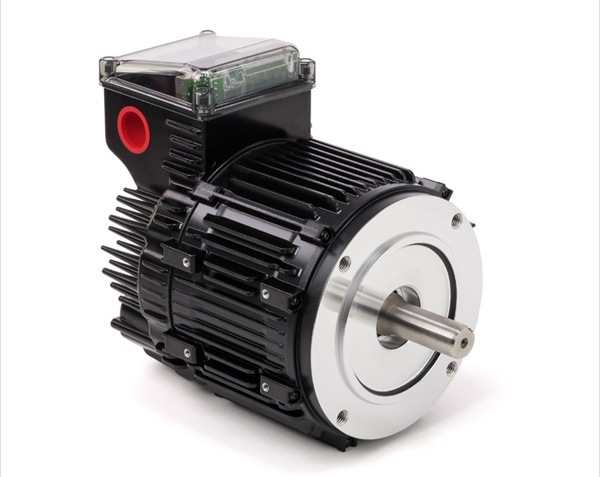
Teknic announces its AC-input ClearPath™ integrated brushless servo motors (1-4 HP continuous power) are now officially IP66K and IP67 rated, making them ideal for demanding washdown environments. These TENV (Totally Enclosed, Non-Ventilated) motors are designed to withstand both high-pressure washdowns (IP66K) and temporary submersion in water up to 1 meter when not running (IP67).
The ClearPath™ servo motors are designed, manufactured, and tested at Teknic’s headquarters in Upstate New York using advanced automation for consistent quality. They meet both the U.S. Premium Efficiency and European IE3 efficiency standards, are UL listed and CE certified for electrical safety, emissions, and susceptibility, ensuring fast, hassle-free machine certification. The series supports digital I/O, step and direction, and advanced protocols including Modbus (via ClearCore), EtherNet/IP (via ClearLink), EtherCAT (on DC models), and serial communication. Each ClearPath permanent magnet (PM) motor includes a sealed, NEMA 6-rated servo drive (equivalent to a VFD) built directly into the motor enclosure. Preconfigured for advanced field-oriented control (FOC), this all-in-one design eliminates the need for external VFD-to-motor cables, significantly reducing conducted and radiated RF noise.
B
Bürkert Fluid Control Systems 14E
Ek Robotics GmbH 8 Emerson Automation Solutions - Systems 13F
FLIR SYSTEMS TRADING BELGIUM 11G
Gerhard Schubert GmbH Verpackungsmaschinen 7 Gericke 9 Getriebebau NORD GmbH & Co. KG 16H
Hutchinson Etanchéité De Précision 15J
N
Netzsch Pumpen und Systeme GmbH 15P
Pumpenfabrik Wangen GmbH 9S
Schubert & Salzer Control Systems GmbH 14 Sensonics 11 Servomex Group Ltd 13 Signal Group Ltd 12T
Teknic 16 TÜV SÜD AG 10V
VPInstruments 16TIMGlobal Media BV
177 Chaussée de La Hulpe, Bte 20, 1170 Brussels, Belgium
o.erenberk@tim-europe.com - www.pcne.eu
- Editorial Director:Orhan Erenberko.erenberk@tim-europe.com
- Editor:Kay Petermann k.petermann@tim-europe.com
- Associate Publisher:Marco Marangonim.marangoni@tim-europe.com
- Production & Order Administration:Francesca Lorinif.lorini@tim-europe.com
- Website & Newsletter:Marco Prinarim.prinari@tim-europe.com
- Marketing Manager:Marco Prinarim.prinari@tim-europe.com
- President:Orhan Erenberko.erenberk@tim-europe.com
Advertising Sales
Tel: +41 41 850 44 24
Tel: +32-(0)11-224397
Fax: +32-(0)11-224397
Tel: +32 (0) 2 318 67 37
Tel: +49-(0)9771-1779007
Tel: +39-02-7030 0088
Turkey
Tel: +90 (0) 212 366 02 76
Tel: +44 (0)7594 239 182
John Murphy
Tel: +1 616 682 4790
Fax: +1 616 682 4791
Incom Co. Ltd
Tel: +81-(0)3-3260-7871
Fax: +81-(0)3-3260-7833
Tel: +39(0)2-7030631
- PCN Europe WebMag May 2026 Essential source of information for professionals in the broad field of processing industries since 2004
- PCN Europe March 2026 WebMAg Essential source of information for professionals in the broad field of processing industries since 2004
- PNC Europe WebMag January 2026 Essential source of information for professionals in the broad field of processing industries since 2004
- PCN Europe December 2025 WebMag Essential source of information for professionals in the broad field of processing industries since 2004
- PCN Europe WebMag October 2025 Essential source of information for professionals in the broad field of processing industries since 2004
- PCN Europe WebMag August 2025 Essential source of information for professionals in the broad field of processing industries since 2004
- WebMag PCN Europe July 2025 Essential source of information for professionals in the broad field of processing industries since 2004
- PCN Europe WebMag April 2025 Essential source of information for professionals in the broad field of processing industries since 2004
- WebMag January/February 2025 Essential source of information for professionals in the broad field of processing industries since 2004
- PCN Europe WebMag August 2024 Essential source of information for professionals in the broad field of processing industries since 2004
- WebMag PCN Europe July 2024 Essential source of information for professionals in the broad field of processing industries since 2004
- PCN Europe WebMag May 2024 Essential source of information for professionals in the broad field of processing industries since 2004
- PCN Europe WebMag January/February 2024 Essential source of information for professionals in the broad field of processing industries since 2004