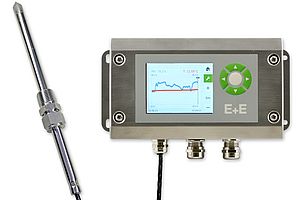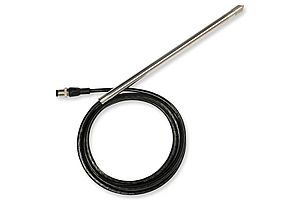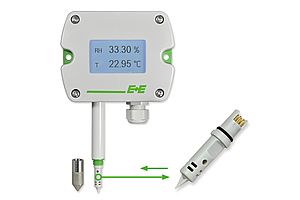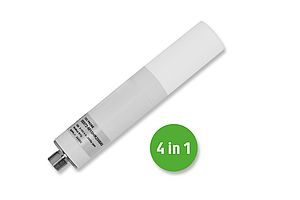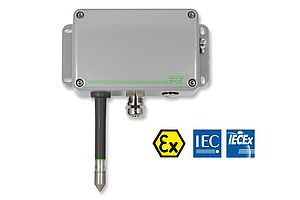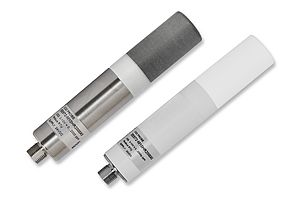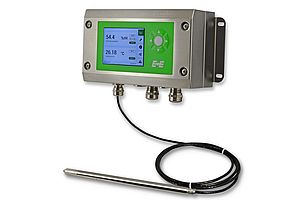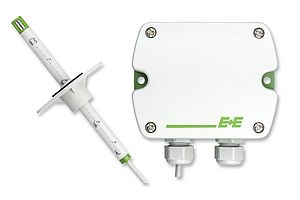


Developed and designed for demanding industrial applications, the new AVS701 from E+E Elektronik sets a new standard in air and gas velocity measurement. The optically and technically redesigned air and gas velocity sensor stands out above all for its accuracy and reliability, as well as significantly simplified installation. It is optimised for demanding industrial applications in a measuring range from 0 to 40 m/s and –40 to +140 °C and is suitable for a wide variety of uses – from cleanroom and pharmaceutical applications to process monitoring in 3D printers. Increased process efficiency and sensor installation that is up to 60% quicker make the AVS701 a good choice.
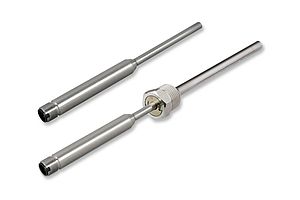
Thanks to the specially developed alignment crimp for the remote probe, the AVS701 can be positioned in the process with high repeatability. This enables fast, reproducible sensor mounting and quick sensor replacement, which speeds up commissioning and significantly increases efficiency.
Measurement accuracy for best product quality
The AVS701 impresses with exceptional measurement accuracy of ±1% of the measured value and, in the range from 0 to 2 m/s, even ±0.03 m/s. This level of precision ensures excellent process reliability, which is particularly crucial in sensitive applications such as cleanrooms and pharmaceutical production. Highly accurate monitoring of the air velocity optimises product quality and reduces scrap. Changes in the process can be detected more reliably and prevented at an early stage. In addition, the long-term stability of the AVS701 minimises maintenance intervals.
The AVS701 is equipped with a robust thin-film ceramic sensing element protected by a durable stainless steel probe head. A special coating on the sensing element protects it against moisture and corrosive influences such as hydrogen peroxide or ammonia. This makes the sensor particularly well suited for use in the most challenging environments, for example in the pharmaceutical sector or the chemical industry.