

The fertilizer industry lives in a permanent balancing act. It must feed the world while cutting its own contribution to climate change. Ammonia, the lifeblood of modern agriculture, is both the solution and the problem. Without it, food security would collapse. With it, vast amounts of energy are burned, mainly in the service of compression.
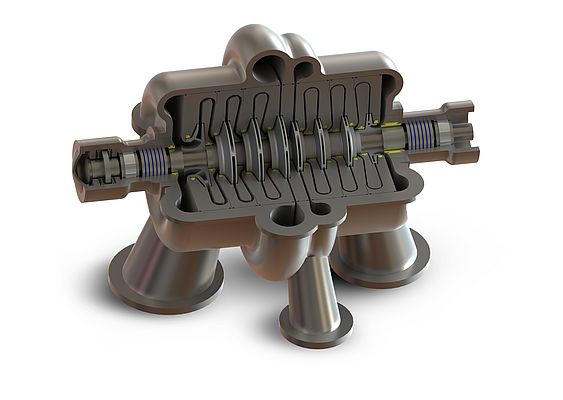
Central to the production of ammonia is the Haber–Bosch process, a catalytic reaction that converts nitrogen and hydrogen into ammonia at high temperature and pressure. Developed in the early 20th century, it uses an iron-based catalyst to drive the gases to react efficiently, and despite countless incremental improvements, the fundamentals have remained unchanged for more than a century. Natural gas is stripped for its hydrogen, nitrogen is pulled from the air, and the two are combined under immense pressure to create ammonia. That pressure is generated by industrial compressors the size of houses, running continuously, day and night. The compressors are amongst the highest consumers of electricity of any other piece of machinery on the site, and their appetite translates directly into carbon emissions when the power comes from fossil fuels.
For years, these machines were overlooked in the debate on decarbonisation. The focus was elsewhere, on the promise of carbon capture, on switching to renewable hydrogen, and on other grand new processes. Yet hidden in plain sight was an opportunity that could deliver meaningful savings today: the performance of compressors themselves.
Why compressors matter
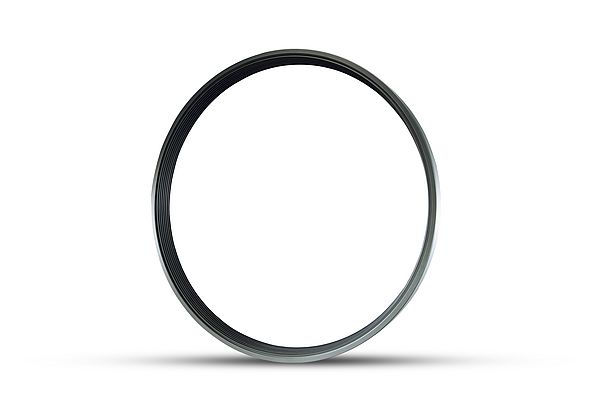
The main air compressor plays a critical role in ammonia production. Positioned at the front end of the air separation unit, it pulls in oxygen and nitrogen, setting the pace for the process. These are not small machines. They require tens of thousands of horsepower to operate, and they run for years without a break. Even a marginal improvement can deliver striking savings in large-scale ammonia production. Tests on MAN Energy Solutions, now Everllence, centrifugal compressors showed that cutting internal leakage with advanced labyrinth seals delivered about a one percent performance gain, saving roughly $300,000 in electricity over a single compressor’s lifecycle. A labyrinth seal is a precision-engineered ring of interlocking ridges that creates a tortuous path for gas or fluid, minimising leakage and maintaining pressure in high-speed rotating equipment such as compressors and turbines.
Across a fleet running 24/7, that figure compounds into millions. A one percent drop in productivity may sound trivial in a meeting room. In the real world, it can mean millions of kilowatt hours wasted over a decade.
That is why the numbers start to matter. A one to two percent gain in compressor performance translates to annual savings of tens of thousands of dollars, and more importantly, thousands of tonnes of carbon dioxide avoided. Multiply that across an installed base of fertilizer plants worldwide, and the potential becomes obvious.
Compressors may not be a glamorous subject, but they are important to manage costs, reduce emissions, and improve reliability. Ignore them, and the industry leaves money on the table and emissions in the atmosphere.
Why has the change been slow
Reliability has always been paramount. In fertilizer production, a breakdown can shut down an entire plant, breach contracts, and wipe out output. That risk keeps engineers loyal to proven designs. Metallic labyrinth seals, enshrined in American Petroleum Institute (API) standards, have been the default choice for decades, trusted to keep compressors running under punishing conditions. Yet the very dependability of these seals has slowed the search for alternatives, even as energy costs and emissions sharpen the case for efficiency gains.
The trade-off was accepted. Metal seals require large clearances to avoid galling or rotor damage during upset conditions. Those clearances mean inefficiency, with gas leaking back across the profile.
Occasionally, the corrosion problem forced a change. Hydrogen sulfide, chlorine or mercury in process streams would attack aluminium, and operators would switch to stainless steel. That solved the corrosion issue but brought other headaches: more hard surfaces that threatened catastrophic rotor damage. Optimisation barely became part of the discussion.
This well-established caution is understandable. The fertilizer sector draws heavily on practices from the hydrocarbon and chemical industries, where “failure is not an option” is more than a slogan. API specifications serve as the rule book, and procurement teams have strong incentives to choose equipment with a long operating record rather than untested alternatives.
The materials shift
Change came through materials science. Engineers developed advanced thermoplastics with a combination of properties that metals could not match. These new polymers were chemically inert, resistant to high temperatures, and crucially, they did not gall. That allowed for tighter clearances, which in compressor language meant less leakage and more output.
Greene Tweed’s Arlon® 4020 and related high-performance PEEK composites gave engineers confidence to look beyond traditional metal seals. Developed by Greene Tweed for demanding turbomachinery, the material offers exceptional chemical resistance, shrugging off corrosive gases such as H₂S, mercury, and chlorine. It absorbs virtually no moisture, resists swelling, and maintains its shape under continuous high-temperature and high-pressure loads. Those properties allow designers to tighten clearances and reduce leakage without gambling with reliability. For the first time, efficiency gains could be captured without sacrificing peace of mind.
The claims were not marketing fluff. Finite element analysis and computational fluid dynamics, that originated in aerospace, were turned on compressors. Every profile was modelled. Laboratory rigs subjected the seals to cycles of heat and pressure. Gradually, the numbers held up.
Proving it in practice
The breakthrough came when compressor OEMs put the theory under their own microscopes. A programme with Everllence, became the inflection point. On the test stand in Germany, leakage across metallic seals was measured at around four percent. With thermoplastic seals in place, that figure halved.
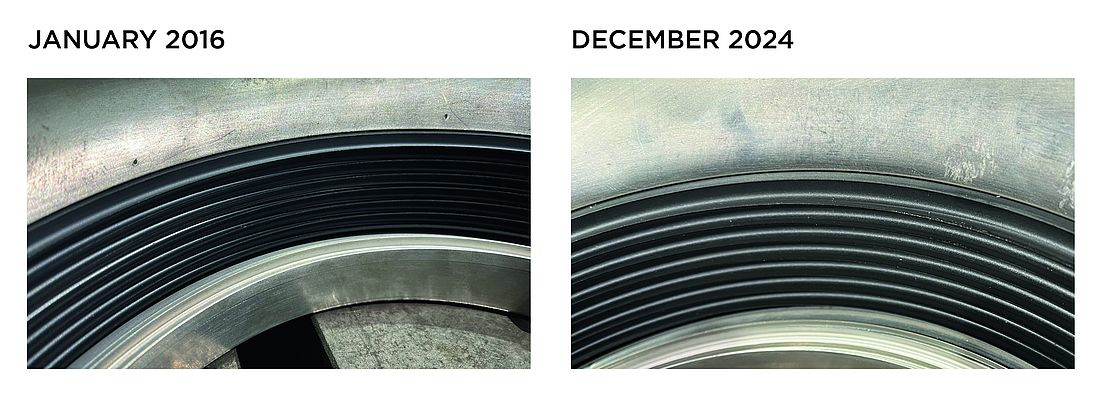
It was not just theory. Field deployments lasted for nearly a decade. When seals were finally inspected, the verdict was startling: almost no wear, no damage to the rotor, no evidence of distress. Maintenance cycles that once defaulted to five years could now stretch to ten.
The economics were equally clear. A one-and-a-half percent improvement in energy use translates to $30,000 a year saved on a single compressor. Throughout its life, the gain was approximately $300,000. For a piece of equipment that is unavoidable, the business case is obvious.
For fertilizer producers using the same integrally geared compressors as those in the energy and chemical industries, the lesson is transferable. They can use the same components that can be specified in new builds or retrofitted into existing machines for similar results.
Attitudes began to shift. What had once been a last-ditch option for corrosion resistance became a proactive strategy for efficient compressor performance. Engineers who insisted on maintaining safety clearances began to request tighter tolerances to capture the gains. OEMs built compressors around the new materials. End users specified them as standard rather than exceptions.
This was more than a technical change. It marked a shift in industry practices. The fertilizer industry began to accept that efficiency and reliability could coexist. The evidence, accumulated over a decade of test data and field experience, had become too solid to ignore.
Digitalisation brings another layer
At the same time, plants were becoming smarter. Sensors and analytics were spreading across the shop floor, delivering streams of vibration and temperature data. Predictive maintenance systems began to replace calendar-based servicing with condition-based interventions.
Advanced materials fit neatly into this environment. Seals that last nine years instead of five give predictive models better data to work with. Monitoring systems confirm their condition, extending intervals further. The two trends reinforce each other: digital tools unlock more value from longer-lasting components, and those components make predictive maintenance more profitable. For operators, the result is fewer surprises, fewer outages, and a smoother relationship between emissions targets and production schedules.
The world outside the plant gate is changing just as quickly. Governments are setting stricter targets for carbon reduction. Investors are demanding transparent pathways to net zero. Customers in agriculture and beyond are beginning to ask about the carbon intensity of fertilizers.
In that climate, performance stops being a nice-to-have and becomes part of the compliance toolkit. A one percent improvement may not sound like much at first glance, but when multiplied across an installed base, it helps meet 2030 or 2050 targets. They also demonstrate a serious willingness to tackle emissions. Cost competitiveness comes as an added advantage. Energy remains the largest variable input in fertilizer production. A plant that consumes less energy has a lower cost base, more resilience against price spikes, and an advantage over rivals who ignore resource optimisation.
The attraction is not limited to new projects. Retrofitting has always been the harder sell: operators worry about downtime, compatibility, and re-engineering. Yet thermoplastic seals can often be machined to the same dimensions as metallic predecessors. In many cases, they are a direct swap.
In the early days, conservative operators insisted on identical clearances. They wanted corrosion resistance without disturbing the balance of the compressor. As confidence grew, those same operators began to request engineered tolerances, seeking the productivity they had once overlooked.
It is an evolution rather than a revolution. Plants do not have to redesign compressors or endure extended outages. They can capture efficiency in the natural rhythm of maintenance cycles, progressively decarbonising their operations without the drama of wholesale replacement.
Ammonia’s future role
The role of ammonia is expanding and it is being studied as a marine fuel, promising carbon-free combustion at sea. It is being positioned as a hydrogen carrier, which is easier to transport and can be cracked back into hydrogen at the point of use.
Both paths will demand more from compressors. Pressures will rise, chemistries will shift, lifetimes will stretch further. Advanced materials will not be optional; they will be critical. Already, development work is underway on seals designed for rapid gas decompression and other stresses unique to emerging energy systems.
For the fertilizer sector, this is both a challenge and an opportunity. By adopting advanced materials now, producers not only decarbonise their current operations but also prepare for the role of ammonia in the global energy transition.
The fertilizer industry cannot avoid its dual challenge. It must produce more and emit less. There will be no single solution. Carbon capture will play a role, as will renewable hydrogen and process redesign. But alongside those headline projects, incremental measures matter.
Compressor performance is one of them. It may not be glamorous, but it is practical, proven, and readily available today. Advanced materials show that reliability and efficiency need not be trade-offs. The financial and environmental case is clear.
The path to a low-carbon fertilizer future will be paved with many steps, large and small. Compressors may not make the headlines, but they will make a difference. The industry that ignores them risks wasting both money and carbon. The sector that embraces them gains a hidden lever, one that pulls in the right direction for both competitiveness and climate.