


For the process industry, this presents a particular challenge. In hardly any other industrial sector are plants as long-lived. Field devices, measuring points, Ex components, and bus infrastructures often remain in operation for 10, 20, or more years. Many of these systems are still based on proven and robust fieldbus technologies such as PROFIBUS PA and PROFIBUS DP, which were not developed according to modern security-by-design principles.
PROFIBUS DP is primarily used at the control level, where distributed control systems, PLCs, drives, and fast I/O are connected. Via DP/PA links or segment couplers, this level is connected to PROFIBUS PA segments that host the field devices, which are often installed across large plant areas or in hazardous zones. This has resulted in a robust, historically grown communication architecture that today requires additional security mechanisms to address modern cyber threats.
In addition to cybersecurity requirements, expectations regarding digital integration are also increasing. Data must be reliably integrated into control systems, asset management platforms, or IIoT analytics solutions. This requires not only secure but also continuously available access to all relevant operational, diagnostic, and configuration data of the plant.
As a result, the demand for modern, secure, and cost-efficient solutions that meet growing requirements for digital integration and economical plant operation is steadily increasing.
Declining Support for DP/PA Couplers and Strategic Shift Toward PROFINET
The DP/PA couplers still used in many plants today serve as the link between the control level (DP) and the field level (PA). Their primary function is to convert the electrical and communication characteristics between the RS-485-based DP network and the MBP (Manchester Bus Powered) technology used in PA segments.
However, traditional DP/PA couplers were not designed to meet the requirements of modern automation and safety concepts. As a result, key requirements such as cybersecurity, redundancy, flexible parameterization, centralized diagnostics, and seamless digital integration can only be supported to a limited extent—if at all.
At the same time, it is becoming apparent across the industry that traditional couplers are reaching technological and regulatory limits. Further development is often no longer economically viable, and long-term availability is not guaranteed.
Against this backdrop, the shift from PROFIBUS DP to PROFINET is gaining momentum as a reliable way to meet growing security and digitalization requirements.
As an Ethernet-based architecture, PROFINET offers clear advantages. These include higher bandwidth, modern redundancy mechanisms such as MRP and system redundancy (S2), and network-based security concepts. In addition, PROFINET enables seamless integration across all levels and simplifies lifecycle management through standardized update and maintenance processes.
As a result, PROFINET effectively meets the requirements placed on modern automation architectures by the CRA and ongoing digital transformation.
Modernizing Step by Step with a PA Gateway – Securely and Without Intervening at the Field Level
For many operators, however, one thing is clear: a complete replacement of existing PA field devices is not realistic. What is needed is a solution that preserves existing PROFIBUS PA segments while enabling a modern PROFINET-based control architecture.
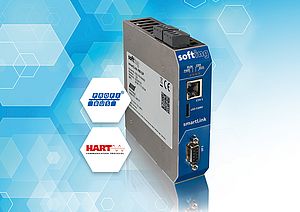
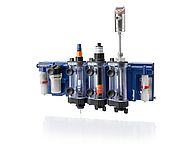
The pnGate PA from Softing Industrial can provide a solution here. The gateway enables the direct integration of PROFIBUS PA into PROFINET controllers and provides PA master functionality without additional intermediate layers. Multiple PA segments can be connected in parallel, while both existing field devices and existing power conditioners are still available for use.
In addition, pnGate PA supports modern redundancy concepts to increase plant availability and, thanks to Configuration-in-Run, allows flexible adjustments during ongoing operation. Integration into common engineering and asset management tools simplifies parameterization, diagnostics, and maintenance, and improves transparency across the entire field level.
The key advantage: the existing PA infrastructure remains fully intact, while modernization is focused on the communication and control level. This allows for a gradual transition to PROFINET without major changes at the field level.
Use Case: Step-by-Step Modernization of a Production Plant
What this looks like in practice is illustrated by a practical use case from a process plant. A chemical operator with a large installed base of PA field devices is facing a modernization decision. The existing communication infrastructure relies on DP/PA couplers whose long-term availability is uncertain. At the same time, internal and regulatory security requirements are increasing, and the company aims to make greater use of process data for condition monitoring, control system integration, and energy efficiency analysis.
Challenges in the existing installation:
The existing communication architecture has evolved and is designed for high availability, but offers only limited capabilities for diagnostics, scalability, and security. Network-based access concepts and modern security mechanisms are lacking. The number of field devices per segment is also technically limited, making expansions more difficult. Parameterization and maintenance involve a high level of manual effort, while redundancy and performance options are available to a limited extent. Overall, the existing DP/PA structure only partially meets today’s requirements for transparency, security, and data availability.
Modernization objectives:
Against this backdrop, the operator defines clear modernization goals. The focus is on introducing PROFINET as a consistent control and communication architecture without fundamentally replacing the existing field level. The existing PA field devices and the installed cabling are to be retained to keep investment costs and downtime low.
At the same time, centralized engineering, parameterization, and asset management concepts are to be established. In addition, clean network segmentation, secure remote access options, and long-term future viability in line with current regulatory requirements—such as the Cyber Resilience Act (CRA)—are required.
Implemented solution approach:
The implementation is carried out step by step to avoid impacting ongoing plant operations. Initially, the existing DP/PA couplers are gradually replaced with modern PA gateways. These enable the direct integration of PA segments into a PROFINET topology, making the field level more transparent and more closely integrated with higher-level automation and engineering tools.
At the same time, the PA segments are integrated into existing asset management and engineering systems, enabling centralized parameterization, diagnostics, and maintenance. For critical plant areas, redundant communication structures are implemented to further increase availability. In addition, this approach opens up new possibilities for detailed diagnostics, continuous monitoring, and the scalable expansion of future plant sections.
Achieved added value:
The modernization delivers multiple benefits for the operator. The new architecture meets key requirements of modern regulations such as the CRA, particularly in terms of secure access, updatability, and transparency. At the same time, the availability of process and diagnostic data improves significantly—for both day-to-day operations and maintenance, monitoring, and optimization tasks. Redundant structures and enhanced diagnostics increase plant availability, while standardized engineering tools reduce engineering and maintenance effort. In addition, retaining existing PA field devices and cabling helps to achieve significant cost savings.
Overall, the operator gains a modern, scalable, and cyber-resilient communication structure without the need for major interventions at the field level. The transition remains manageable and can be implemented largely without specialized IT expertise.
Cyber-Resilient Process Communication Through PA Gateways and PROFINET Integration
The Cyber Resilience Act is accelerating technological change in the process industry. At the same time, digitalization is opening new potential for transparency, efficiency, and security.
Modern PA gateways, such as the pnGate PA enable operators to manage this transformation in a controlled, economical, and step-by-step manner. They connect the robust world of existing PA field devices with the flexible, secure, and high-performance PROFINET architecture, making process plants fit for future technological, regulatory, and economic requirements.