



A fundamental change is imminent in the process industry: With Ethernet-APL (Advanced Physical Layer, APL for short), endto-end Ethernet communication down to the field level will be possible for the first time, even in explosion-hazardous areas. The technology is based on the proven Ethernet and enables data transmission at 10 Mbit/s over distances of up to 1000 meters. Ethernet-APL therefore not only provides the foundation for a new era of system communication, but also considerably simplifies engineering, commissioning, and maintenance. Real-time data from the field is available without detours, diagnostic information can be used in a targeted manner, and standardized interfaces facilitate system integration.
Plug&Go Makes the Difference
Ethernet-APL offers plant operators a technological basis for sustainably modernizing communication in process automation, including in explosion-hazardous areas. However, while the physical interface and device compatibility are precisely defined in standards, project implementation is anything but standardized. Each process environment has its own specific requirements: existing sensors, industry-specific or regional regulations, operating conditions, maintenance concepts, or maintenance cycles. This is precisely where it is decided whether an APL project delivers the expected added value or falls short of its potential.
A central problem: operators who plan and implement their APL infrastructure themselves are confronted with a multitude of tasks that go beyond the mere selection of components. The selection of suitable APL field switches, the design of explosion-protected enclosure solutions, the interaction with existing sensors (4–20 mA/HART, discrete, analog), integration into existing control systems, ATEX or IECEx-compliant certification, EMC-compliant cabling—all of this must be coordinated. What's more: Not every field device is APL-ready, not every cable is suitable, and not every combination is permitted.
A solution provider that integrates, thinks and delivers all these aspects relieves the operator of this complexity. This eliminates a large number of interfaces from the design phase through to commissioning. Project costs can be better calculated, coordination is centralized, and the solution works straight away – tested, documented, and ready for acceptance. This not only saves time, but also reduces the project risk, especially in safety-critical applications.
Structured Project Processes with Technical Know-How
A successful APL project begins long before the first components are delivered – it starts with an understanding of the processes, framework conditions, and objectives of the system. This is why professional providers such as Pepperl+Fuchs rely on structured project processes that systematically map all phases from requirements analysis to commissioning.
The first step is to take a technical inventory: Which signals need to be transmitted? Which devices are already available? In which Ex zones are the components located? Which standards, for example IECEx, NEC, or regional regulations such as CCC or INMETRO, need to be taken into account? This results in a technical specification that forms the basis for the solution concept.
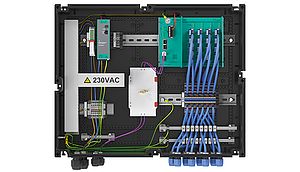
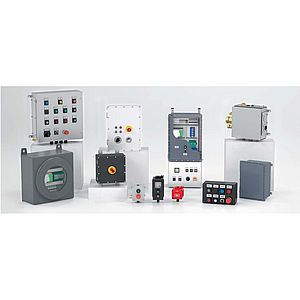
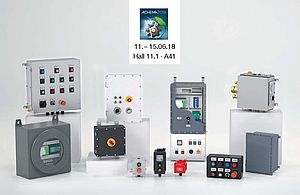
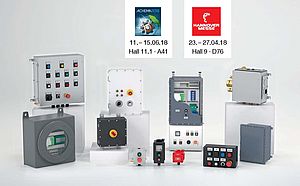
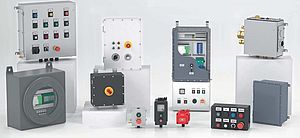
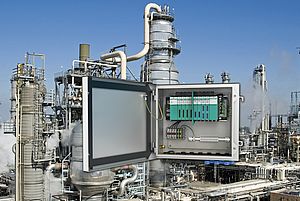
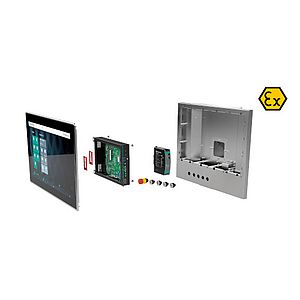
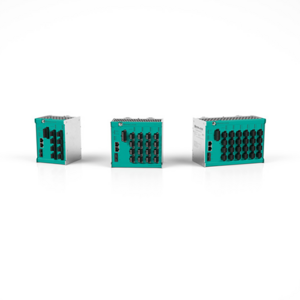
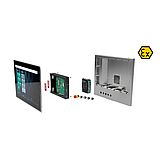
A suitable infrastructure is then developed consisting of stainless-steel enclosures for Zone 1/21 or Zone 2/22, with multi-input/ output (MIO) for discrete or temperature input modules (TM-I) for analog signals, as well as APL field switches with integrated physical layer diagnosis, which provide information about the quality of the installation. A central element is engineering, assembly, and system testing in Pepperl+Fuchs’ own Solution Engineering Centers (SECs). This is where the solutions are designed, the enclosures are machined, components are installed and wired, electrical tests are carried out, and the Ex-certification is prepared. The customer receives a tested system including complete documentation: wiring diagrams, certificates, declarations of conformity, and operating instructions. On request, packaging is also carried out according to transport specifications, for example for direct delivery to construction sites.
Fixed contact persons, project managers, and technical specialists are constantly available throughout the course of the project – an aspect that is particularly important for multi-stage projects in complex systems. This means that adjustments can be introduced and coordinated at an early stage.
Digitalization of a Tank Farm with Ethernet-APL
The example of an international operator in the waste management sector who wanted to modernize the control technology of its tank farm shows what this approach looks like in practice. The existing PROFIBUS PA installation was technically outdated, fieldbus junction boxes made of aluminum were getting on in years with recurring failures due to moisture ingress, and many components were no longer classified for Zone 2 in accordance with standards.
As part of a turnaround, the operator opted for a complete solution based on Ethernet-APL from Pepperl+Fuchs. Explosion-protected and durable stainless-steel field junction boxes were used, pre-assembled and certified according to ATEX and IECEx, equipped with MIO or TM-I modules for connecting existing sensors. The central component of the solution was an APL rail field switch with comprehensive diagnostic functionality and easy integration into the existing infrastructure. The commissioning was carried out digitally throughout, with automatic device recognition and minimal configuration effort.
The result: significantly increased plant availability, reduced maintenance costs, and a future-oriented communication concept – without the need for extensive rewiring. The operator can now evaluate all field signals digitally and has end-to-end asset management right down to the individual temperature sensor.
From Technology to Solution: A Holistic Approach to Ethernet-APL
Ethernet-APL opens up completely new possibilities in process automation, especially in hazardous areas. However, the real innovation does not lie in the technology alone, but in its systematic implementation. Only those who understand APL as part of a wellthought-out overall solution can take full advantage of the benefits for efficiency, safety, and availability. Complete solutions from a single source reduce interfaces, accelerate projects, and offer security –technically, organizationally, and economically. They are the key to a successful migration to a fully digital system.
With its specialized Solution Engineering Centers, Pepperl+Fuchs makes it possible to handle the entire project, including certification and quality control, from a single source. The solution is pre-assembled, tested, documented, and packaged in-house, as a "plug-and-go" system that can be installed directly at the customer's premises. This represents real added value for customers.