



Why is tank monitoring important?
Tank monitoring enables organisations to optimise their inventory management, ensuring that materials are available when needed, stored safely and properly documented. If materials are poorly tracked or stock levels become excessive, the likelihood of spills or leaks increases, putting people and assets at risk. Inaccurate or incomplete records of hazardous materials can lead to penalties from regulatory authorities, legal action or even shutdowns. Real-time visibility of material availability also enables correct stock rotation, preventing product spoilage or instability, and helps to ensure operational efficiency and foster good customer relationships by avoiding production delays and missed deliveries. Furthermore, optimised inventory management improves cost control – as excess stock ties up capital and increases storage costs – and supports sustainability goals by reducing waste.
How is tank monitoring currently performed?
In many plants, manual tank monitoring methods are still used. This can involve operators measuring tank levels with dipsticks or by visually checking sight glasses. Some facilities use semi-automated devices such as basic level gauges, but these often require readings to be manually entered into a control system, which breaks the chain of automation. These manual practices persist largely because they are familiar, inexpensive to set up and require limited technical know-how. However, manual monitoring is also labour-intensive and time-consuming, and can expose workers to risks, as they often have to climb tanks or approach hazardous areas to take readings. Human error can easily occur when readings are estimated or transcribed, and because data is captured only intermittently, there is a lag between measurement and decision-making.
What are the advantages of automated tank monitoring systems?
Automated tank monitoring systems replace periodic manual checks with continuous, precise and reliable measurement of stored material volumes. This delivers real-time visibility of stock levels and facilitates faster, better-informed decision-making, helping companies prevent overfills or stock shortages and maintain accurate, auditable records. Automation eliminates the need for workers to climb tanks, thereby improving safety, while also removing the risk of human error from measurement and reporting. Automated systems can also integrate directly with plant control systems or inventory platforms, providing a unified view of material data across sites and supply chains.
What does a typical automated tank monitoring system look like?
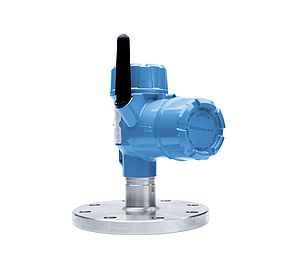
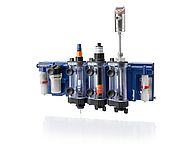
A modern automated solution typically includes several core components. Non-contacting radar level sensors or other transmitters measure tank levels precisely. Data from these instruments – as well as from pressure and temperature transmitters – is gathered by a local data concentrator that provides a field display for technicians and operators to view. A communication unit then transmits this data to the control or inventory management system via protocols such as Modbus or HART®. The result is complete visibility of storage operations, from tank to enterprise level, with historical data available for auditing and forecasting.
What prevents some companies from adopting automated tank monitoring?
Although highly effective, traditional automated tank monitoring systems have often been viewed as complex to deploy. They can require numerous individual device connections, specialised configuration, and knowledge of communication protocols. Upfront costs may also seem high for smaller operations. Many facilities rely on older infrastructure that can be difficult to upgrade. The combination of complexity, expense and integration challenges has often slowed the transition from manual to automated systems.
How are these barriers being overcome?
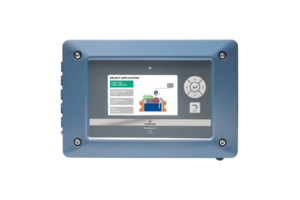
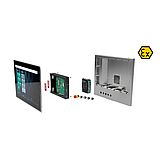
Automation suppliers such as Emerson have developed tank monitoring hubs – devices that combine the roles of data concentrator, communication unit and local display into a single, compact unit. This streamlined architecture reduces the number of components needed and simplifies installation and integration.
In a traditional set-up, each device might communicate separately with the control system, requiring multiple wiring runs, converters and power supplies. A monitoring hub centralises these connections, collecting data from multiple field instruments and sending it to the host system through a single communication interface. This approach drastically reduces wiring, shortens set-up time and makes the system easier to expand and maintain.
Tank monitoring hubs deliver live readings of parameters such as level, flow, volume and utilisation, accessible both in the field and in control rooms. They connect flexibly with plant control systems and inventory management software, integrating smoothly with distributed control systems (DCS), PLCs, SCADA or MES platforms. By embedding tank data directly into existing digital workflows, companies can shift from reactive to proactive inventory management, improving efficiency, reducing costs, strengthening supply chain reliability and supporting compliance and safety objectives.
Are these hubs user-friendly?
Yes – ease of use has become a key design goal for modern monitoring hubs. The Rosemount™ 2405 Monitoring Hub from Emerson, for example, provides set-up tools that guide technicians through configuration step by step, minimising the need for specialised skills. This is especially valuable when integrating devices from multiple vendors, each with different configuration and set-up requirements.
Selecting a tank monitoring hub with a built-in graphical display enables quick access to critical information on-site. Features such as QR-coded asset tagging further streamline maintenance by linking directly to digital manuals and support resources, helping technicians diagnose and resolve issues quickly. This not only reduces downtime but also supports predictive maintenance by addressing problems before they escalate.
For facilities with limited technical expertise, such simplified interfaces make automation more attainable. Engineers no longer need to master multiple communication standards or tools. The result is a more intuitive, sustainable system that promotes operational efficiency, regulatory compliance and digital transformation.
Are there any special considerations when selecting a hub?
Yes, equipment reliability is vital because it can be impacted by harsh industrial environments with corrosive substances, moisture, dust, vibration and extreme temperatures. Tank monitoring hubs must be engineered for consistent accuracy and resilience under such demanding conditions, as failures can affect safety, compliance and productivity. Ingress protection ratings such as IP66/67 and Type 4X indicate resistance to dust, water and corrosion, while international hazardous area certifications confirm suitability for locations where flammable gases, vapours or dust may be present.
It is also important to consider the flexibility and compatibility of the instrumentation connected to the hub. Because the Rosemount 2405 Monitoring Hub communicates via the HART protocol, operators can select from a broad portfolio of transmitters, each optimised for different measurement needs and process conditions. This allows the monitoring system to be tailored precisely to the application.
Choosing a hub with both comprehensive global certifications and wide transmitter compatibility ensures a continuous, dependable monitoring architecture capable of delivering accurate data even in extreme conditions. This level of reliability protects personnel and the environment, minimises costly unplanned downtime and supports compliance with stringent industry standards.