


Plastic is part of everyday life. It is used in packaging, electronics, vehicles, household appliances and countless chemical products. But once these products become waste, the challenge becomes clear. A truly circular economy for plastics is still difficult to achieve. Mechanical recycling works well when waste streams are clean and properly sorted. Mixed or contaminated plastics are a different matter. Polyolefins in particular are used in huge quantities, yet they are difficult to recycle into high-quality secondary raw materials. As a result, many of these materials never make it back into the production cycle. They are incinerated, used for energy recovery or disposed of altogether. At the same time, they represent a valuable resource if they can be processed in a controlled and efficient way.
Chemical recycling offers a route back into the value chain for plastic waste that cannot be handled effectively by mechanical processes. But moving from technical promise to reliable industrial operation is far from simple. This is where enespa ag and Endress+Hauser are working together. Their aim is to make pyrolysis processes safer, more efficient and more sustainable.
Measurement Technology as the Backbone of Process Stability
Based in Appenzell, Switzerland, enespa ag develops and operates plants for the chemical recycling of plastic waste. The company uses pyrolysis to convert polyolefin-rich waste streams into high-quality pyrolysis oil. This oil can then be used by the petrochemical industry as feedstock to produce new plastics.
In this way, enespa helps reduce avoidable greenhouse gas emissions, makes use of waste streams that have so far been difficult to recycle, and contributes to a more circular use of resources. Running the process is far from straightforward. The main challenge stems from the highly variable nature of the feedstock. Plastic waste is rarely uniform. Different polymers, additives and contaminants all behave differently when exposed to heat, with varying melting and decomposition points. “We also have some extremely demanding process conditions in parts of our plant,” says Julian Herrmann, Technical Director at enespa ag.
Temperatures of up to 400°C, pressure fluctuations in pipes and vessels, and changing material states all come together in a process where the feedstock composition is constantly shifting. This makes pyrolysis particularly sensitive to process deviations. Even small deviations can disrupt reactions or affect whether the resulting pyrolysis oil meets the required specifications.
Downtime is another critical factor. Any interruption can lead to complex cleaning procedures and time-consuming restart processes, reducing the efficiency of the entire plant. For enespa, it soon became clear that stable operation depends on continuous, accurate monitoring of all relevant process parameters.
Reliable Data Drives Process Control
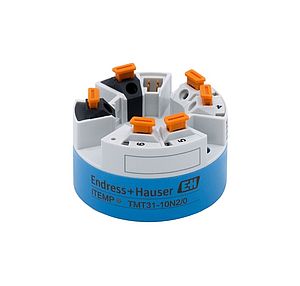
Endress+Hauser developed a measurement concept tailored to the process, covering all critical parameters. Cerabar PMP71B monitors pressure in pipes and reactors and helps maintain stability even when conditions fluctuate. Temperature, one of the decisive factors in pyrolysis, is measured by iTHERM TM131, which delivers reliable readings even under sustained high thermal stress.
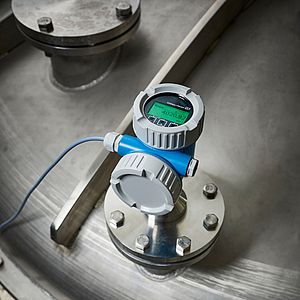
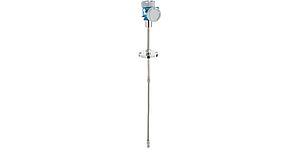
In tanks and reactors, Levelflex FMP51 provides continuous level measurement, while Liquiphant FTL51B ensures that critical level limits are reliably maintained. Proline Prowirl F 200 measures process flows, providing the data needed for effective process control and optimization.
Together, these measurement points provide a clear, continuous view of the process. This enables enespa to run its chemical recycling process in a stable and reproducible way, even under challenging conditions.
From Process Data to Automated Control
The real value of measurement data lies in what is done with it. At enespa, readings are not simply collected. They are processed in real time and translated into control actions. This creates a digital representation of the plant and gives operators real-time visibility into performance.
Deviations can be detected early and corrected before they affect product quality or plant operation. As a result, the system can respond to changing conditions before they affect product quality or plant performance. “Endress+Hauser’s measurement technology has enabled us to achieve a very high level of automation. We have now reached a point where the plant can essentially be operated autonomously,” says Julian Herrmann.
Efficiency as a Driver of Sustainability
Precise monitoring and control also have a direct impact on efficiency and sustainability. Every stable process step reduces losses, avoids unnecessary energy consumption and helps use resources more effectively. Technical precision therefore creates measurable value across the entire plant operation. Alexander Hermann, Portfolio Manager at Endress+Hauser, sees this as an important contribution to sustainability: “Ultimately, sustainability is also about using resources more efficiently. Every improvement in process efficiency helps reduce waste and conserve valuable resources. Enespa is a strong example of this. Pyrolysis makes it possible to return these materials to the value chain.”
Modern instrumentation does far more than simply measure process variables. It provides the foundation for efficient operations and is becoming an increasingly important enabler of sustainable industrial processes.