


Overvoltage can be transient or permanent: Transient overvoltages are brief voltage spikes caused, for example, by lightning, switching operations, or electrostatic discharges. Permanent overvoltages last longer and can be triggered by power grid issues or neutral conductor faults, among other things. They often lead to overheating and accelerated aging of equipment. As a general rule: If the electrical voltage exceeds the tolerance range of the rated voltage, consequential damage is practically inevitable.
The Root Cause Is Internal
Overvoltage can enter a circuit in three different ways. In the case of galvanic coupling, there is a direct conductive connection, such as via grounding or common return conductors. Inductive coupling arises from changing magnetic fields that induce voltages in adjacent conductors. Capacitive coupling is based on electric fields between conductive parts with different potentials. Inductive and capacitive effects occur without a direct connection between the conductors.
External causes such as lightning strikes or load switching in the power grid trigger strong pulses and have a high potential for damage. However, they account for only about one-fifth of the incidents. The remaining 80 percent of surges originate within the systems themselves. Causes here include switching operations, electrostatic discharges, reflections in long lines, coupling between parallel lines, and inadequate grounding.
Typical Consequences
In automation technology, the consequences of overvoltage often do not manifest as clearly identifiable individual damage. Rather, typical issues are malfunctions that are difficult to analyse and attribute. For example, when a contactor or relay is switched off, the collapsing magnetic field can generate a voltage spike – digital inputs flicker, the PLC reports errors, or automatically restarts. Frequency converters and power electronics generate steep voltage transients through fast switching operations, which can interfere with sensors, analog signals, and bus systems.
Long sensor cables are also susceptible. Reflections can superimpose signals and lead to incorrect measured values, communication errors, or ghost signals. If the control system and power supply are both fed via the same 24-V line, switching larger loads on or off can cause voltage dips and spikes. Here, too, this can result in PLC resets, failed I/O modules, or connection interruptions on field devices.
The economic damage typically far exceeds the value of the damaged component and the cost of repairs. Downtime, restarting, troubleshooting, production scrap, delivery delays, and damage to the company’s reputation can add up to many times the purely technical damage. Creeping equipment damage is also particularly problematic: sensors drift, power supplies become unstable, and I/O modules fail weeks after the event. Such faults tie up personnel and often lead to the replacement of components on a precautionary basis. As a rule, the total costs of a single damage event already far exceed the investment cost for surge protection.
Customized Protection
Effective protection against overvoltage requires components that are compatible with the system architecture. For signal lines, for example, it makes a difference whether the signal circuit is grounded or not. For grounded signal lines, a defined protection level from the line to ground is required. For ungrounded signal circuits, a higher insulation voltage from the line to ground is necessary. The rated voltage also plays an important role in the selection of protection components: 24-V signal circuits have different requirements than applications in the millivolt range.
Among the most commonly used protection components are gas discharge tubes, suppressor diodes, and varistors. They differ primarily in their reaction rate and dissipation capacity – the faster the reaction rate, the lower the capacity, and vice versa. Gas discharge tubes can dissipate high energies but react comparatively slowly. Varistors react faster and are frequently used for general device protection against voltage spikes. Suppressor diodes react extremely quickly and limit the voltage very precisely, but can only absorb smaller amounts of energy.
Complete Portfolio and Comprehensive Solutions
Pepperl+Fuchs’ surge protection barriers are primarily designed as hybrid protection circuits that combine various components. For example, a first stage with gas discharge tubes clamps high voltages and diverts large currents. A second stage with suppressor diodes limits the remaining residual energy to a safe level.
The portfolio offers complete surge protection for automation technology, including accessories and in combination with explosion protection, from a single source. The solutions from the Mannheim-based manufacturer are available for 4–20 mA signals, Ethernet-APL, and fieldbuses, and are suitable for intrinsically safe circuits. The surge protection barriers can be supplied with standard threads for screw-in installation or for mounting on a DIN mounting rail. There is also a piggyback solution for fieldbuses: the modules can be plugged directly onto the field barrier or the Segment Protector. This even eliminates the need for an intermediate wiring level in the field junction box. An overview of the most important module series:
- M-LB-4000 – two-part system with a modular design consisting of a base and protection module, device replacement during operation without rewiring, and loop disconnect function,
- M-LB-2000 – compact base system for DIN rail mounting, only 6 mm module width, loop disconnect function,
- M-LB-(Ex)26 – for 3-wire applications with very low rated voltage,
- M-LB-* – Protection modules for 115/230 V supply lines,
- P-LB – Protection module for 20 mm wide isolator modules of the K-System, space-saving on the field side,
- DP-LBF – Surge protectors for FOUNDATION Fieldbus H1 and PROFIBUS PA, control cabinet installation on the DIN mounting rail or in the fieldbus distributor,
- TPH-LBF – Plug-in surge protection module for trunk installation on the PROFIBUS Power Hub (“piggyback”), for FOUNDATION Fieldbus H1 and PROFIBUS PA,
- M-LBAS – Surge protectors for Ethernet-APL, control cabinet installation on DIN mounting rail, with direct or indirect shield grounding,
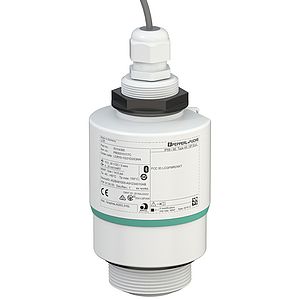
- FN-LBAS – Screw-in modules for Ethernet-APL/field device mounting, available with all standard threads.
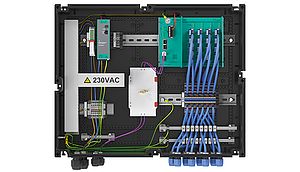
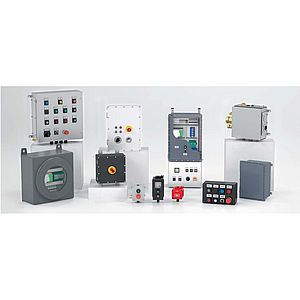
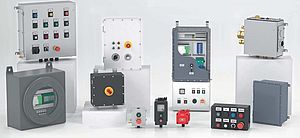
In addition to individual modules, users can also obtain custom, fully wired, and certifiable enclosure solutions. The experts at Pepperl+Fuchs offer comprehensive consulting, planning, and implementation support.