


JTEC Energy has developed a waste-heat recovery technology that generates electricity efficiently at relatively low temperatures using hydrogen as the working fluid. Precise moisture control is critical, requiring highly accurate measurement across a wide humidity range. The sensors must operate reliably in hydrogen, withstand varying pressures and flows, integrate with control systems, and meet hazardous-area requirements.
Protecting a Critical System in a Demanding Hydrogen Environment
JTEC’s waste-heat-to-power system combines two subsystems with different moisture requirements: an electrochemical stack that needs moisture for efficient operation and metal hydride reactors that must be protected from excess humidity.
Waste heat is supplied to metal hydride reactors, which absorb hydrogen when cooled and release it at higher pressure when heated. JTEC uses this temperature-driven pressure increase as part of its process for converting waste heat into electrical power.
The pressurized hydrogen is sent to electrochemical stacks, where its expansion generates electricity. Afterward, the low-pressure hydrogen is returned to a separate metal hydride reactor, where it can be reheated, repressurized and reused. This closed-loop process continuously recirculates a single hydrogen charge, with no hydrogen consumption and waste heat as the system’s only energy input.
Because hydrogen is humidified as it passes through the stacks, JTEC must carefully control moisture levels. Adequate humidity is required for stack performance, while excess moisture can impair reactor efficiency, making hydrogen drying essential before recirculation. “At its core, humidity measurement is so important to JTEC because we have two parts of our system that work really well, but for them to work well together, we have to ensure that we can control humidity passing back and forth between them really tightly,” said Julian Bell, Vice President of Engineering at JTEC Energy.
JTEC first piloted a Vaisala dew point sensor in an internal R&D project in 2023. As the company worked toward its first production system and field pilot, Vaisala became the preferred option based on low dew point performance, calibration stability, availability, integration flexibility and technical support. “The honest truth is that we had not found a good sensor option before we came to Vaisala,” Bell said.
Vaisala sensors support three critical moisture measurement points for JTEC
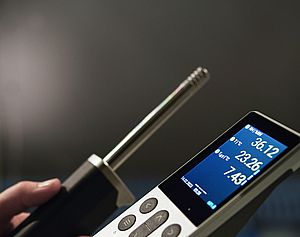
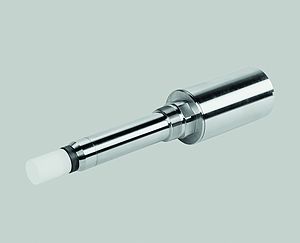
The first measurement point is located after the initial dehumidification stage, where hydrogen leaving the electrochemical stack has already had most of its moisture removed. JTEC uses a Vaisala HMP7 humidity and temperature probe to verify performance and help prevent condensation.
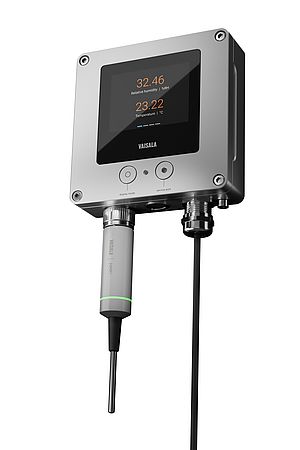
The second point measures low dew point levels before hydrogen returns to the metal hydride reactors. A Vaisala DMP370 Ex-rated sensor ensures accurate, stable measurements and supports future hazardous-area requirements.
The third measurement point is in the maintenance manifold, where a Vaisala DMT143 dew point transmitter confirms that moisture is not transferred into dry hydrogen circuits during startup, shutdown and maintenance. The sensors were installed and integrated easily with JTEC’s control system. In a process with widely varying pressure, temperature and flow conditions, measurement reliability, data accessibility and technical support were critical factors.
“Vaisala’s auto-calibration is a key feature that improves confidence in the number coming back to us, which has been a huge benefit,” Bell said. “At the same time, we have been able to integrate pressure compensation routines into our dew point measurements with support from Vaisala engineers, and that expertise really shines through.”
Vaisala support extends beyond product selection. The company provides access to Vaisala’s doctoral-level scientists who are global experts in humidity metrology. Their continued guidance helps the team evaluate moisture measurement in hydrogen at varying pressures and low dew point levels.
This was especially important because moisture measurement in hydrogen at pressures substantially different from atmospheric conditions is not fully understood across the scientific community or industry. Vaisala's technical expertise helped JTEC make informed decisions about how to approach pressure compensation and measurement confidence in those conditions.
“Vaisala helped educate us about what is known, what we can confidently say and where confidence drops off," Bell said. “It is because Vaisala has experts like that and is willing to make them accessible to customers that we were able to make intelligent decisions about how to perform these measurements."
Measurement Confidence for Field Deployment
As JTEC prepares its first production system for deployment in a field pilot, Vaisala measurement technology gives the company confidence that it can monitor moisture closely enough to protect critical reactor components. For example, JTEC must tightly control moisture content in the hydrogen gas as it returns to the reactors, making measurement accuracy, repeatability and robustness central to field readiness.
“I would have to have the highest level of certainty in my moisture measurements in order to feel comfortable running a reactor system of this scale in a field pilot, and Vaisala provides this certainty,” Bell said. “The investment in the reactor system is too great to justify running it if you are not 100 percent confident that you know what kind of moisture content you are putting back into the reactors.”