We use cookies to provide you with personalized services and improve our website. More info Ok
A new wave of more efficient, adaptable and intelligent plant operations is emerging as conventional control systems evolve into modern, open and modular automation ecosystems. Stefan Basenach, Senior Vice President ABB Automation Technology, explains how ABB’s Automation Extended allows industrial organizations to fully embrace the opportunities of digitalization while futureproofing their operations.
Polyurethanes (PUR) are found in many products, such as upholstered furniture, foam or insulation materials, flooring, paints and even medical catheter tubes. The production of these high-demand plastics, however, relies on toxic isocyanate. Fraunhofer researchers have now developed an alternative production process using harmless dicarbamate.
The new treatment will reduce the high cost of transforming rice straw and citrus pruning waste into plant-based plastics.
When it comes to beverage dispensing and flow measurement, Titan Enterprises offers two distinct solutions that each has unique strengths and trade-offs, making the choice application-dependent.
At the Bürkert Trade Press Days we spoke with Georg Stawowy, CEO of Bürkert Fluid Control Systems about the concept of a regenerative economy.
As the world urgently seeks ways to decarbonise, James Clements from Signal Group explains how gas analysis will perform a vital role – particularly in carbon capture, and not just for CO2 but for all of the important greenhouse gases.
The Hungarian MOL Group has achieved a significant milestone in its SHAPE TOMORROW Strategy by successfully completing its first ISCC PLUS-certified production run using circular feedstock at its MOL Petrochemicals site in Tiszaújváros.
Endress+Hauser is once again among the three finalists for this year’s German Sustainability Award (GSA) in the measurement and control technology sector.
The family-owned company holds an annual Innovators’ Meeting, where it presents awards in recognition of the people behind these inventions. This year, for the first time, the event included an award for sustainable product development.
Fraunhofer researchers have developed sensor systems and measuring equipment that detect leaks in hydrogen lines and tanks. Applications for the new technology include continuous monitoring of hydrogen shipments and facilities in the chemical industry.
The demonstrator, designed as an interactive screen with code readers, has been made possible thanks to the collaboration of ITC Packaging and Famosa
Conductivity Sensor is Key to Energy-Saving Dairy CIP System
Plasma-coated paper as a plastic alternative for the packaging industry
Acceleration of development for sustainable battery industry
Crowdhelix’s Circular Industry Helix platform seeks to bring experts from materials science, process engineering, mineral waste recycling and industrial innovation to collaboratively develop solutions that can quickly scale industrial symbiosis.
Finding possible contaminants in renewable hydrogen helps prevent equipment damages
Mitsubishi Electric technologies have enabled the development of innovative composting machines that can turn food waste into high-quality fertiliser in just 24 hours. This solution responds to the global problem of waste, in particular food waste, which constitutes about 30% of landfill waste. For Radisson Blu Scandinavia, this technology enables the daily processing of food waste from restaurants, room service, and other food-related operations.
The European Pump Association announced that its 2025 Annual Meeting and General Assembly will be held in Prague from 21st -23rd May 2025.
In the process of transforming our economy and society towards greater sustainability and climate neutrality, green chemistry can make a decisive contribution. Fraunhofer scientists are playing a key role in supporting industry with practical solutions. At ACHEMA, the world's leading trade fair for the international process industry, 10-14 June, they will present a selection of their current projects and research results at Fraunhofer Stand D49 in Hall 6.0.
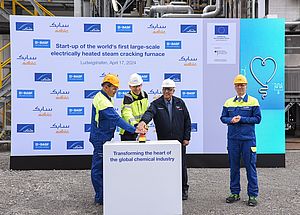
Joint development and construction of electric steam cracking furnaces at BASF’s Verbund site in Ludwigshafen. The technology has the potential to reduce CO2 emissions by at least 90% compared to conventional steam crackers.
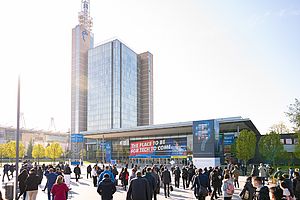
More than 130,000 visitors from 150 countries, 4,000 exhibiting companies, 300 startups and over 300 economic and political delegations from all over the world. These are the figures that emphasise the fair's position again after five successful days.
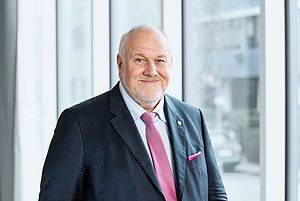
Growth in incoming orders, sales, profit and employment reported for 2023 by Matthias Altendorf and Luc Schultheiss
Today, the majority of consumer goods and everyday items are made from petroleum-based plastics. In Germany alone, around six million tonnes of plastic waste is generated every year. About half of this is mechanically recycled into new materials; the rest is used for energy recovery. The incineration of this waste results in the release of CO2, a greenhouse gas. It is therefore important to keep more plastics in the material cycle for climate and environmental reasons. Eight Fraunhofer Institutes are developing new ideas and processes to significantly improve the mechanical recycling rate of plastics as part of the Waste4Future flagship project.
Software is playing a crucial role in the value chain optimization
For the first time, the Nobel Sustainability Trust (NST) and the Technical University of Munich (TUM) are presenting an award for outstanding research and development work in the fields of sustainable energy and climate change economics. The first two honorees of the "Sustainability Award supported by NST" are Prof. Elena Bou of EIT InnoEnergy for her contributions to promoting energy start-ups, and Lord Nicholas Stern, Professor at the London School of Economics and Political Science, for his achievements relating to the economic aspects of climate change.
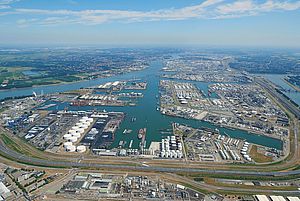
Port of Rotterdam and Yokogawa kick off feasibility study for optimization of efficient energy use
As a pillar of the global economy, the process industry is facing major challenges: high energy consumption and high use of fossil fuels, rising energy costs and stricter legal regulations make the decarbonization of the industry increasingly urgent. In order to achieve CO2 reductions and higher energy efficiency in their own operations, it is essential that companies drive the digitalization and automation of their entire production process. Author: Axel Lorenz, CEO Process Automation, Siemens
Schenck Process repositions itself with focus on digital solutions and sustainable bulk solids processes
Investment of €1 billion in Germany, €500 million for new Technology Campus in Erlangen to create blueprint for industrial metaverse in Nuremberg metropolitan region
Cocoa plays an important role in Brazilian agriculture. However, the fruit of the cacao tree (cocoa pods) is prone to fungal diseases. pest infestations are responsible for crop losses of up to 40 percent worldwide. In collaboration with the State University of Campinas (Unicamp), Brazil, researchers at the Fraunhofer Institute for Process Engineering and Packaging IVV are looking to establish new ways of using damaged cocoa pods as part of the Damaged Beans project.
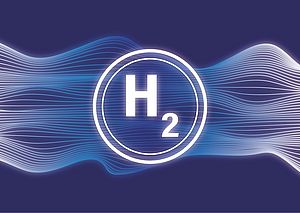
At the upcoming Hannover Messe, running from 17 to 21 April, some 500 companies will be presenting their solutions for hydrogen production, transport, storage and consumption.
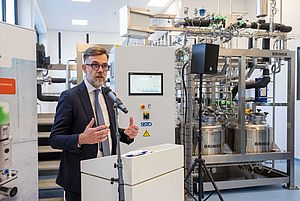
SISTO Armaturen S.A., a member of the KSB Group, inaugurated a newly built technology centre in Echternach, Luxembourg, on 27 February 2023.
We spoke with Hubertus von Monschaw, Global Director HANNOVER MESSE at Deutsche Messe AG about HANNOVER MESSE 2023 in a challenging environment
The list of challenges facing industry is long, in Europe and all over the world: climate change, energy shortages, disrupted supply chains and a shortage of skilled labor.
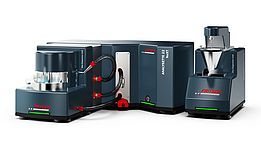
Available in two different measuring ranges with addition of functional modules
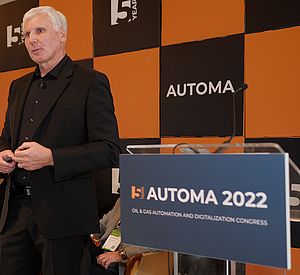
Latest automation and digital trends in the segments of upstream, midstream and downstream was the main direction of Oil & Gas Automation and Digitalization Congress 2022 at the 5th AUTOMA.
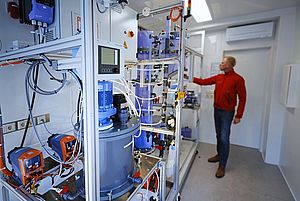
Looking at all of the business sectors in Germany, industry requires the largest amount of water. This makes access to efficient technology for cleaning and recycling water all the more important for this sector in particular. Ideally, this technology should also allow energy and valuable raw materials to be retrieved so that they can be reused in production.
Simplified security control information makes it easier for operational teams to make better decisions and improve industrial automation security with simplified decision processes.
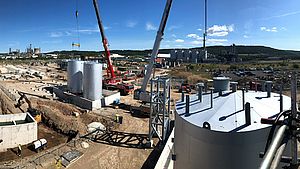
Recycling pioneer Mura Technology is making great strides in the construction of the world’s first HydroPRS plant, scheduled to go into operation in early 2023
The decarbonization of energy systems has seen greater interest in the production, distribution and use of hydrogen. To ensure it can become a viable business, custody transfer for hydrogen is essential and this is now being made possible using the latest generation of measurement technologies, as Ricardo Mendes, Global Product Line Manager, ABB explains.
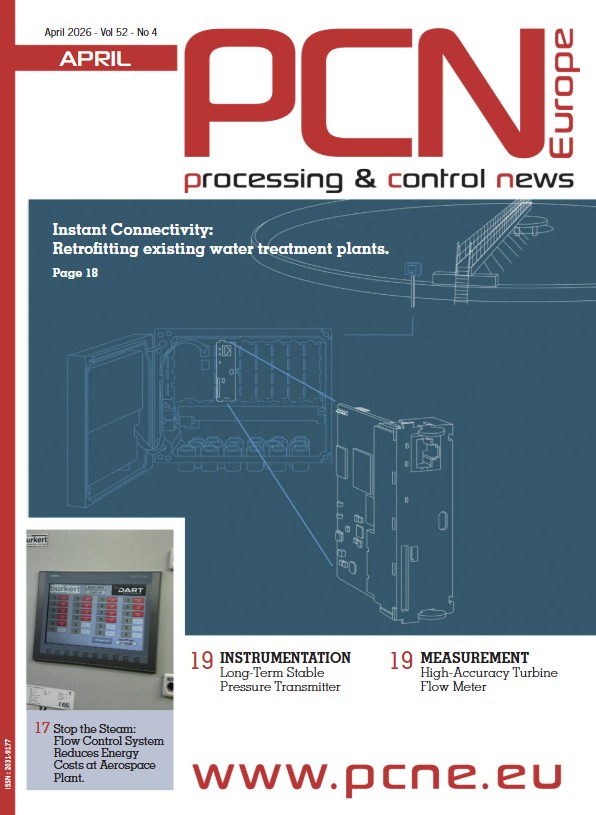
Digital Edition Download PDF