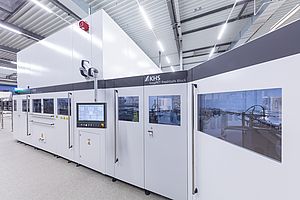
Plasma-coated paper as a plastic alternative for the packaging industry
For safe conveying of high-viscosity fluids
Siemens named one of the global preferred suppliers for Merck's next-level automation, boosting global smart manufacturing with Siemens Xcelerator platform
Acceleration of development for sustainable battery industry
Crowdhelix’s Circular Industry Helix platform seeks to bring experts from materials science, process engineering, mineral waste recycling and industrial innovation to collaboratively develop solutions that can quickly scale industrial symbiosis.
Mitsubishi Electric technologies have enabled the development of innovative composting machines that can turn food waste into high-quality fertiliser in just 24 hours. This solution responds to the global problem of waste, in particular food waste, which constitutes about 30% of landfill waste. For Radisson Blu Scandinavia, this technology enables the daily processing of food waste from restaurants, room service, and other food-related operations.
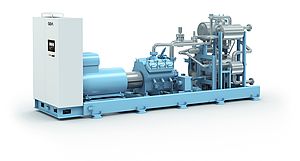
Founded in 1864 with the focus on agricultural machinery, AERZEN today is an experienced solution provider for process air and gas applications
The climate crisis is driving demand for the electrification of transportation and energy infrastructure, which in turn is accelerating the need for more powerful and safer rechargeable batteries, including li-ion, sodium-ion, and solid-state. However, one of the key issues affecting battery quality is accurate humidity monitoring and dry control during manufacture.
The German sensor company and the Swiss measurement and automation technology specialist have agreed on a strategic partnership. Endress+Hauser will take over worldwide sales and service of SICK’s process analyzers and gas flowmeters, with a joint venture to be established for their production and further development.
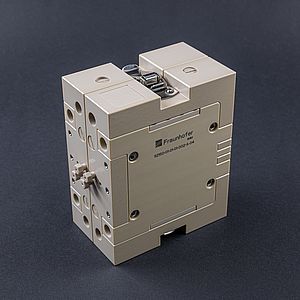
Modular valve engineering for a more efficient and sustainable valve, suitable for liquids, gases and vapors
Product packaging has always polarized: while it is indispensable for maintaining product and consumer safety, some materials are constantly under scrutiny regarding their environmental impact. The EU’s Packaging and Packaging Waste Regulation (PPWR) introduces binding regulations across the EU to mitigate these effects by reducing and replacing certain types of packaging. Packaging manufacturers and brand owners alike can meet those challenges and become PPWR-compliant without sacrificing efficiency and packing quality.
Clean water for rearing healthy fish – High-performance systems for sustainable production in RAS
AERZEN and HH2E agree on cooperation for large-scale production with an initial capacity of 100 MW in 2026
Digital Twin Platform in Conjunction with Digital Nameplates for the Process Industry Introduced at ACHEMA
Cooling systems are crucial parts of industrial facilities, and an efficient cooling tower is of critical importance for the performance and durability of the facility
The Alsatian family-owned group, De Dietrich Process Systems, announces the acquisition of the HEINKEL Drying and Separation Group with its brands HEINKEL, COMBER, BOLZ-SUMMIX, and JONGIA.
In the process of transforming our economy and society towards greater sustainability and climate neutrality, green chemistry can make a decisive contribution. Fraunhofer scientists are playing a key role in supporting industry with practical solutions. At ACHEMA, the world's leading trade fair for the international process industry, 10-14 June, they will present a selection of their current projects and research results at Fraunhofer Stand D49 in Hall 6.0.
Margo is a new open standard initiative for interoperability that will address key roadblocks to digital transformation. The initiative is hosted by the Linux Foundation and driven by a founding group of industrial automation solution providers, including ABB Process Automation and ABB Machine Automation (B&R)
Growth in incoming orders, sales, profit and employment reported for 2023 by Matthias Altendorf and Luc Schultheiss
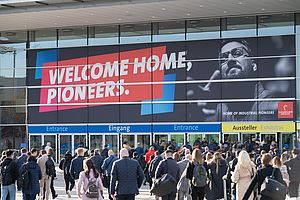
At the event from April 22 to 26 the new format points the way to a carbon-neutral industrial society
Today, the majority of consumer goods and everyday items are made from petroleum-based plastics. In Germany alone, around six million tonnes of plastic waste is generated every year. About half of this is mechanically recycled into new materials; the rest is used for energy recovery. The incineration of this waste results in the release of CO2, a greenhouse gas. It is therefore important to keep more plastics in the material cycle for climate and environmental reasons. Eight Fraunhofer Institutes are developing new ideas and processes to significantly improve the mechanical recycling rate of plastics as part of the Waste4Future flagship project.
Software is playing a crucial role in the value chain optimization
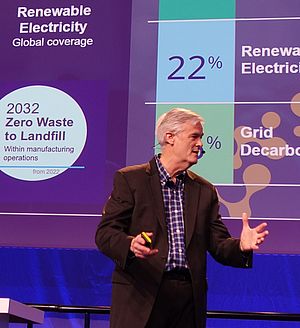
In the keynote at Emerson Exchange 2024 in Düsseldorf, Emersons’s Chief Sustainability Officer Mike Train and Chief Technology Officer Peter Zornio spoke about different aspects of their company's and customer's sustainability journey
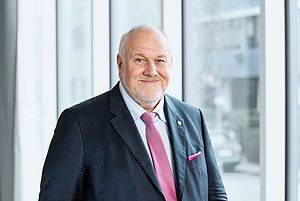
PCN Europe spoke to Hubertus von Monschaw, Global Director Trade Fair and Product Management HANNOVER MESSE at Deutsche Messe AG, about the current challenges facing the industry and HANNOVER MESSE 2024.
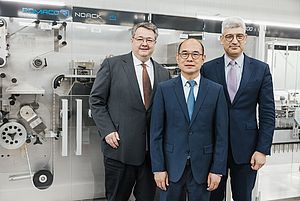
Jens Torkel and Linbin Zeng appointed new Managing Directors of the Romaco Group
One focus will be on development of new processes for chemical recycling of plastic waste
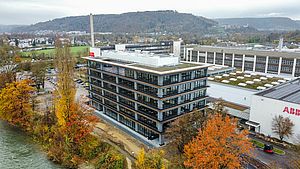
Competence Centre for Power Electronics strenghtened by setting up 500 state-of-the-art workplaces
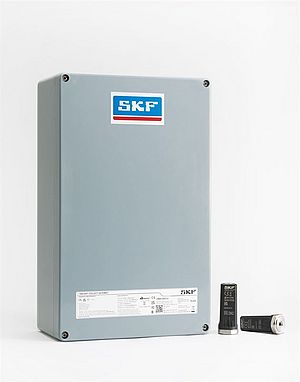
Condition monitoring of assets in hazardous areas
German sensor company SICK and Swiss measurement and automation technology specialist Endress+Hauser want to intensify their cooperation. By bundling their strengths, the companies are striving to provide even better support for their customers in important areas such as energy and resource efficiency and protection of the climate and environment.
To date, the KHS coating of wafer-thin, chemically pure glass on the inside wall of PET bottles was primarily applied to improve the quality and shelf life of sensitive soft drinks and juice. VILSA-BRUNNEN Otto Rodekohr GmbH is now the first mineral water bottling plant to profit from Plasmax technology. The family business is consistently investing in its product quality and the long-lasting freshness protection of its premium beverages – and in doing so is setting standards on the market.
How can mining companies make their operations more sustainable to reduce their environmental footprints? One element that can be perfectly adapted to match the conditions is the efficient transport of the mined material. Here overland conveyors that can move large quantities of material over long distances are required. BEUMER Group relies on modern planning and layout tools to support operators at an early stage of the project and design the ideal conveying solution together with the customer.
For the first time, the Nobel Sustainability Trust (NST) and the Technical University of Munich (TUM) are presenting an award for outstanding research and development work in the fields of sustainable energy and climate change economics. The first two honorees of the "Sustainability Award supported by NST" are Prof. Elena Bou of EIT InnoEnergy for her contributions to promoting energy start-ups, and Lord Nicholas Stern, Professor at the London School of Economics and Political Science, for his achievements relating to the economic aspects of climate change.
GEA supplies Britvic, one of UK’s leading soft drinks manufacturers, with a heat recovery system at its Beckton site, in London. The installation begins this summer and will result in cutting the factory’s carbon emissions by an estimated 1,200 tons annually – equivalent to the annual energy usage of around 500 UK homes.
Before purchasing something new, it is worthwhile to take a look at the stock and think about possible reuse and upgrading, as this example shows.
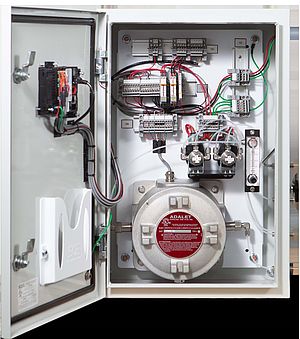
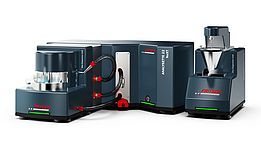
Two-in-One Analyzer for measuring hydrogen sulfide (H2S) and carbon dioxide (CO2) as part of quality and process control
$280 million will be spent on integrated campus for automated manufacturing, R&D, customer experience and training centers.
A PCN Europe Interview with Steve Biegacki, Managing Director of the FDT Group
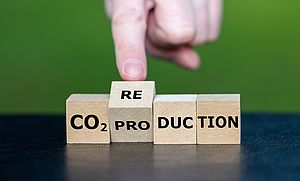
As a pillar of the global economy, the process industry is facing major challenges: high energy consumption and high use of fossil fuels, rising energy costs and stricter legal regulations make the decarbonization of the industry increasingly urgent. In order to achieve CO2 reductions and higher energy efficiency in their own operations, it is essential that companies drive the digitalization and automation of their entire production process. Author: Axel Lorenz, CEO Process Automation, Siemens
Schenck Process repositions itself with focus on digital solutions and sustainable bulk solids processes
Electrochemical processes like water electrolysis will become increasingly important in the future in light of climate change and the resultant need for an energy and raw materials transition. The Fraunhofer Institute for Microengineering and Microsystems IMM is collaborating with hte GmbH to develop modular electrochemical cells. These flow cells are used in screening tasks, thereby helping optimize electrochemical production processes, such as water electrolysis.
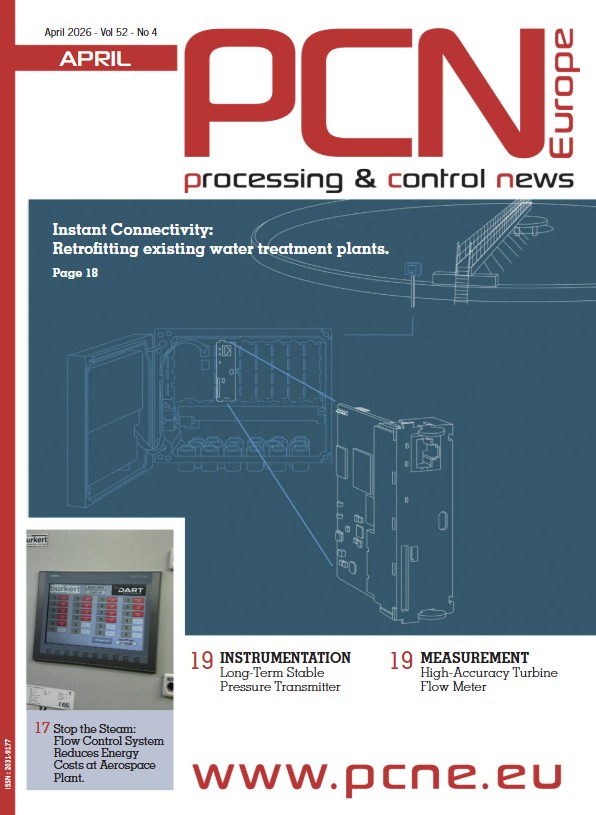
Digital Edition Download PDF