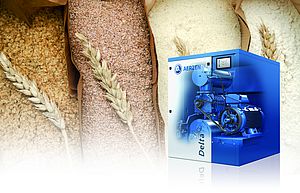
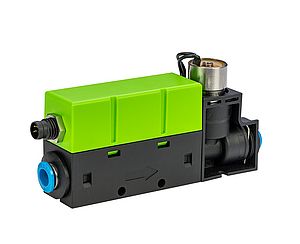
Direct driven blowers for economical and energy-efficient process air generation
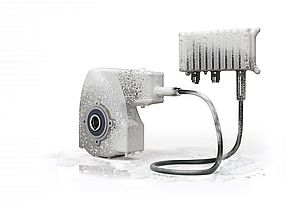
Making aluminium drives resistant to cleaning chemicals
A new wave of more efficient, adaptable and intelligent plant operations is emerging as conventional control systems evolve into modern, open and modular automation ecosystems. Stefan Basenach, Senior Vice President ABB Automation Technology, explains how ABB’s Automation Extended allows industrial organizations to fully embrace the opportunities of digitalization while futureproofing their operations.
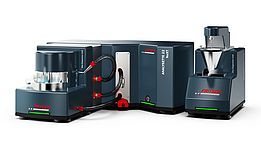
SOPAT and Parsum optical inline systems will further strengthen the process analysis portfolio. The Germany-based specialist in inline process measurement technology, retaining the company’s staff in Berlin and Chemnitz.
At the Bürkert Trade Press Days we spoke with Georg Stawowy, CEO of Bürkert Fluid Control Systems about the concept of a regenerative economy.
October marks the 50th year since ABB’s Low Voltage Variable Speed Drive was first brought to market. Developed by Finnish company Strömberg, which went on to become part of ABB, VSD have revolutionized industrial energy consumption and decarbonization
From fertilizer to energy source of the future
Sensirion Connected Solutions, a subsidiary of Sensirion Holding AG specializing in sensor-based IoT solutions and services for emissions monitoring, announced the acquisition of Kuva Systems, a Cambridge-based innovator in image-based methane emissions monitoring.
Addressing complex fluid measurement challenges of Original Equipment Manufacturers (OEMs) across different industries.
In the production of pet food, Fessmann relies on JUMO technology when it comes to temperature monitoring and control.
International Federation of Robotics reports on trends in the industry
Analysis technology insensitive to cross-contamination allows cost effective measurements
Industrial processes involving dry foodstuffs or animal feed can quickly create an explosive atmosphere by stirring up dust. Dust explosions present a huge risk not only to human life, but also in terms of destroyed equipment and unplanned production downtimes. Bormann & Neupert by BS&B offers efficient safety systems that effectively nip dust explosions in the bud or minimise their effects.
The food and beverage industry is continually evolving, driven by the need for enhanced efficiency, quality, and safety. Central to these advancements is fluid process control, a crucial component in manufacturing processes such as mixing, fermentation, and pasteurisation. Recent innovations in this area have focused on precision, automation, and sustainability, significantly improving production practices.
Modular valve engineering for a more efficient and sustainable valve, suitable for liquids, gases and vapors
Steen-Hansen – a Norwegian manufacturer of fouling prevention and net protecting solutions for aquaculture use as well as of specialized industrial paint systems – has not only successfully overcome quality problems with its newly developed antifouling coatings, but also significantly shortened process times, simply by switching its production facilities to state-of-the-art mixing and dispersion technology.
Clean water for rearing healthy fish – High-performance systems for sustainable production in RAS
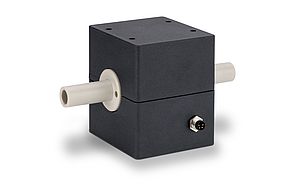
The measurement of low flow is becoming widely used in many industries. However, the smaller the flow, the trickier it is to control and measure, and finding a suitable flow measuring technology at reasonable cost can prove challenging for both users and flow sensor manufacturers.
Hygienic flow measurement with high accuracy
Cooling systems are crucial parts of industrial facilities, and an efficient cooling tower is of critical importance for the performance and durability of the facility
Form A and Form B sizes for Zone 2 and 22
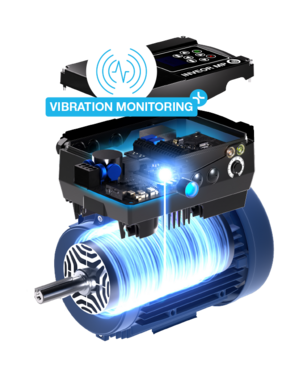
Minimising downtimes with predictive maintenance
Water management is an increasingly important and challenging issue, particularly in light of concerns such as water scarcity. Greater value is thus being placed on disinfection processes. To protect against bacteria, viruses and other harmful organisms, drinking water requires disinfection and hygiene measures. This also applies to the environment in order that lakes and water-based activities can be enjoyed without hesitation. Disinfection processes play a large role in industrial processes as well. In the beverage industry, drinking water flows directly into the products, while surface waters are frequently used as a coolant in other segments such as energy generation.
Scratch-resistant and shatter-proof display with high protection class
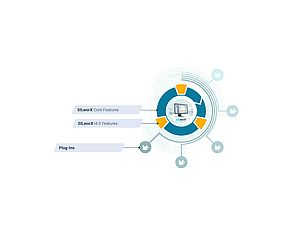
Simplified collaborative engineering for automation projects
A digital twin is not only the basis for a holistic view of the system and the individual processes. It is also the basis for automatic routines that react autonomously to changes in the process. It helps applications identify unwanted situations and the countermeasures to be taken often long before the plant comes to a standstill. Predictive maintenance is a key to the efficient operation of a process plant. However, digital processes are not a question of individual products or components, but require the seamless interaction of people and systems.
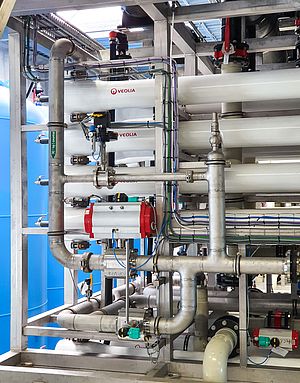
Veolia Water Technologies has built an ultra-modern plant to produce drinking water in Ostend, Belgium. In a multi-stage filtration process, the water supplier is now producing drinking water of excellent quality – far above the statutory requirements. At critical points of the process – during reverse osmosis, filtration with activated carbon and remineralisation of the water – sliding gate valves made by Schubert & Salzer Control Systems are responsible for regulating pressure and flow rate.
For the first time, the Nobel Sustainability Trust (NST) and the Technical University of Munich (TUM) are presenting an award for outstanding research and development work in the fields of sustainable energy and climate change economics. The first two honorees of the "Sustainability Award supported by NST" are Prof. Elena Bou of EIT InnoEnergy for her contributions to promoting energy start-ups, and Lord Nicholas Stern, Professor at the London School of Economics and Political Science, for his achievements relating to the economic aspects of climate change.
Photometer with UV-absorption-based measurement principle
Pneumatic conveying processes have a key function in the material flow of many industrial companies and place correspondingly high demands on blower technology, with efficiency, reliability and purity of the conveying air particularly in focus.
As a pillar of the global economy, the process industry is facing major challenges: high energy consumption and high use of fossil fuels, rising energy costs and stricter legal regulations make the decarbonization of the industry increasingly urgent. In order to achieve CO2 reductions and higher energy efficiency in their own operations, it is essential that companies drive the digitalization and automation of their entire production process. Author: Axel Lorenz, CEO Process Automation, Siemens
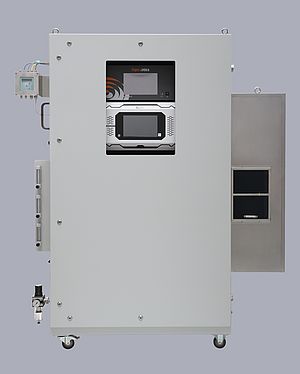
The use of conventional analysis equipment in hazardous areas is complicated due to a lack of approvals. Equipment without ATEX or IECEx certification must be specially protected so that it does not act as an ignition source. At the same time, analysis equipment is essential for many processes. For example, for testing the purity of hydrogen at hydrogen refuelling stations.
Schenck Process repositions itself with focus on digital solutions and sustainable bulk solids processes
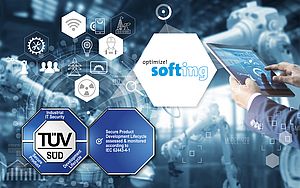
Softing Industrial is now certified to document a safe product development cycle.
Certified for food contact under Reg. (EC) 1935/2004
The green transition demands efficient storage of renewable energy, to which end a number of Power-to-X plants are under construction in Denmark. They are designed to convert green electricity to another form of energy.
The world is facing a fundamental change to its entire energy supply. All current methods of generating energy are under scrutiny. Nuclear energy has fallen into disrepute for a number of reasons. Meanwhile, hydropower has its own limitations in terms of scope, one of which is its immense impact on the landscape and the associated consequences for flora and fauna. Biomass is another option, but it competes with food production and is also a limited resource. Author: Wolfgang Weber, Pepperl+Fuchs
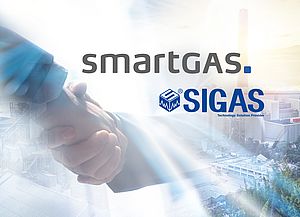
smartGAS Germany and SIGAS merge to optimize industrial chains and open up the global market.
Lightweight and versatile device with high accuracy
Ammonia could play a decisive role in the transition from fossil fuels to climate-friendly alternatives if produced from green hydrogen. Researchers at the Fraunhofer Institute for Microengineering and Microsystems IMM are developing ammonia-based systems for a mobile, decentralized energy supply in the infrastructure, transportation and industry sectors.
Digital Edition Download PDF